(1) The faculty of making fortunate discoveries by
accident; a combination of events which have come together by chance to make a
surprisingly good or wonderful outcome.
(2) Luck, good fortune.
(3) As the serendipity berry (Dioscoreophyllum volkensii),
a tropical dioecious rainforest vine in the family Menispermaceae, native to tropical
Africa from Sierra Leone east to Eritrea, and south to Angola and Mozambique.
1754: The construct was Serendip + -ity.The proper noun Serendip (Serendib the
alternative form) was an archaic name for the island of Ceylon (सिंहल (siṃhala (Sri Lanka”) after 1972 from
द्वीप (dvīpa) (island)), from the Arabic سَرَنْدِيب (sarandīb),
from the Persian سرندیپ (sarandip), from the Prakrit sīhaladīva
& Sanskrit सिंहलद्वीप (siṃhaladvīpa (literally “island of the Sinhala people”)).The –ity
suffix was from the French -ité, from
the Middle French -ité, from the Old
French –ete & -eteit (-ity), from the Latin -itātem, from -itās, from the primitive Indo-European suffix –it.It was cognate with the
Gothic –iþa (-th), the Old High
German -ida (-th) and the Old English
-þo, -þu & -þ (-th).It was used to
form nouns from adjectives (especially abstract nouns), thus most often
associated with nouns referring to the state, property, or quality of
conforming to the adjective's description.
Serendipity berries, one of the “miracle berries”.
The
serendipity berry is noted as a source of monellin,
an intensely sweet protein and if chewed, alters the perception of taste to
make tart, acidic or bitter food taste sweet.Pills containing synthesized monellin are sold as “miracle fruit tablets”
for this purpose (a lemon eaten after sucking on one of these tablets quite a
revelation) and as “miracle fruit”, serendipity and related berries are widely
used in African folk medicine although there’s scant evidence for their
efficacy as a treatment for the many diseases they’re said to cure.Words with a similar meaning include fluke,
happenstance, blessing, break and luck but serendipity carries the particular
sense of something very useful and wholly unexpected being the result while The phrases “Murphy's law” & “perfect storm” are close to being antonyms.In science and industry, serendipity has
played a part in the discovery or development of vaccination, insulin to treat
diabetes, penicillin, quinine, Viagra, x-rays, radioactivity, pulsars, cosmic
microwave background radiation, Teflon, vulcanized rubber, microwave ovens, Velcro
and 3M's (originally Minnesota Mining & Manufacturing) post-it notes (though it seems its part in the invention of stainless steel
may be a myth).Serendipity & serendipitist are nouns, serendipitously
is an adverb and serendipitous is an adjective; the noun plural is serendipities.Serendipiter
& serendipper are non-standard noun
forms adopted in popular culture.
Serendipity was in 1754 coined by the English Whig politician
& author writer Horace Walpole (1717–1797), derived from the fairy tale The
Three Princes of Serendip, the three,
Walpole noted, “always making
discoveries, by accidents and sagacity, of things which they were not in quest
of”.The Three Princes of Serendip was
an English version of Peregrinaggio di
tre giovani figliuoli del re di Serendippo, printed in 1557 by Venetian publisher
Michele Tramezzino (1526-1571), the text said to have been the work of a Cristoforo
Armeno who had translated the Persian fairy tale into Italian, adapting Book
One of Amir Khusrau's Hasht-Bihisht (1302).
The story was translated into French before the first English edition was published
and Voltaire (François-Marie Arouet, 1694–1778) used the tale in his 1797
novella Zadig ou la Destinée (Zadig or The Book of Fate), an intriguing fusion of fiction and philosophy
which influenced systematic science, the evolution of creative writing about crime
and even horror stories.
Portrait of Horace Walpole (1728), aged ten by William Hogarth (1697-1784) in gilt frame, Strawberry Hill House, Twickenham. He was the youngest son of Sir Robert Walpole (1676-1745), the Whig politician who between 1721-1742 served as first lord of the Treasury, chancellor of the exchequer and leader of the House of Commons; by virtue of this, he came to be recognized as Britain's first prime-minister.
Walpole used serendipity first in a letter (dated 28
January 1754) he wrote to Florence-based British diplomat Sir Horace Mann
(1706–1786) but which seems not to have been published until 1833, the new word
remaining almost unnoticed until the 1870s when there was a brief spike; it was
in the early-mid twentieth century it became popular and until then it was rare
to find a dictionary entry although the adjective serendipitous appeared as
early as 1914.Walpole was compelled to
coin serendipity to illustrate his delighted surprise at finding a detail in a painting
of Bianca Cappello (1548–1587 and latterly of the clan Medici) by Giorgio
Vasari (1511-1574). The charm of the word is
such that it’s been borrowed, unaltered, by many languages and it frequently appears in "favorite word" or "words of the year" lists.
Portrait of Bianca Cappello, Second Wife of Francesco I
de' Medici (circa 1580), fresco by Alessandro Allori (1535-1607), Galleria
degli Uffizi, Firenze.
The twenty-two-year-old Walpole fell under the charm of the long dead Bianca Cappello while staying in Florence during his grand tour of the
continent.Besotted by the portrait of
the peach-skinned Venetian beauty which hung in the Casa Vitelli, it's not
clear what immediately drew his eye but a diary note by the French writer
Montaigne (1533–1592), who in 1580 had the pleasure of meeting her, might provide a hint: “...belle à l’opinion italienne, un visage
agréable et imperieux, le corsage gros, et de tetins à leur fouhait”
("...according to the Italians she is beautiful.She has an agreeable and imposing face, and large breasts, the way they
like them here…").He confided his
passion to Mann who around 1753 purchased the work, sending it to his friend
who had by then returned to England, his cover letter including the revelatory “It is an old acquaintance of yours, and once
much admired by you... it is the portrait you so often went to see in Casa
Vitelli of Bianca Capello… to which, as your proxy, I have made love to for a
long while… It has hung in my bedchamber and reproached me indeed of
infidelity, in depriving you of what I originally designed for you”.These days, such things are called objectum sexuality or fictosexualism but in the eighteenth century it was just something
the English aristocracy did.
Lindsay Lohan in a Michael Kors (b 1959) pussy-bow, polka-dotsilk blouse with Valentino sneakers, enjoying a frozen hot chocolate, Serendipity 3 restaurant, New York, January 2019.
Whatever other pleasures the oil on canvas bought him,
Walpole must also have devoted some attention to detail for he would soon write
back to Mann: “I must tell you a critical
discovery of mine a propos in a book of Venetian arms.There are two coats of Capello… on one of
them is added a fleu de luce on a blue ball, which I am persuaded was given to
the family by the Grand Duke” (of Medici who was Bianca's second husband
(who may have murdered the first)). Much
pleased at having stumbled upon this link between the two families in a book of
Venetian heraldry he happened at the time to be reading in the search for
suitable emblems with which to adorn the painting's frame, he told his dear
friend: “This discovery indeed is almost
of that kind which I call SERENDIPITY”.
(1) Two
or more slices of bread or the like with a layer of meat, fish, cheese etc
between each pair.
(2) A type of cake with noticeably distinct horizontal layers.
(3) To
insert something between two other things (used figuratively also of ideas, concepts, historic events etc).
(4) In engineering or construction, a technique of assembly in which materials (which need not be flat) are joined in two or more layers.
(5) To eat one or more sandwiches (archaic except in literary or poetic use).
1762: Named after John Montagu (1718-1792), fourth of Earl Sandwich, a bit of a cad and gambler who, during marathon sessions at the tables,
would eat slices of cold meat between bread rather than rise for a meal and thus "miss a bet".However, the earl’s biographer suggested his
subject was a serious chap, committed to the navy, politics and the arts and
the sandwiches were actually eaten at his desk at the Admiralty but the legend
is much preferred.It was in his honor Captain James
Cook (1728-1779) named the Hawaiian Sandwich islands in 1778 when Montagu was First Lord of
the Admiralty (then the UK's minister for the Royal Navy).The family name is from
the place in Kent which in the Old English was Sandwicæ
(sandy harbor; trading center). In structural linguistics, a "sandwich" word is one in which two or more syllables have been split (al la slices of bread) and filled with another word. Use of the technique is common and exemplified by an opinion such as: "Fox News is just Murdoch propafuckinganda". The term was coined by US lexicographer Dr Harold Wentworth (1904-1965). A "sandwichery" is a place where sandwiches are sold and the noun sandwichness (the state or quality of being a sandwich) seems only ever used as jocular term food reviews. Sandwich, sandwichness & sandwichery are nouns, verb & adjective, sandwiched is a verb and sandwichlike, sandwichy & sandwichless are adjectives; the noun plural is sandwiches (the always rare sandwichs probably now extinct).
There
are a least dozens and likely more than a hundred recorded descriptions of
sandwiches with names drawn variously from the fillings, type of bread, method
of preparation, (alleged) regional origin or occasion when served but the word has
also appeared in idiomatic use including: “nothing sandwich” (a sandwich with a
bland taste (used also figuratively as a synonym of “nothingburger” to suggest
something is of less significance than its appearance or treatment accorded
deserves)); “soup sandwich” (something or someone thought disorganized,
incompetent, fundamentally flawed or unfinished; “air sandwich” (a sandwich
consisting only of bread and a sauce or spread, but no filling (in figurative
use a strategy that has high-level
direction and low-level administrative support but in operation is close to
inert); “Elvis sandwich” (a sandwich made peanut butter, sliced or mashed
banana, and sometimes bacon on toasted bread, based on the fondness the singer Elvis
Presley (1935-1977) had for the concoction (a banana smeared with peanut butter
was reputedly a favourite snack of Bill Clinton (b 1946; POTUS 1993-2001)); “shit
sandwich” (something highly undesirable that is rendered more acceptable or
palatable by the addition of more tolerable or agreeable components); “tavern
sandwich” a sandwich consisting of unseasoned ground beef and sautéed onions in
a bun); “barley
sandwich” (a glass of beer (synonymous with “liquid lunch”); “lead sandwich” (a method of suicide in which a shotgun is placed in
the mouth and discharged (100% success
rate as might be expected)) and “prawn (shrimp) sandwich brigade” (those who attend
sporting event to socialize and enjoy the hospitality in corporate hospitality
boxes rather than having any interest in the event).In physics a “nanosandwich” is a nanoscale
structure consisting of a dielectric layer between two discs and in chemistry a
“sandwich compound” is any compound in which a metal atom is located between
the faces of two planes of atoms, especially between two rings.
Sandwich is a town in Barnstable County, Massachusetts, its population 20,675 at the last census; the oldest town on Cape Cod, in 2014, Sandwich turned 375 years old.Sandwich has a police department: They are the Sandwich Police.
The Sandwich Police cruiser is a second generation (1998-2011) Ford Crown Victoria (1992-2011), built on the corporation's "Panther" platform (1978-2011). When Ford ceased production of the Crown Victoria, it was the last of the old-style (BoF (body-on-frame), V8, RWD (rear wheel drive)), full-sized cars that were the backbone of the US industry for much of the first four post-war decades. Although by the 1990s judged archaic by the US motoring press (and some international journalists who drove them in 2009 expressed amazement such a thing was still made), the demise of the Crown Victoria was a matter of regret for US police departments and many other fleet operators (notably rental car companies) because the CV's combination of virtues (robust, reliable, spacious, low TCO (total cost of ownership)) made them ideally suited for "heavy duty use" and in fleets, even today, some remain faithfully in service. In truth, if driven within it's limitations, a CV (or the companion Mercury Grand Marquis) could be a satisfying experience for what it lacked in refinement it compensated for in other ways and for those who yearn still for the way things used to be done, the more desirable of the CVs can be a good choice.
More
sandwich police: A police officer at the Ingham Subway in Queensland, Australia
preparing a sub, an event held by Subway Australia on 2 November, 2018 to mark World Sandwich Day.On the day, 329,814
sandwiches were assembled for needy families.
There is doubt whether the sandwich became
so-named as early as 1762 because the first documented account of the earl’s
culinary innovation was written in 1770 but it certainly caught on.The sandwich board, the two-sided mobile advertising
carried on the shoulders was first so-described in 1864 and someone employed to "wear" the device was sandwichman (a word now probably extinct although sandwich boards still occasionally are seen, carried presumably by sandwichpersons). The
Wall Street Journal once described the sandwich as "Britain's biggest contribution to gastronomy" but,
given the parlous reputation of the rest of their pre-modern cuisine, the WSJ may have
been damning with faint praise.Regardless, while Lord Sandwich may have lent his name, the historical record
suggests sandwiches have been eaten since bread was first baked, pre-dating the
earl by thousands of years.
In 2022, with Lindsay Lohan on location in Ireland for the shooting of the Netflix film Irish Wish (2024), Westport Café The Creel created a sandwich to honor the famous visitor.The Lindsay LoHam included 'nduja sausage, Monterey Jack cheese, mixed grated cheddar, caramelized onions and, naturally enough given the name, ham. Irish Wish remains available to stream but the Lindsay LoHam enjoyed only a limited release.
By convention, when more than two slices of bread are used it becomes a "club sandwich" and it's now not uncommon for filled bread rolls, pita, flatbreads, etc also to be sold as sandwiches. When the filling is spread atop a single slice of bread, it can be called an "open sandwich" which (historically) is oxymoronic but in commerce the term is well-established; dating from the 1920s, these first appeared on menus as "open face sandwich" but the term was soon clipped. Over millennia, there must have been countless inventions and re-inventions of variants of the sandwich and the innovations have been linguistic as well as culinary, one noted concoction the muffuletta, a thick, round sandwich, typically containing ham, salami, and cheeses and topped with an olive salad, a specialty of New Orleans; it seems first to have been served in the late 1960s, the name from the Sicilian dialect, from the Italian muffoletta (a round hollow-centered loaf of bread), from muffola (mitten), from the French moufle. In New Orleans, among the muffuletta cognoscenti, there is a heated faction and a room-temperature faction. Another delicacy is the fried brain sandwich which, although now associated with things south of the Mason-Dixon line, was apparently first offered in St Louis, Missouri. Self-explanatory, it's made with thinly sliced fried slabs of calf’s brain on white toast; to some a genuine delicacy, to others it'd be an acquired taste. Etymologists
note that confusingly, in the US, some restaurants (said to be most often those “specializing
in barbecue”) use “sandwich” in its adjectival sense when serving a meal that is
smaller than either lunch or dinner yet not so modest to be thought “a snack”.These offerings do not imply that of
necessity what’s served will be in the form of “a sandwich” although some may
be, the point being what’s on the menu is “something smaller than what appears on
the lunch and dinner menus”.
Quintessential Grilled Cheese: The ultimate cheese toastie.
In
2017, Guinness World Records officially recognized the “Quintessential Grilled Cheese” on the menu at New York City’s Serendipity 3 as the planet’s most expensive commercially available sandwich.Then listed at US$214, it was made with Dom
Perignon champagne-infused French Pullman bread, 23-karat edible gold,
a rare Italian cheese and grass-fed white truffle butter.Served on a Baccarat crystal plate with a
bowl of South African lobster tail tomato bisque, the restaurant required customers
to order 48-hour in advance.Obviously
not a typical cheese toastie, the core ingredient was Caciocavallo Podolico, an
extremely rare Italian cheese made from the milk of a mere 25,000-odd cows grazing
on fennel, licorice, and wild strawberries; accounting for some of the sandwich’s
high price, the beasts lactate only for a few weeks over May-June. The luxury toastie still appears on Serendipity 3's menu (along with the “World's most expensive fries” but interestingly, the restaurant have not advised any increase in the price, despite recent inflation and the spike in the gold price. Given it need to be ordered in advance, presumably it's now on a PoA (price on application) basis. Still, renowned also for its Frrrozen Hot
Chocolate (there’s a $25,000 “Haute” version of that which must be remarkable),
Serendipity 3 does sound the ideal place for a first date although it would raise expectations and one should choose the place only if one has the disposable
income for regular return visits. The Quintessential Grilled Cheese deserves at least a footnote in economics textbooks because a cheese toastie at that price is one of the industry's most literal instances of “conspicuous consumption” and its qualities may also be Veblen in that should Serendipity 3 note a slowing in sales, demand might be stimulated by raising the price, the point about Veblen goods being their behavior moving in the opposite direction on the classic PED (Price Elasticity of Demand) curve.
Lindsay Lohan next to pink ice cream truck, Salt Lake City, Utah, 2021.
In
2021, RadarOnline (a pop culture aggregation handler published by RMG (Radar
Media Group)) reported that while on-location in Salt Lake City, Utah for the
shooting of the Netflix movie Falling for Christmas (2022), Lindsay Lohan bought ice cream sandwiches for the film
crew. Ice cream is in Utah a popular commodity because of what's laid down in the Word of Wisdom, (a kind of etiquette guide cum rulebook) for members of The Church of
Jesus Christ of Latter-day Saints (the Mormons). The Word of Wisdom is properly styled the Doctrine and Covenants (the D&C (1835)) and is the Mormon scriptural canon, section 89 containing the dietary rules proscribing, inter-alia, the consumption of alcohol, tobacco and hot drinks (ie tea & coffee). Noted Mormon Mitt Romney (b 1947; Republican nominee in the 2012 US presidential election, US senator (Republican-Utah) 2019-2025) usually looks so miserable not only because of what has become of the Republican Party but because the D&C's index of the forbidden denies him the simple indulgence of a cup of coffee. The rules also explain why manufacturers of chocolate, candy & soda have long found the Mormons of Utah a receptive and lucrative market; other than the joyful singing of hymns, the sugary treats are among their few orally enjoyed pleasures. In Utah, as well as ice cream sandwiches, there's a ready market too for “dirty sodas”; Mormons aren’t allowed to do anything “dirty” (though it's rumored some do) and a dirty soda (a soda flavored with “spikes” of cream, milk, fruit purees or syrups) is about as close to sinfulness as a reading of the D&C would seem to permit. Mormans sometimes team an ice cream sandwich with their dirty soda and for those who want more, ice cream cakes are also a big seller.
Replacing humans with mechanical devices has a long history: Automated dystrybutor piwa i kanapek (beer and sandwich dispenser), Kraków, Poland. It was installed in May 1931.
In the mid
1950s when English in the US was more regionalized than it would become, in New
York City a sandwich typically was sold as a “hero” while in other parts it
might be a grinder (based on the ground meat often used as the base of the
filling) or a submarine (based on the use of a long, tubular bread roll, the
use carried-over when other types of bread were used).The “poor boy” was a description from New
Orleans of uncertain origin but presumed related to the idea of a sandwich being
a “cheap meal” to take-away while richer folks sat in the diner and ate off a
plate.Most intriguing was the “hoagie”
which definitely emerged in the Pennsylvanian city of Philadelphia though the history
is disputed.One explanation is the
original was a “big sandwich” in the form a filled split-roll (al la those
served by the modern Subway chain) and thus resembling in shape a large cigar,
the linguistic link claimed to be with “stogie”, a common slang term for a
cigar, the construct thought to be stoga + -ie, the first element derived from the
Conestoga Cigar Company which in the 1880s was one of the first Pennsylvanian
cigar factories. The connection sounds
plausible but is undocumented.The
professionals seem unconvinced by the alternative suggestions: (1) a folk-etymology
alteration of the Greek gyro (a back-formation from the plural gyros, from the
Ancient Greek γύρος (gýros) (from the turning of the meat on a spit) or (2) some
connection with the US popular musician Hoagland “Hoagy” Carmichael (1899-1981).The Greek link is undocumented and thought “vague”
and although as a songwriter Hoagy Carmichael enjoyed success as early as the
late 1920s, his fame as a performer wasn’t established until a decade later and
in Philadelphia the sandwiches were being sold as “hoggies” as early as 1935,
thus the conclusion his later celebrity status might have influenced a change
in the spelling, “Hoagies” on sale by 1945.It is of course possible the original “hoggie” was derived from “hog” on
the basis of at least some of the sandwiches being “pork rolls” but of this
there’s no evidence.As a footnote,
although rarely seen without a cigarette, Mr Carmichael seems not to have been
a cigar smoker.
The
Lotus Elite (Type 14) was produced in two series (S1, 1957-1960; S2, 1960-1963)
and was a rolling catalogue of innovation and clever re-purposing of off-the-shelf parts. One of its most distinctive
features was borrowed from aviation: the stressed-skin fibreglass monocoque
construction which obviated entirely the need for a chassis or space-frame, the
body an integrated, load-bearing structure created using the “sandwich
technique”. The only substantial steel
components were a sub-frame supporting the engine and front suspension and a
hoop to which was attached the windscreen, door hinges and jacking points. The company’s philosophy was “simplify, then
add lightness” while lent the Elite some delightful characteristics but even
had all components been produced in accordance with the specification, many
parts of the structure were so close to the point of failure that some
revisions to the design would anyway have been necessary but the early cars
were far from perfect. The contact for
the fabrication of the bodies had been won by a boat-builder, then one of the
few companies with much experience in molding fibreglass.
Club sandwich: The Elite's layered monocoque.
However, the Elite was a more complex design than a boat hull and
fibreglass was still a novel material, even Chevrolet in the United States,
with access to the financial and engineering resources of General Motors, found
early in the production of the Corvette there were lessons still to be
learned. Unlike many boats which used a
single or double-layer method, the Elite’s body consisted of three
stressed-fiberglass layers (thus in industry jargon a “club sandwich”) which,
when joined in a monocoque, created the bulkheads and eight torsion boxes gave
the structure its strength and stiffness although the success was something of
a surprise. The designer, working in the
pre-CAD (computed-aided design) era and with no experience of the behavior of fibreglass, had doubted
the material would be strong enough so had the first prototype built with some
steel and aluminum plates sandwiched between the layers with mounting brackets
bonded in points at the rear to support the suspension and differential
mountings. In subsequent tests, these
proved unnecessary but so poorly molded were many of the layers that structural
failures became common, the resin porings of inconsistent thickness creating
weaknesses at critical points, suspension struts and differentials known to
punch themselves loose from mountings or even tear away chunks of the
supposedly supporting fibreglass.
Le Mans 24 Hour, June
1959: Lotus Elite #41 leads Ferrari
250TR #14. The Ferrari (DNF) retired after overheating, the Elite finishing
eighth overall, winning the 1.5 litre GT class.
Needing an operation more
acquainted with the tight tolerances demanded in precision engineering, after finishing some Elites, Lotus
switched suppliers, the molding contract granted to the Bristol Aeroplane
Company. This transformed quality control and the remaining 750-odd Elites
carried an S2 designation, the early cars retrospectively (but unofficially)
dubbed S1. Even so, despite the
improved, lighter and stiffer shell, it would be another generation before the
structural implications of fibreglass would fully be understood and the flaws
inherent in the design remained, suspension attachment points sometimes still
prone to detachment, Lotus content to the extent it now happened only under
extreme loading rather than habitually. The
combination of light-weight, a surprisingly powerful engine and a degree of
aerodynamic efficiency which few for decades would match delivered a package
with a then unrivalled combination of performance and economy. On the road, point-to-point, it was able to
maintain high average speeds under most conditions and only in then unusual
places like the German Autobahns with their unlimited speeds could heavier,
more powerful machines assert their advantage.
On the circuits, it enjoyed an illustrious career, notable especially
for success in long-distance events at the Nürburgring and Le Mans. The frugal fuel consumption was an important
factor too, as well as claiming five class trophies in the Le Mans 24 hour
race, the Elite twice won the mysterious Indice
de performance (an index of thermal efficiency), a curious piece of
mathematics actually designed to ensure, regardless of other results, a French
car always would win a trophy for something.
Charlotte Brontë (1816–1855).
Elizabeth Gaskell's (1810–1865) 1857 biography (a very Victorian work) long loomed over the memory of Charlotte Brontë because it portrayed the author of the deliciously depraved eponymousprotagonist in Jane Eyre (1847) as the doomed, saint-like victim of the circumstances which crushed her and the consumption which stalked her. The old curmudgeon G.K. Chesterton (1874–1936) reckoned that while a good biography told one much about the subject, a bad one revealed all one needed to know about the author. Gaskell’s crafted miserabilia of course created a legend of its own, a kind of death cult for those for whom victimhood isn’t quite enough so Charlotte Brontë has long been on the emo reading list (a very specific sub-set of the canon). However, whatever might have been the tone of reviews penned by those critics who found little to admire in works by women, even jaded types like literary editors were captivated by her words, George Smith (1865-1932) who worked for the publishing house Smith, Elder & Co at Cornhill noting in his diary: “After breakfast on Sunday morning I took the manuscript of Jane Eyre to my little study, and began to read it. The story took me captive. When the servant came to tell me that luncheon was ready I asked him to brim me a sandwich and a glass of wine, and still went on with Jane Eyre. Dinner came; for me the meal was a very hasty one; and before I went to bed that night I had finished reading the manuscript.” She deserved better than the gloomy impression left by Elizabeth Gaskell and history has been kind although even George Smith who admired her thought he discerned what she really wanted from life, writing in The Critic in 1901: "I believe she would have given all her genius and all her fame to be beautiful. Perhaps few women ever existed more anxious to be pretty than she, and more angrily conscious of the circumstance that she was not pretty." That was perhaps toxic masculinity as expressed by the literary middle class but Anthony Trollope (1815-1882) focused just on the work, writing in his Autobiography (1883): "I venture to predict that Jane Eyre will be read among English novels when many whose names are now better known shall be forgotten."
Of the fourth Earl of Sandwich who got a bit of fun out of life
Portrait of John Montagu, fourth Earl of Sandwich (1783) by Thomas Gainsborough (circa 1727-1788), National Maritime Museum, Greenwich.
John Montagu was one of the more interesting
chaps to sit in the House of Lords.Rich
and well-connected, he was a libertine in the milieu of the aristocratic swagger of the eighteenth century, his country house described by a contemporary as
“the scene of our youthful debaucheries, the retreat of your hoary
licentiousness.”There’s never been any
suggestion Sandwich was in his self-indulgence any more depraved than many of his companions but certainly, he fitted-in.
In his lifetime, the earl’s fame came not from the
eponymoussnack but his long affair with Miss Martha Ray (1746-1779), a most
becoming and talented young singer.It’s
never been known when first they made friends but she lived with him as his
mistress from the age of seventeen (he was then forty-five), the relationship
producing nine children. The concubinage of Miss Ray he enjoyed while his wife was suffering from mental illness and while it’s not recorded
if her condition was triggered by her husband’s ways, given he conducted
an affair also with his sister-in-law, there must be some suspicion.
Montagu's behavior attracted the interest of many,
including John Wilkes, a prominent satirist who wrote a number of pieces
critical of the earl’s politics and ridiculing his (not so) private life.Montagu’s revenge was swift.Wilkes didn’t write only publicly-published
satire, he also had a small circle of socially elite subscribers to his other
literary output.That was pornography,
and the earl was a subscriber.To
discredit Wilkes, Lord Sandwich rose in the House of Lords and read extracts
from Wilkes’ The Essay on Women which
he prefaced by telling their lordships “…it
was so full of filthy langue (sic)as
well as the most horrid blasphemies”.The earl did not exaggerate and even today the words would shock and appall their lordships although, it must be admitted, it's always been a place where members easily are appalled (or at least affect to be). The vengeance backfired, the Lords ruling his speech a breach of
procedure which sounds a mild rebuke but in that place was a damning censure.It also provoked Wilkes who responded with
tales of Sandwich’s “debauchery, miserliness and lack of good faith” and a biography
published in the 1760s labelled him “an arsonist and thief”.His reputation never recovered although, when masticating a sandwich, we all still should remember him and be glad.
Portrait of Martha Ray (in pussy bow) by Nathaniel Dance-Holland (1735–1811).
Miss Ray’s end was sadder still. Lord Sandwich granted her a generous allowance and obtained
a flat in Westminster so she had somewhere to live during those times when, for
whatever reason, she couldn’t stay in his house.He also introduced her to a young soldier,
James Hackman (circa 1752-1779) who became obsessed with her and soon turned into what would now
be called a stalker.In 1779, Hackman resigned
his commission to join the church and it seems he and Ms Ray may have had a brief
liaison but she declined his offers of marriage, apparently because she thought
his social status and financial means inadequate to keep he in the style to which she'd become accustomed. Not handling rejection well, Hackman remained infatuated,
became obsessively jealous and renewed the pursuit. One evening in April 1779, after following her to the
Royal Opera House at Covent Garden, he shot her dead, apparently under the
impression she had taken another lover, which may or may not have been
true.Immediately after the murder, Hackman
attempted suicide but succeeded only in wounding himself and was arrested.Two days after she was buried, the Reverend Hackman was
sentenced to be hanged and within the week he died on the Tyburn gallows in a public
execution before “a large crowd”.
(1) A place where confections are kept, made or sold (obsolete except in retro-branding).
(2) A historic alternative spelling of confectionery (obsolete for centuries in this context).
1535–1545: Both words are constructs: confection + -ery or -ary. Confection was from the Middle English confescioun, from the Old French confeccion, from the Late Latin cōnfectiōnem & cōnfectiōnārius (one who prepares things by means of combining ingredients according to method), (nominative cōnfectiō), from cōnfectus, past participle of conficere (to prepare), that construct being con- (with) + facere (to make, do). Originally the meaning was "the making by means of ingredients"; the modern sense of "candy or light pastry" becoming predominant only in the early seventeenth century. The use of confectionery to mean “excessive architectural ornamentation” dates from 1861 and was later used to condemn the excesses of 1950s US automobiles such as the Edsel although the confectionery played little part in its failure. The adoption of “confected rage” in political discourse to describe "fake outrage" appears to have begun in the 1980s. The use of confectioneress (a female confectioner; the plural confectioneresses) is dated and now rarely used but does still appear, apparently as a marketing gimmick including as the trading name of business outlets, their advertising usually featuring much chocolate.
The suffix -ery was from the Middle English -erie, from the Anglo-Norman and Old
French -erie, a suffix forming
abstract nouns.The suffix first occurs
in loans from the Old French into the Middle English, but became productive in
English by the sixteenth century, sometimes as a proper combination of -er with
“y” (as in bakery or brewery) but also as a single suffix (such as slavery or
machinery). The suffix –ary (of or pertaining to) was a back-formation from unary and
similar, from the Latin adjectival suffixes -aris
and -arius; appended to many words,
often nouns, to make an adjective form and use was not restricted to words of
Latin origin. Confectionery is a noun and confectionary are a nouns & adjectives, confectioner is a noun, confection is a noun & verb and confect & confected are verbs; the nouns plural are confectioneries and confectionaries.
Lindsay Lohan in a Michael Kors (b 1959) pussy-bow, polka-dotsilk blouse with Valentino sneakers, enjoying a frozen hot chocolate, Serendipity 3 restaurant, New York, January 2019.One visits a confectionary to admire, purchase or eat confectionery, confected by a confectioner.
1958 Buick Century Convertible: Laden with chrome and other ornamental detail, the 1958 Buicks were actually worse examples of excess than the more expensive Cadillacs of that season. Although hardly restrained, in 1958 Cadillac laid it on with a smaller trowel than Buick. Fortunately, 1958 proved "peak confectionery" year for General Motors (GM) although plenty of other excesses lay ahead.
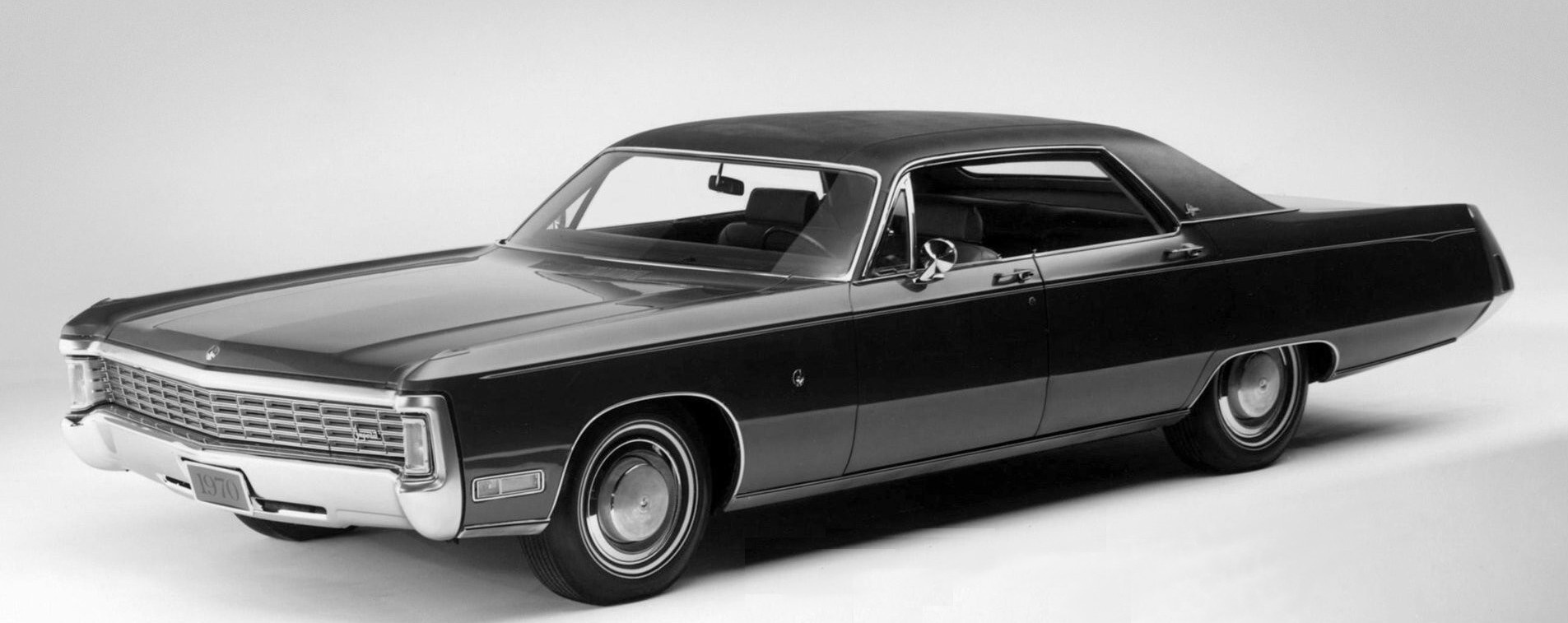
Hardtop & Hard Topor Hard-Top ( pronounced hahrd-top)
(1) In
automotive design, as hardtop, a design in which no centre post (B-pillar) is used between the
front and rear windows.
(2) As "hard top" or "hard top", a rigid, removable or retractable roof used on convertible cars (as distinct from
the historically more common folding, soft-top).
(3) Mid
twentieth-century US slang for an indoor cinema with a roof (as opposed to a
drive-in).
1947-1949:
A compound of US origin, hard + top.Hard was from the Middle English hard, from the Old English heard, from the Proto-West Germanic hard(ī),
from the Proto-Germanic harduz, from
the primitive Indo-European kort-ús,
from kret- (strong, powerful). It was
cognate with the German hart, the
Swedish hård, the Ancient Greek
κρατύς (kratús), the Sanskrit क्रतु (krátu) and the Avestanxratu.Top was from the Middle English top & toppe, from the
Old English top (top, highest part;
summit; crest; tassel, tuft; (spinning) top, ball; a tuft or ball at the
highest point of anything), from the Proto-Germanic tuppaz (braid, pigtail, end), from the primitive Indo-European
dumb- (tail, rod, staff, penis).It was
cognate with the Scots tap (top), the
North Frisian top, tap & tup (top), the Saterland Frisian Top (top), the West Frisian top
(top), the Dutch top (top,
summit, peak), the Low German Topp (top),
the German Zopf (braid, pigtail,
plait, top), the Swedish topp (top,
peak, summit, tip) and the Icelandic toppur
(top). Hardtop is a noun; the noun plural is hardtops.
Although the origins of the body-style can
be traced to the early twentieth century, the hardtop, a two or four-door car
without a central (B-pillar) post, became a recognizable model type in the late
1940s and, although never the biggest seller, was popular in the United States
until the mid 1970s when down-sizing and safety legislation led to their
extinction, the last being the full sized Chrysler lines of 1978.European manufacturers too were drawn to the
style and produced many coupes but only Mercedes-Benz and Facel Vega made four-door
hardtops in any number, the former long maintaining several lines of two-door hardtop
coupés.
1965
Lincoln Continental four-door sedan (with centre (B) pillar).
The convention of
use is that the fixed roofed vehicles without the centre (B)-pillars are called
a hardtop
whereas a removable or retractable roof for a convertible is either a hard
top or, somewhat less commonly a hard-top.The folding fabric roof is either a soft
top or soft-top, both common forms; the word softtop probably doesn't exist although it has been used by manufacturers of this and that to describe various "tops" made of stuff not wholly rigid. In the mid-1990s, the decades-old idea of the
folding metal roof was revived as an alternative to fabric but although the engineering was sound but most manufacturers have since reverted to fabric, the advantages of solid materials
outweighed by the drawbacks of weight, cost and complexity.A solid, folding top is usually called a retractable roof or folding hard-top.
1957
Ford Fairlane Skyliner (1957-1959).
Designers had toyed with the idea of the solid
retractable roof early in the twentieth century, and patents were applied for in the
1920s but the applications were allowed to lapse and it wouldn't be until
1932 one was granted in France, the first commercial release by Peugeot in
1934.Other limited-production ventures followed but it wasn't until 1957 one was sold in any volume, Ford's Fairlane
Skyliner using a system developed for but never used on the Continental Mark II (1956-1957) a very expensive (US$10,000) top-of-the range model that lasted only two unprofitable seasons until reality bit. The Skyliner's top was raised and lowered by an electric system that was a marvel in what was still substantially the
pre-electronic age; it used an array of motors, relays and switches, all
connected with literally hundreds of feet of electrical cables in nine different
colors.Despite that, the system was
reliable and could, if need be, be fixed by any competent auto-electrician who
had the wiring schematic; in its
three-season run, nearly fifty-thousand were built so although its very existence was due only to the serendipity of the apparatus being "on the shelf" after being developed for the Continental, Ford presumably amortized the investment. The possibilities of nomenclature are interesting too. With the roof in place, the Skyliner becomes also a hardtop because there's no B pillar so it's a "hardtop" with a "hard-top", something only word-nerds note.
2005 Mercedes-Benz SLK55 AMG with retractable metal roof.
After 1960, the concept was neglected,
re-visited only by a handful of low-volume specialists or small production runs
for the JDM (Japanese domestic market).The
car which more than any other turned the retractable roof into a mainstream
product was the 1996 Mercedes-Benz SLK which began as a show car, the favorable
response encouraging production.Successful, over three generations, it was in the line-up for almost twenty-five years. The idea long had intrigued those who like convertibles but were aware of the limitations of folding fabric soft-tops.
1952
Packard "Pacifica" Concept Car.
In the optimistic US of 1952 there was
in some circles a feeling “anything was possible” and it was in that spirit Saga
magazine that year held a contest for a concept car design, the winner the Packard
“Pacifica”. The Pacifica impressed Saga’s
editor enough to appear on the cover but Packard (then having problems of its
own) wasn’t tempted to begin production although one Packard fanboy (a once
numerous breed, the best known being comrade Stalin (1878-1953; Soviet leader
1924-1953) who had several) in the early 2000s built a replica, based on the
platform of a 1951 convertible. The Pacifica
was clever in that it offered three configurations (1) a closed coupé, (2) a
targa (dubbed “Opera
Roof mode”) once the central roof panel was removed and (3) a
conventional convertible (the “sleekest sport-roadster yet” according to Saga’s
editor) after the rear section was retracted (a la the method seen on the 1941 Chrysler
Thunderbolt dream car).
The
Fairlane Skyliner's top was notable for another reason: size and weight. On small roadsters, even when made from
steel, taking off and putting on a hard-top could usually be done by someone of
reasonable strength, the task made easier still if the thing instead was made
from aluminum or fibreglass. If large
and heavy, it became impossible for one and difficult even for two; some of even the smaller hard-tops (such as the Triumph Stag and the R107 Mercedes SL roadster) were infamous heavyweights. Many owners stored their tops on a trolley but the best way to make fitting or removing a top was a ceiling-mounted hoist, the winch operated manually or with an electric motor, the latter making things effortless but many prefered being able to control things with a handle because it made placement more precise. Another advantage was that while not all had the floorspace to accommodate a trolley, usually a garage had the headspace for a hoist.
1962 Pontiac Catalina convertible with Riviera "Esquire" Series 300 hard-top. Note the fake landau irons.
No manufacturer attempted a retractable hard-top on the
scale of the big Skyliner but at least one aftermarket supplier thought there
might be demand for something large and detachable. Riviera Inc, based in Cedar Rapids, Iowa, offered
them between 1963-1964 for the big (then called "full-size") General Motors
(GM) convertibles. Such was GM’s
production-line standardization, the entire range of models, spread over three years and five
divisions (Chevrolet, Buick, Oldsmobile, Pontiac & Cadillac) and three years, could be covered by just three variations (in length) of hard-top. Made from fibreglass with an external texture which emulated leather, weight
was a reasonable 80 lb (30 kg) but the sheer size rendered them unmanageable for
many and not all had storage for such a bulky item, the growth of the American automobile
meaning garages accommodative but a few years earlier were now cramped.
1962
Chevrolet Impala SS (Super Sport) convertible with Riviera "Esquire" Series 100 hard-top.
Riviera offered their basic (100 series) hard-top in black
or white, a more elaborately textured model (200 series) finished in gold or
silver while the top of the range (300 series) used the same finishes but with simulated
“landau” irons. No modification was
required to the car, the roof attaching to the standard convertible clamps, the soft-top remaining retracted. Prices started at US$295 and the company seems
to have attempted to interest GM's dealers in offering the hard-tops as a
dealer-fitter accessory but corporate interest must have been as muted as buyer
response, Riviera ceasing operations in 1964.
1935 MG NB
Magnette “Faux Cabriolet” on Triple-M chassis (chassis number NA0801).The body is believed the work of an unknown
Irish coach-builder.
Lest it be
thought Riviera adding fake landau bars to their fibreglass hard-tops was
typical American vulgarity, in the Old World across the Atlantic, their use as a decorative accoutrement
was not unknown.Most of the 738 MG
N-type Magnettes (1934-1936) were bodied as roadsters or DHCs (drop head coupé,
a style understood in Europe as a cabriolet and in the US as a convertible) and
while coach-builders like Carbodies and Allingham did a few with enclosed
bodywork, chassis NA0801 is the only known “Faux Cabriolet” and it would be
more rapid than many because the 1271 cm3 (78 cubic inch) SOHC
(single overhead camshaft) straight-six has been fitted with a side-mounted Marshall
87 supercharger.While the combination
of that many cylinders and a small displacement sounds curious, the
configuration was something of an English tradition and a product of (1) a
taxation system based on cylinder bore and (2) the attractive economies of
scale and production line rationalization of “adding two cylinders” to existing
four-cylinder units to achieve greater, smoother power with the additional
benefit of retaining the same tax-rate.Even after the taxation system was changed, some small-capacity sixes were
developed as out-growths of fours.Despite
the additional length of the engine block, many N-type Magnettes were among the
few front-engined cars to include a “frunk” (a front trunk (boot)), a small
storage compartment which sat between cowl (scuttle) and engine.
1935 MG NB
Magnette “Faux Cabriolet”.
The
scalloped shape of the front seats' squabs appeared also in the early (3.8
litre version; 1961-1964) Jaguar E-Types (1961-1974) but attractive as they were,
few complained when they were replaced by a more prosaic but also more
accommodating design.The lengths of
rope fitted just behind the door frames were for years these were known as “assist straps”, there to aid those
exiting and while not needed by the young or still agile, were a help to
many.When implemented as a rigid
fitting, they were known (unambiguously) as “grab handles” but in the US in the 1970s they were sometimes
advertised as “Lavaliere straps”.Lavaliere was a term from jewellery design
which described a pendant (typically with a single stone) suspended from a
necklace, the style named after Françoise-Louise de La Baume Le Blanc, Duchess
of La Vallière and Vaujours (1644–1710) who was, between 1661-1667 (a reasonable
run in such a profession), the mistress of Louis XIV (1638–1715; le Roi Soleil (the Sun King), King of
France 1643-1715).It’s said the
adaptation of her name for the pendants was based on the frequency with which
the accessories appeared in her many portraits.
Cadillac
Hearse based on 1987 Cadillac Brougham (used in the Lindsay Lohan film Machete
(2010), left), 1964 Alvis TE21 DHC (drophead coupé) by Park Ward (centre) and
1938 Mercedes-Benz 540K Cabriolet C by Sindelfingen (right).
The landau
irons (which some coach-builders insist should be called “carriage bars”) on
the rear side-panels emulate in style (though not function) those used on
horse-drawn carriages and early automobiles (the last probably the
Mercedes-Benz 300 (the “Adenauer”; W186 (1951-1957) & W189 (1957-1962))
Cabriolet D.On those vehicles, the
irons actually supported the folding mechanism but as a decorative device they
proved useful those hearses not fitted with rear side-windows, existing to relieve
the slab-sidedness of the expanse of flat metal.That may have been the rationale of the MG’s Irish
coach-builder (or his customer) and the bulk of the fabric on the soft-top of
the Alvis TE21 (above, centre) illustrates why the visual effect on larger convertibles
with no rear side-windows displeased some.
1967 Ford
Thunderbird sedan: it’s a strange look without the vinyl roof and would be more
bizarre still without fake landau irons.
When for 1967 Ford replaced
the convertible version of the Thunderbird with a four-door model, it also
appeared with fake landau irons.On the
two-door Thunderbirds they were just gorp (what bling used to be called in
Detroit) but the sedan was built on a relatively short wheelbase combined with
a large C-Pillar (for the desired “formal roofline”) so the only way to make
the door opening wide enough to be functional was use the “suicide” (rear
hinged) configuration and integrate some of the structure into the
C-Pillar.To disguise the trick (1) a
vinyl roof was glued on (covering also the affected part of the door) and (2) the
curve of the landau bars formed an extension of the trim-line (roof guttering).As a visual device it worked, making the four-door
Thunderbird (1967-1971) the only car ever improved by the addition of the otherwise
ghastly vinyl roof although it works best in a black-on-black combination,
further disguising things.
Publicity shot for 1961 Lincoln
Continental four-door hardtop (pre-production prototype).
One of the
anomalies in the history of the four-door hardtops was that Lincoln, in its
classic 1960s Continental, offered a a four-door pillared
sedan, a by then unique (in the US, Mercedes-Benz as late as 1962 still with one on the books) four-door convertible and, late in the run, a two-door hardtop but no four-door hardtop.That seemed curious because the structural
engineering required to produce a four door hardtop already existed in the
convertible coachwork and both Ford & Mercury had several in their ranges,
as did the many divisions of GM & Chrysler. According to the authoritative Curbside Classic, the four-door hardtop was cancelled almost on the eve of the model's release, the factory’s records indicating either ten or eleven were built (which seem to have been pre-production vehicles rather than prototypes) and
photographs survive, some of which even appeared in general-release brochures with a B-pillar air-brushed in. It seems testing had revealed that at speed, the large expanse of metal in the roof was prone to distortion which, while barely perceptible, allowed some moisture intrusion through the window seals. The only obvious solution was to use heavier gauge metal but that would have been expensive and delayed the model's release so, with some some uncertainty about the prospects of success for the brand, the decision was taken to prune the line-up. While never the biggest sellers, the four-door hardtops had always attracted attention in showrooms but for that task, Lincoln anyway had something beyond the merely exclusive, they had the eye-catching four-door convertible. So late was the decision taken not to proceed that Lincoln had already printed service bulletins, parts lists and other documents, detailing the four-door (pillared) sedan (Body Code 53A), four-door convertible (74A) & four-door hardtop (57C). Curbside Classic revealed that of the 57C count, either six or seven were converted to sedans while the fate of the "missing four" remains a mystery, there being nothing to suggest any of the phantom four ever reached public hands.Collectors chase rarities like these but they’ve
not been seen in 65-odd years so it’s presumed all were either converted to sedans or scrapped once the
decision was taken not to proceed with production.
An
alternative explanation for the body-style not reaching production was provided
by Mac's Motor City Garage which noted the intricate mechanisms fitted to the
doors of the convertible, devised to replicate the way side-windows behave when
a B-pillar is present.What the body
engineers did was craft a system in which the rear side glass seal slipped in
behind the front glass, triggering an automatic “drop-down” which made the rear
glass lower to the extent required when the door was opened.The pre-production plan had been for all these
motors and associated wiring to be fitted also to the four-door hardtop but the
assumption is the accountants must have looked at the increased costs all this
imposed and then compared the math with the sales projections, concluding the
economics were wrong.Because the body
engineering had been done for the convertible, there was no structural
necessity in the B-pillar used for the sedan (which is why it could be so impressively
slender) but it did provide an effective seal between the front and rear side
glass and much reduced wear on the weather-stripping. So, according to Mac's Motor City Garage, the
non-appearance of the planned hardtop was all about the cost savings achieved
by not having to install the hardware in the doors.
1966 Lincoln
Continental two-door hardtop.
The consensus among Lincoln gurus is the rationale for the decision was based wholly on cost.While the
Edsel's failure in the late 1950s is well storied, it’s often forgotten that nor were the huge Lincolns
of 1958-1960 a success and, with the Ford Motor
Company suddenly being run by the MBA-type “wizz kids”, the Lincoln brand too
was considered for the axe. After Lincoln booked a cumulative loss of US$60 million (then a great deal of money although that number, like the Edsel's US$250 million in red ink, might have been overstated to take advantage of the tax rules related to write-offs), that idea was considered but Lincoln was given one last chance at redemption, using
what was actually a prototype Ford Thunderbird; that was the car which emerged
as the memorable 1961 Lincoln.But, given the lukewarm reception to the last range, there
was no certainty of success so it seems the decision was taken to restrict the
range to the pillared sedan and the four-door convertible, a breakdown on the
production costs of the prototype four-door hardtops proving they would be much
more expensive to produce (by virtue of both the roof mechanism and the use of the convertible's intricate side-window assemblies).
1975 Jaguar XJC. With the ugly vinyl removed, the lovely roof-line can be admired. Although long habitually referred to as a "coupé", the factory called them the "XJ Two-Door Saloon", reserving the former designation for the E-Type (1961-1974), XJ-S (later XJS) (1975-1996) and such. Although it's the memory of the sensuous E-Type that looms over Jaguar, there are flaws in the lines and, assessed purely on the design elements, the XJC probably was the company's finest hour. They've certainly not since produced anything as elegant and, if recently published renderings of future directions are any indication, things are getting worse.
Coincidently, over a decade later, Jaguar in the UK faced a similar problem when developing the two-door hardtop version (1975-1977) of their XJ saloon (1968-1992). It was a troubled time for the UK industry and although first displayed in 1973, it wasn't until 1975 the first were delivered. One problem revealed in testing was the roof tended slightly to flex and while not a structural issue, because regulations had compelled the removal of lead from automotive paint, the movement in the metal could cause the now less flexible paint to craze and, under-capitalized, Jaguar (by then part of the doomed British Leyland conglomerate) didn't have the funds to undertake a costly re-design so the Q&D (quick & dirty) solution was to glue on a vinyl roof. It marred the look but saved the car and modern paint can now cope so a number of owners have taken the opportunity to restore their XJC to the appearance the designers intended. There
are those who claim the “crazing paint” tale is just an urban myth and the
awful stuff was glued on as a deliberate aesthetic choice because the look was
then inexplicably popular (one of many lapses of good taste in the 1970s) but the "flex" problem seems well-documented. Other problems (the dubious window sealing and the inadequate door hinges, the latter carried over from the four-door range which used shorter, lighter doors) were never fixed. It's an accident of history that in 1960 when the fate of the Lincoln four-door hardtop was being pondered, vinyl roofs (although they had been seen) were a few years away from entering the mainstream so presumably the engineers never contemplated gluing one on to try to "fix the flex" although, given the economic imperatives, perhaps even that wouldn't have allowed it to escape the axe.
End of the line: 1967 Lincoln
Continental four-door convertible.
It did work, sales volumes after a slow start
in 1961 growing to a level Lincoln had not enjoyed in years, comfortably
out-selling Imperial even if never a challenge to Cadillac. The four-door convertible's most famous owner was Lyndon Johnson (LBJ, 1908–1973; POTUS 1963-1969) who would use his to drive visitors around his Texas ranch (often with can of Pearl beer in hand according to LBJ folklore). While never a big seller (21,347 made over seven years and it achieved fewer than 4,000 sales even in its best year), it was the most publicized of the line and to this day remains a staple in film & television productions needing verisimilitude of the era. The convertible was
discontinued after 1967 when 2276 were built, the two-door hardtop introduced the year before
out-selling it five to one. The market had spoken; it would be the last convertible Lincoln ever
produced and it's now a collectable, LBJ's 1964 model in 2024 selling at auction for US$200,000 and fully restored examples without a celebrity connection regularly trade at well into five figures, illustrating the magic of the coach-work.
John Cashman (aka "The Lincoln Guru") is acknowledged as the world's
foremost authority on the 1961-1967 Lincoln Continental Convertibles.Here, in a video provided when LBJ's car (in
Arctic White (Code M) over Beige Leather (Trim 74)) was sold on the Bring-a-Trailer
on-line auction site, he explains the electrical & mechanical intricacies of
the machinery which handles the folding top and side windows. The soft-top is a wonder of analogue-era mechanical engineering.
Chrysler New
Yorker Town & Country wagons: 1960 (left) and 1961 (right).In 1960 there were 671 nine-passenger New
Yorker Town & Country wagons, production increasing the next year to 760.
There were
even four-door hardtop station wagons (which the Europeans would probably
classify as “five door”) and curiously it was the usually dowdy AMC (American
Motors Corporation) which in 1956 released the first, the impressively named Rambler
Custom Cross Country Hardtop Wagon which, in 1957, even gained a V8 engine.For 1958, the niche body-style was moved to
the bigger Ambassador series but it remained available only until 1960.Buick, Oldsmobile and Mercury also flirted
with four-door hardtop wagons all releasing models in 1957 but the GM (General
Motors) models were produced for only two seasons while the slow-selling Mercury
lasted until 1960.
Image from
1960 Dodge brochure featuring the line's two wagons, the Dart (red) and the
Polara (bronze).
In the era, the
relationship in appearance between the car in the metal and the images in the
advertising were something like what McDonalds and others do with their
burgers: indicative but exaggerated. In fairness to Chrysler, there were others in the industry who applied their artistic licence with much less restraint.
Not for the first or last time, Chrysler
were late to a trend and with the quirky four-door hardtop wagon segment, the
corporation managed to enter the market just as the rest of the industry had concluded
it wasn’t worth the effort.The 1960
Chryslers were the first to use unit-body (ie no separate chassis) construction
and both the Windsor & New Yorker Town & Country wagons included the
style and it remained in the catalogue until 1964, dropped when the new C-Body
made its debut for 1965.The companion marque
Dodge had their premium Polara available as a hardtop wagon and it was
available even with the photogenic Sonoramic cross-ram induction system.After a hiatus in 1962, the style returned the
next year in the Custom 880 series but as with the Chryslers, 1964 was the end
of the line for the four-door hardtop wagon, not just for the corporation but
the whole industry; there have been none since.
1949 Kaiser
Virginian.
In a more delicate form, Ford
reprised the roof and rear-window design for the 1951 Custom Victoria, the
company's first two-door hardtop.The Ford's look was admired but in later years the construction would prove challenging
for restorers.There was a single, continuous
weather-strip, meaning the three pieces of glass and the upright stainless
steel dividers had to be fitted into the rubber prior to the assembly being mounted on the roof.That meant a heavy, fragile
apparatus that needed at least two and preferable three strong people to do the
job. The Mercedes-Benz 300d didn’t appear in the catalogue until 1957 and by
then the US-built four-door hardtops had been on sale for two seasons and that’s
why it’s agreed it was the US industry that built “the first four door hardtops”.That was in 1949 when
the Kaiser Virginian was released although it was a fairly clumsy implementation
of the concept, the central pillars needing manually to be removed, a process
demanding the use of a tool.The
compromise was necessitated by the company lacking the resources re-engineer
their four-door sedan’s structure and although clever, it was also a fudge which
convinced neither the public nor other manufacturers.
Spanner required: 1949 Kaiser
Virginian B-Pillar. The “removable B-pillar”
idea had been seen before, the most elegant implementation probably the way
things were done on the Lincoln Zephyr Convertible Sedan (1937-1939).
The core concept was however
was sound and the major brands had the money to do things properly, lending to
the four-door cars a glamour traditionally denied as two-door convertibles and
coupés took the limelight.Of course, it
was profits from the high sales of four-door sedans and station wagons that generated the profits and economies of scale allowing the lower-volume lines to be built but the more prosaic of the breed tended often to be
relegated to the back of the showroom, the “window spot” reserved for the more
photogenic stable-mates.It might seem
strange to associated “glamour” with the rather frumpy looking 1949 Kaisers but
their design language was representative of the first generation of cars
emerging from Detroit in the late 1940s, most of what was produced between
1945-1948 being slightly revised versions of what had been on sale in 1942 when
passenger car production ceased as industrial capacity was re-directed to
military needs.
Pre-war pillarless: 1937 Bentley
4¼ Litre Park Ward Pillarless saloon (left) and 1938 Bentley 4¼-Litre Pillarless
Saloon by Park Ward (right).
It was in
1955 when Detroit’s first “true” four-door hardtops debuted on the GM B-Body, the
corporation’s “mid-market” marques Oldsmobile and Buick both offering
versions.Solid sales convinced GM to
extend availability and the next season Chevrolet, Pontiac and Cadillac all had
four-door hardtops on the books and during 1956, both Ford and Chrysler jumped on the bandwagon.Chrysler may have been
a year late but the corporation kept the four-door hardtop faith the longest,
the last not built until 1978.However,
although the Americans are right to claim it was their industry that first
mass-produced four-door hardtops, English coach-builders in the 1930s had done
a few “pillarless” four-doors with examples by Park Ward, Gurney Nutting and
Vanden Plas occasionally now appearing as curiosities on the auction circuit.Interestingly, Bentleys in this configuration
seem more numerous than Daimlers or Rolls-Royces but whether that’s a product
of the survival rate or the original production volumes is unclear because with
the decline (almost to the point of extinction) of the coach-building business,
the records are sketchy.For well-documented
reasons, there’s now less demand for all but a handful of cars of the inter-war
era but the novelty of the pillarless four-doors usually attracts some interest.
Deconstructing the oxymoronic "pillared hardtop"
Ford public relations department's press release announcing the 1974 "pillared hardtop", September 1973 (left) and the frameless rear window on a 1977 Mercury Marquis four-door "pillared hardtop".
So
it would seem settled a hard-top is a convertible’s removable roof made with
rigid materials like metal or fibreglass while a hardtop is a car with no
central pillar between the forward and rear side glass. That would be fine except that in the 1970s, Ford
decided there were also “pillared hardtops”, introducing the description on a
four-door range built on their full-sized (a breed now extinct) corporate
platform shared between 1968-1978 by Ford and Mercury. The rationale for the name was that to differentiate
between the conventional sedan which used frames around the side windows and
the pillared hardtops which used the frameless assemblies familiar from their
use in the traditional hardtops. When
the pillared hardtops were released, as part of the effort to comply with
pending rollover standards, the two door hardtop switched to being a coupé with
thick B-pillars, behind which sat a tall “opera window”, another of those
motifs the US manufacturers for years found irresistible.
1976
Cadillac Eldorado convertible, at the time: “the last American convertible”. Unlike the convertibles, the US industry's four-door hardtops were never resurrected from the 1970s coachwork cull. The styling of the original FWD Eldorado (1967) was one of the US industry's finest (as long as buyers resisted ordering the disfiguring vinyl roof) which no subsequent version matched, descending first to the baroque before in the 1980s becoming an absurd caricature. In 1976, the lines of “the last American convertible” were almost restrained compared with the excesses of earlier in the decade.
The
wheels in the picture are a minor footnote in the history of US
manufacturing.When GM’s “big” FWD (front
wheel drive) coupes debuted (the Oldsmobile Toronado for 1966, the Eldorado the
following season), although the styling of both was eye-catching, it was the
engineering which intrigued many.On
paper, coupling 7.0 litre (the Eldorado's 429 cubic inch version soon enlarged to 7.7 (472) and then 8.2 (500)) V8 with FWD sounded at least courageous but even in the early, more powerful,
versions, GM managed remarkably well to tame the characteristics inherent in
such a configuration and the transmission (the TH425 which included a chain-drive!)
proved as robust and the other heavy-duty Turbo-Hydramatics.Unlike other ranges, the Toronado and
Eldorado offered no options in wheel or wheel-cover design and because the
buyer demographic was very different for those shopping for Mustangs, Corvettes
and such, there was initially no interest from wheel manufactures in offering
an alternative; being FWD, it would have
required a different design for the mounting and with such a small potential market,
none were tempted.Later however,
California’s Western Wheel Company adapted their “Cyclone Special” (a “turbine”
style) and released it as the “Cyclone Eldorado”.It wasn’t a big seller but the volumes must
have been enough to justify continuation because Western also released a
version for the 1979-1985 Eldorados although the two were not interchangeable,
the bolt-circle 5 x 5" for the older, 5 x 4.75" for the newer.The difference in the offset was corrected
with a spacer while the wheels (Western casting #4056) were otherwise
identical.When Cadillac in the 1980s
offered a factory fitted alloy wheel, that was the end of the line for Western's Cyclone
Eldorado.
According to Ford in 1973, a “sunroof” was an opening in the roof with a sliding hatch made from a non-translucent material (metal or vinyl) while a “moonroof” included a hatch made from a transparent or semi-transparent substance (typically then glass). The advantage the moonroof offered was additional natural light could be enjoyed even if the weather (rain, temperature etc) precluded opening the hatch.A secondary, internal, sliding hatch (really an extension of the roof lining) enabled the sun to be blocked out if desired and in that configuration the cabin’s ambiance would be the same whether equipped with sunroof, moonroof or no sliding mechanism of any kind.Advances in materials mean many of what now commonly are called “sunroofs” are (by Ford’s 1973 definition) really moonroofs but the latter term has faded from use.
1973 Lincoln Continental Mark IV with moonroof.
Manufacturers in the 1970s allocated resources to refine the sunroof because, at the time, the industry’s assumption was the implications of the US NHTSA's (National Highway Traffic Safety Administration) FMVSS (Federal Motor Vehicle Safety Standards) 208 (roll-over protection, published 1970) fully would be realized, outlawing both convertibles and hardtops (certainly the four-door versions). FMVSS 208 was slated to take effect in late 1975 (when production began of passenger vehicles for the 1976 season) with FMVSS 216 (roof-crush standards) added in 1971 and applying to 1974-onwards models.There was a “transitional” exemption for convertibles but it ran only until August 1977 (a date agreed with the industry because by then Detroit’s existing convertible lines were scheduled to have reached their EoL (end of life)) at which point the roll-over and roof-crush standards universally would be applied to passenger vehicles meaning the only way a “convertible” could registered for use on public roads was if it was some interpretation of the “targa” concept (Porsche 911, Chevrolet Corvette etc), included what was, in effect a roll-cage (Triumph Stag) or (then more speculatively), some sort of device which in the event of a roll-over would automatically be activated to afford occupants the mandated level of protection and Mercedes-Benz later would include such a device on the R129 SL roadster (1998-2001).Although in 1988 there were not yet “pop-ups” on the internet to annoy us, quickly the press dubbed the R129’s innovative safety feature a “pop-up roll bar”, the factory called the apparatus automatischer Überrollbügel (automatic rollover bar).Activated by a control unit that triggered an electromagnet to release a stored spring tension, the bar was designed fully to deploy in less than a half-second if sensors detected an impending rollover although the safety-conscious could at any time raise it by pressing one of the R129’s many buttons.This was a time when the corporate tag-line “Engineered like no other car” was still a reasonable piece of “mere puffery”.
Alternative approaches to partial toplessness: 1973 Triumph Stag in Magenta (left) and 1972 Porsche 911 Targa in Silver (right). The charming but flawed Stag (1970-1977) actually needed its built-in roll cage for structural rigidity because it's underpinnings substantially were unchanged from the Triumph 2000 sedan (1963-1977) on which it was based.
Despite the myths which grew to surround the temporary extinction of convertibles from Detroit’s production lines, at the time, the industry was at best indifferent about their demise and happily would have offered immediately to kill the breed as a trade-off for a relaxation or abandonment of other looming safety standards.As motoring conditions changed and the cost of installing air-conditioning (A-C) fell, convertible sales had since the mid-1960s been in decline and the availability of the style had been pruned from many lines.Because of the additional engineering required (strengthening the platform, elaborate folding roofs with electric motors), keeping them in the range was justifiable only if volumes were high and it was obvious to all the trend was downwards, thus the industry being sanguine about the species loss.That attitude didn’t however extend to a number of British and European manufacturers which had since the early post-war years found the US market a place both receptive and lucrative for theirroadstersandcabriolets; for some, their presence in the US was sustained only by drop-top sales. By the 1970s, the very existence of the charming (if antiquated)MG&Triumphroadsters was predicated upon US sales.
High tech approach (prophylactic toplessness): Mercedes-Benz advertising for the R129 roadster (in the factory's Sicherheitsorange (safety orange) used for test vehicles). The play on words uses the German wunderbar (“wonderful” and pronounced vuhn-dah-baah) with a placement and context so an English speaking audience would read the word as “wonder bar”; it made for better advertising copy than the heading: Automatischer Überrollbügel. It had been the spectre of US legislation which accounted for Mercedes-Benz not including a cabriolet when the S-Class (W116, 1972-1980) was released, leaving the SL (R107; 1971-1989) roadster as the company’s only open car and it wasn’t until 1990 a four-seat cabriolet returned with the debut of the A124.
Chrysler was already in the courts to attempt to have a number of the upcoming regulations (focusing on those for which compliance would be most costly, particularly barrier crash and passive safety requirements) so instead of filing their own suit, a consortium of foreign manufacturers (including British Leyland & Fiat) sought to “append themselves” to the case, lodging a petition seeking judicial review of roll-over and roof-crush standards, arguing that in their present form (ie FMVSS 208 & 216), their application unfairly would render unlawful the convertible category (on which the profitability of their US operation depended).A federal appeals court late in 1972 agreed and referred the matter back to NHTSA for revision, ordering the agency to ensure the standard “…does not in fact serve to eliminate convertibles and sports cars from the United States new car market.”The court’s edit was the basis for the NHTSA making convertibles permanently exempt from roll-over & roof crush regulations.That ensured the foreign roadsters & cabriolets lived on but although the ruling would have enabled Detroit to remain in the market, it regarded the segment as one in apparently terminal decline and had no interest in allocating resources to develop new models, happily letting existing lines expire.
The “last American convertible” ceremony, Cadillac Clark Street Assembly Plant, Detroit, Michigan, 21 April 1976.
One potential “special case” may have been the Cadillac Eldorado which by 1975 was the only one of the few big US convertibles still available selling in reasonable numbers but the platform was in its final years and with no guarantee a version based on the new, smaller Eldorado (to debut in 1978) would enjoy similar success, General Motors (GM) decided it wasn’t worth the trouble but, sensing a “market opportunity”, promoted the 1976 model as the “Last American convertible”.Sales spiked, some to buyers who purchased the things as investments, assuming in years to come they’d have a collectable and book a tidy profit on-selling to those who wanted a (no longer available) big drop-top.Not only did GM use the phrase as a marketing hook; when the last of the 1976 run rolled off the Detroit production line on 21 April, the PR department, having recognized a photo opportunity, conducted a ceremony, complete with a “THE END OF AN ERA 1916-1976”) banner and a “LAST” Michigan license plate.The final 200 Fleetwood Eldorado convertibles were “white on white on white”, identically finished in white with white soft-tops, white leather seat trim with red piping, white wheel covers, red carpeting & a red instrument panel; red and blue hood (bonnet) accent stripes marked the nation’s bicentennial year.
The “last American convertible” ceremony, Cadillac Clark Street Assembly Plant, Detroit, Michigan, 21 April 1976.
Of course in 1984 a convertible returned to the Cadillac catalogue so some of those who had stashed away their 1976 models under wraps in climate controlled garages weren’t best pleased and litigation ensued, a class action filed against GM alleging the use of the (now clearly incorrect) phrase “Last American Convertible” had been “deceptive or misleading” in that it induced the plaintiffs to enter a contract which they’d not otherwise have undertaken.The suit was dismissed on the basis of there being insufficient legal grounds to support the claim, the court ruling the phrase was a “non-actionable opinion” rather than a “factual claim”, supporting GM's contention it had been a creative expression rather than a strict statement of fact and thus did not fulfil the criteria for a “deceptive advertising” violation.Additionally, the court found there was no actual harm caused to the class of plaintiffs as they failed to show they had suffered economic loss or that the advertisement had led them to make a purchase they would not otherwise have made.That aspect of the judgment has since been criticized with dark hints it was one of those “what’s good for General Motors is good for the country” moments but the documentary evidence did suggest GM at the time genuinely believed the statement to be true and no action was possible against the government on several grounds, including the doctrines of remoteness and unforeseeability.
Ronald Reagan (1911-2004, US president 1981-1989). in riding boots & spurs with 1938 LaSalle Series 50 Convertible Coupe (one of 819 produced that year), Warner Brothers Studios, Burbank California, 1941.
LaSalle was the lower-priced (although marketed more as "sporty") "companion marque" to Cadillac and a survivor of GM's (Great Depression-induced) 1931 cull of brand-names, the last LaSalle produced in 1940. Mr Regan remained fond of Cadillacs and when president was instrumental is shifting the White House's presidential fleet to them from Lincolns. Although doubtlessly Mr Reagan had fond memories of top-down motoring in sunny California (climate change not yet making things too hot, too often for them to be enjoyed in summer) and was a champion (for better and worse) of de-regulation, it's an urban myth he lobbied to ensure convertibles weren't banned in the US.
Compliant and not with FMVSS 208 as drafted. 1978 Chevrolet Corvette Coupe with T-Top roof (left) and 1978 Chrysler New Yorker, the last of the four-door hardtops (right). The indefinite extension of the "temporary exemption" of convertibles from FMVSS's roll-over standards created the curious anomaly that Chrysler could in theory have maintained a New Yorker convertible (had one existed) in production while being compelled to drop the four-door hardtop. Market realities meant the federal court never had to resolve that one and no manufacturer sought an exemption for the latter.
1966 Lincoln Continental Sedan (left) and 1974 Buick Century Luxus Colonnade Hardtop Sedan (right). Luxus was from the Latin luxus (extravagance) and appeared in several Germanic languages where it conveyed the idea of "luxury".
With "pillared hardtops", it
was actually only the ostensibly oxymoronic nomenclature which was novel, Ford’s
Lincoln Continentals combining side windows with frames which lowered into the doors and a B pillar; Lincoln
called these a sedan, then the familiar appellation in the US for all four-door
models with a centre pillar. Curiously,
in the 1960s another descriptive layer appeared (though usually not used by the
manufacturers): “post”. Thus where a
range included two-door hardtops with no pillar a coupés with one, there was
among some to adopt “coupé” and “post coupé” as a means of differentiation and
this spread, the term “post sedan” also still seen today in the collector
markets. Other manufacturers in the
1970s also used the combination of frameless side glass and a B-pillar but Ford’s
adoption of the “pillared hardtop” designation was unique; All such models in General Motors’ (GM)
“Colonnade” lines were originally described variously as “colonnade hardtop
sedans” (Buick) or “colonnade hardtops” (Chevrolet, Oldsmobile & Pontiac) and
the nickname was borrowed from architecture where colonnade refers to “a series
of regularly spaced columns supporting an entablature and often one side of a
roof”. For whatever reasons, the advertising
copy changed over the years, Buick shifting to “hardtop sedan”, Chevrolet &
Oldsmobile to “sedan” and Pontiac “colonnade hardtop sedan”. Pontiac was the last to cling to the use of “colonnade”;
by the late 1970s the novelty has passed and the consumer is usually attracted
by something “new”. Because the GM range
of sedans had for uprights (A, B & C-pillars plus a divided rear glass),
the allusion was to these as “columns”.
Ford though, was a little tricky.
Their B-pillars were designed in such as way that the thick portion was recessed
and dark, the silver centrepiece thin and more obvious, so with the windows
raised, the cars could be mistaken for a classic hardtop. It was a cheap trick but it was also clever,
in etymological terms a “fake hardtop” but before long, there was a bit of a
vogue for “fake soft-tops” which seems indisputably worse.
1975 Imperial LeBaron (left) and 1978 Chrysler New Yorker. The big Chryslers were the last of the four-door hardtops produced in the US.
The
Americans didn’t actually invent the pillarless hardtop style and although coach-builders on both sides of the Atlantic had built a handful in both two and four door form, in the
post-war years it was Detroit which with gusto took to the motif. The other geo-centre of hardtops was the JDM (Japanese Domestic Market)
which refers to vehicles produced (almost) exclusively for sale within Japan
and rarely seen beyond except in diplomatic use, as private imports, or as part
of the odd batch exported to special markets.
As an ecosystem, it exerts a special fascination for (1) those who study the
Japanese industry and (2) those who gaze enviously on the desirable versions the RoW (rest of the world) was denied. The range of high performance versions and variations in coachwork available in the JDM was wide and for those with a fondness for Japanese cars, the subject of cult-like veneration. By the late 1970s,
the handful of US four-door hardtops still on sale were hangovers from designs
which dated from the late 1960s, behemoths anyway doomed by rising gas (petrol) prices
and tightening emission controls; with the coming of 1979 (coincidently the
year of the “second oil shock”) all were gone.
In the JDM however, the interest remained and endured into the 1990s.
1965 Chevrolet Corvair Corsa (two-door hardtop, left) and 1969 Mazda Luce Coupé (right).
The
first Japanese cars to use the hardtop configuration were two-door coupés, the
Toyota Corona the first in 1965 and Nissan and Mitsubishi soon followed. One interesting thing during the era was the
elegant Izuzu 117 Coupé (1968-1980), styled by the Italian Giorgetto Giugiaro
(b 1938) which, with its slender B-pillar, anticipated Ford’s stylistic trick
although there’s nothing to suggest this was ever part of the design brief. Another of Giugiaro’s creations was the rare
Mazda Luce Coupé (1968), a true hardtop which has the quirk of being Mazda’s
only rotary-powered car to be configured with FWD. Giugiaro’s lines were hardly original because
essentially they duplicated (though few suggest "improved") those of the lovely second
generation Chevrolet Corvair (1965-1969) and does illustrate what an
outstanding compact the Corvair could have been if fitted with a conventional (front-engine
/ rear wheel drive (RWD)) drive-train.
1973 Nissan Cedric four-door Hardtop 2000 Custom Deluxe (KF230, left) and 1974 Toyota Crown Royal Saloon four-door Pillared Hardtop (2600 Series, right).
By
1972, Nissan released a version of the Laurel which was their first four-door although it was only the volume manufacturers for which the economics of scale
of such things were attractive, the smaller players such as Honda and Subaru
dabbling only with two-door models.
Toyota was the most smitten and by the late 1970s, there were hardtops
in all the passenger car lines except the smallest and the exclusive Century,
the company finding that for a relatively small investment, an increase in profit
margins of over 10% was possible. Toyota
in 1974 also followed Ford’s example in using a “pillared hardtop” style for
the up-market Crown, the exclusivity enhanced by a roofline lowered by 25 mm (1
inch); these days it’d be called a “four door coupé” (and etymologically that
is correct, as Rover had already demonstrated with a "chop-top" which surprised many upon its release in 1962). In the JDM, the last true four-door hardtops
were built in the early 1990s but Subaru continued to offer the “pillared
hardtop” style until 2010 and the extinction of the breed was most attributable
to the shifting market preference for sports utility vehicles (SUV) and such. In Australia, Mitsubishi between between 1996-2005
used frameless side-windows and a slim B-pillar on their Magna so it fitted the
definition of a “pillar hardtop” although the term was never used in marketing,
the term “hardtop” something Australians associated only with two-door coupés (Ford
and Chrysler had actually the term as a model name in the 1960s &
1970s). When the Magna was replaced by
the doomed and dreary 380 (2005-2008), Mitsubishi reverted to window frames and
chunky pillars.
Standard and Spezial coachwork on the Mercedes-Benz 300d (W189, 1957-1962).The "standard" four-door hardtop was available throughout the run while the four-door Cabriolet D was offered (off and on) between 1958-1962 and the Spezials (landaulets, high-roofs etc), most of which were for state or diplomatic use, were made on a separate assembly line in 1960-1961.The standard "greenhouse" (or glasshouse) cars are to the left, those with the high roof-line to the right.
Few European manufacturers attempted four-door hardtops and one of the handful was the 300d (W189, 1957-1962), a revised version of the W186 (300, 300b & 300c; 1951-1957) which came to be referred to as the "Adenauer" because several were used as state cars by Konrad Adenauer (1876–1967; chancellor of the FRG (West Germany) 1949-1963).Although the coachwork never exactly embraced the lines of mid-century modernism, the integration of the lines of the 1950s with the pre-war motifs appealed to the target market (commerce, diplomacy and the old & rich) and on the platform the factory built various Spezials including long wheelbase "pullmans", landaulets, high-roof limousines and four-door cabriolets (Cabriolet D in the Daimler-Benz system).The high roofline appeared sometimes on both the closed & open cars and even then, years before the assassination of John Kennedy (JFK, 1917–1963; US president 1961-1963), the greenhouse sometimes featured “bullet-proof” glass. As well as Chancellor Adenauer, the 300d is remembered also as the Popemobile (although not then labelled as such) of John XXIII (1881-1963; pope 1958-1963).
A tale of two rooflines: 1955 Chrysler C-300 (top left), 1970 Mercedes-Benz 280 SE 3.5 Coupé (top right), Rover 3.5 Coupé (bottom left) and Rover 3.5 Saloon (bottom right).
On sale only during the 1955-1956 seasons, the restrained lines of Chrysler’s elegant “Forward Look” range didn’t last long in the US as extravagance overtook Detroit but the influence endured longer in Europe, both the Mercedes-Benz W111 (1961-1971) & W112 Coupes (1962-1967) and the Rover P5 (1958-1967) & P5B (1967-1973) interpreting the shape.In the UK, Rover (a company with a history or adventurism in engineering which belies its staid image) tried to create a four-door hardtop as a more rakish version of their P5 sedan (3 Litre (P5, 1958-1957) & 3.5 Litre (P5B 1967-1973)) but were unable to perfect the sealing around the windows, something which later afflicted also the lovely two-door versions of the Jaguar & Daimler XJ. Rover instead in 1962 released a pillared version of the P5 with a lowered roof-line and some different interior fittings and named the four-door the "Coupé" which puzzled those who had become used to "coupés" being two-door machines but etymologically, Rover was correct.
Pillars, stunted pillars & "pillarless"
1959 Lancia Appia Series III
Actually,
although an accepted part of engineering jargon, to speak of the classic
four-door hardtops as “pillarless” is, in the narrow technical sense,
misleading because almost all used a truncated B-pillar, ending at the
belt-line where the greenhouse begins. The
stunted device was required to provide a secure anchor point for the rear door's hinges (or latches for both if suicide doors were used) and in the case of the latter, being of frameless
construction, without the upright, the doors would be able to be locked in
place only at the sill, the physics of which presents a challenge because even
in vehicles with high torsional rigidity, there will be movement. The true pillarless design was successfully executed
by some but those manufacturers used doors with sturdy window frames,
permitting latch points at both sill and roof, Lancia offering the
configuration on a number of sedans including the Ardea (1939-1953), Aurelia
(1950-1958) & Appia (1953-1963). The
approach demanded a more intricate locking mechanism but the engineering was
simple and on the Lancias it worked and was reliable, buyers enjoying the ease
of ingress & egress. It's sad the company's later attachment to front wheel drive (FWD) ultimately doomed Lancia because in every other aspect of engineering, few others were as adept at producing such fine small-displacement vehicles.
1961 Facel Vega II (a two door hardtop with the unusual "feature" of the rear side-glass being hinged from the C-pillar).
Less
successful with doors was the Facel Vega Excellence, built in two series between
1958-1964.Facel Vega was a French
company which was a pioneer in what proved for almost two decades the
interesting and lucrative business of the trans-Atlantic hybrid, the combination
of stylish European coachwork with cheap, refined, powerful and reliable American engine-transmission
combinations.Like most in the genre,
the bulk of Facel Vega’s production was big (by European standards) coupés (and
the odd cabriolet) and they enjoyed much success, the company doomed only when
it augmented the range with the Facellia, a smaller car.Conceptually, adding the smaller coupés &
cabriolets was a good idea because it was obvious the gap in the market existed
but the mistake was to pander to the feelings of politicians and use a French
designed & built engine which proved not only fragile but so fundamentally
flawed rectification was impossible.By
the time the car had been re-engineered to use the famously durable Volvo B18
engine, the combination of the cost of the warranty claims and reputational
damage meant bankruptcy was impending and in 1964 the company ceased operation.The surviving “big” Facel Vegas, powered by a
variety of big-block Chrysler V8s, are now highly collectable and priced
accordingly.
1960 Facel Vega Excellence EX1
Compared
with that debacle, the problem besetting the Excellence
was less serious but was embarrassing and, like the Facellia's unreliable engine, couldn’t be fixed.The Excellence was a
four-door sedan, a configuration also offered by a handful of other
trans-Atlantic players (including Iso, DeTomaso & Monteverdi) and although volumes were low, because the platforms were elongations of those used on
their coupés, production & development costs were modest so with high prices,
profits were good.Facel Vega however
attempted what no others dared: combine eye-catching suicide doors, frameless side glass and coachwork which was truly pillarless, necessitating latching &
locking mechanisms in the sills.With the
doors open, it was a dramatic scene of lush leather and highly polished burl
walnut (which was actually painted metal) and the intricate lock mechanism was
precisely machined and worked well… on a test bench.Unfortunately, on the road, the
pillarless centre section was inclined slightly to flex when subject to lateral
forces (such as those imposed when turning corners) and this could release the
locks, springing the doors open.Owners reported
this happening while turning corners and it should be remembered (1) lateral
force increases as speed rises and (2) this was the pre-seatbelt era.There appear to be no confirmed reports of
unfortunate souls being ejected by centrifugal force through an suddenly open door (the author Albert Camus (1913–1960) was killed when the Facel Vega HK500 two-door coupé in which he was a passenger hit a tree, an accident unrelated to doors) but clearly the risk was there.Revisions to the mechanism improved the security but the problem was
never completely solved; despite that the factory did offer a revised second
series Excellence in 1961, abandoning the dog-leg style windscreen and toning
down the fins, both of which had become passé but in three years only a handful
were sold.By the time the factory was
shuttered in 1964, total Excellence production stood at 148 EX1s (Series One; 1958-1961)
& 8 EX2s (Series Two; 1961-1964).
The Mercedes-Benz R230 SL: Lindsay Lohan going topless (in an automotive sense) in
2005 SL 65 AMG with folding roof lowered (left), Ms Lohan's SL 65 AMG (with folding roof erected) later when on sale (centre)
& 2009 SL 65 AMG Black Series with fixed-roof (right).
At the time, uniquely in the SL lineage, the R230 (2001-2011) was available with both a retractable hard top and
with a fixed roof but no soft-top was ever offered (the configuration continued in the R231 (2012-2020) while the R232 (since 2021) reverted to fabric).Having no B pillar, most of the R230s were
thus a hardtop with a hard-top but the SL 65 AMG Black Series (2008–2011, 400 of which were built, 175 for the US market, 225 for the RoW) used
a fixed roof fabricated using a carbon fibre composite, something which
contributed to the Black Series weighing some 250 kilograms (550 lb) less
than the standard SL 65 AMG. A production of 350 is sometimes quoted but those maintaining the registers insist the count was 400. Of the
road-going SLs built since 1954, the Black Series R230 was one of only three
models sold without a retractable roof of some kind, the others being the
original 300 SL Gullwing (W198, 1954-1957) and the “California coupé” option offered
between 1967-1971 for the W113 (1963-1971) "Pagoda" roadster (and thus available only
for the 250 SL (1966-1968) & 280 SL (1967-1971)).The "California coupé" (a nickname from the market, the factory only ever using "SL Coupé") was simply an SL supplied
with only the removable hard-top and no soft-top, a folding bench seat included
which was really suitable only for small children.The name California was chosen presumably because
of the association of the place with sunshine and hence a place where one could
be confident it was safe to go for a drive without the fear of unexpected rain.Despite the name, the California coupé
was available outside the US (a few even built in right-hand drive form) and although
the North American market absorbed most of the production, a remarkable number seem to exist in Scandinavia.
A classic roadster, the C3 Chevrolet Corvette L88: Convertible with soft-top lowered (top left), convertible with hard-top in place (top right), convertible with soft-top erected (bottom left) and coupé (roof with two removable panels (T-top)) (bottom right). The four vehicles in these images account for 2.040816% of the 196 C3 L88 Corvettes produced (80 in 1968; 116 in 1969) and the L88 count constitutes .000361% of total C3 production.