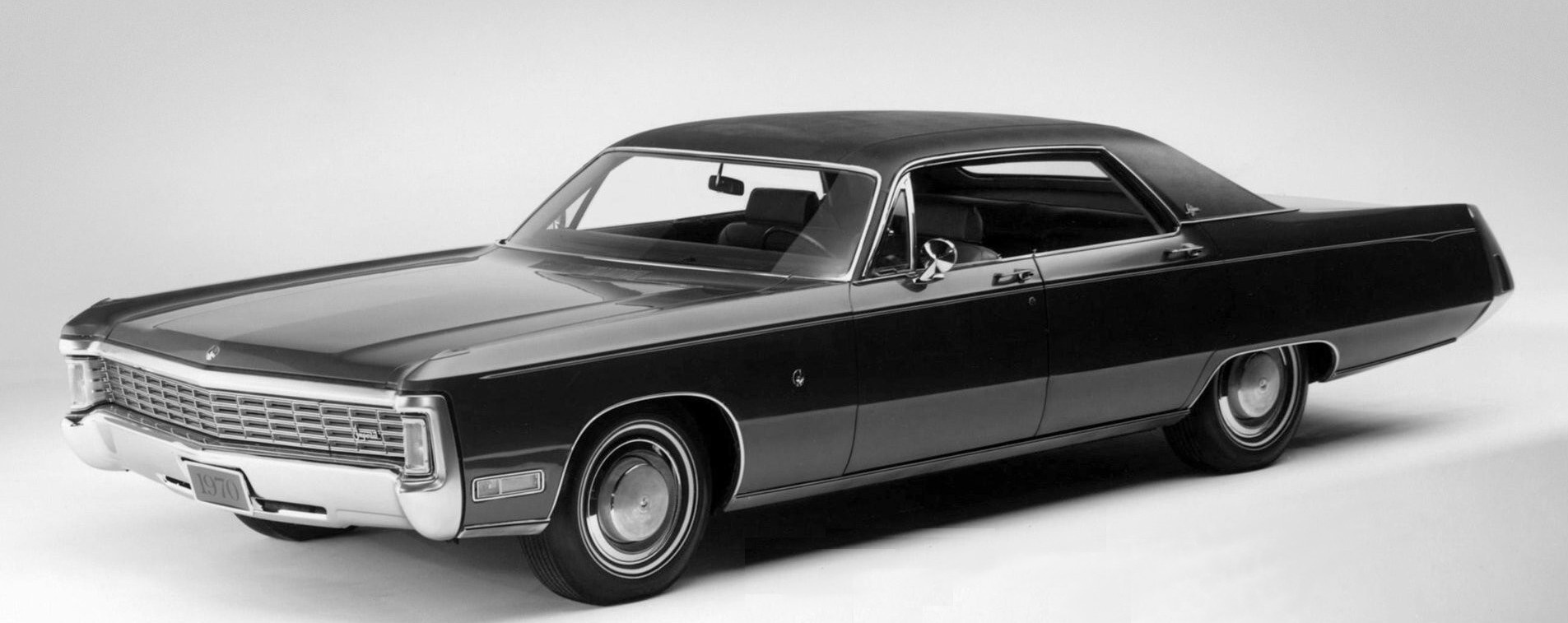
Accouterment (pronounced uh-koo-ter-muhnt
or uh-koo-truh-muhnt)
(1) A
clothing accessory or a piece of equipment regarded as an accessory (sometimes essential,
sometimes not, depending on context).
(2) In
military jargon, a piece of equipment carried by a soldier, excluding weapons
and items of uniform.
(3) By
extension, an identifying yet superficial characteristic; a characteristic feature,
object, or sign associated with a particular niche, role, situation etc.
(4) The
act of accoutering; furnishing (archaic since Middle English).
1540-1550:
From the Middle French accoutrement
& accoustrement, from accoustrer, from the Old French acostrer (arrange, sew up).As in English, in French, the noun accoutrement
was used usually in the plural (accoutrements) in the sense of “personal
clothing and equipment”, from accoustrement,
from accoustrer, from the Old French acostrer (arrange, dispose, put on
(clothing); sew up).In French, the word
was used in a derogatory way to refer to “over-elaborate clothing” but was used
neutrally in the kitchen, chefs using the word of additions to food which
enhanced the flavor.The verb accouter (also accoutre) (to dress or equip" (especially in military uniforms
and other gear), was from the French acoutrer,
from the thirteenth century acostrer (arrange,
dispose, put on (clothing)), from the Vulgar Latin accosturare (to sew together, sew up), the construct being ad- (to) + consutura (a sewing together), from consutus, past participle of consuere
(to sew together), the construct being con-
+ suere (to sew), from the primitive
Indo-European root syu- (to bind, sew).
The Latin prefix con- was from the preposition cum (with), from the Old Latin com, from the Proto-Italic kom, from the primitive Indo- European ḱóm (next to, at, with, along).It was cognate with the Proto-Germanic ga- (co-), the Proto-Slavic sъ(n) (with)
and the Proto-Germanic hansō.It was used with certain words to add a
notion similar to those conveyed by with, together, or joint or with certain
words to intensify their meaning.The synonyms include equipment, gear, trappings & accessory.The spelling accoutrement (accoutrements the
plural) remains common in the UK and much of the English-speaking world which
emerged from the old British Empire; the spelling in North America universally
is accouterement.The English spelling
reflects the French pronunciation used in the sixteenth century. Accouterment is a noun; the noun plural (by
far the most commonly used form) is accouterments.
In
the military, the equipment supplied to (and at different times variously worn
or carried by) personnel tends to be divided into "materiel" and
"accouterments".Between
countries, at the margins, there are differences in classification but as a
general principle:Materiel: The core equipment, supplies, vehicles, platforms etc
used by a military force to conduct its operations. This definition casts a wide vista and covers
everything from a bayonet to an inter-continental ballistic missile (ICBM),
from motorcycles to tanks and from radio equipment to medical supplies.Essentially, in the military, “materiel” is used
broadly to describe tangible assets and resources used in the core business of
war.Accouterments: These are the items or accessories associated with a
specific activity or role. Is some
cases, an item classified as an accouterment could with some justification be
called materiel and there is often a tradition associated with the classification.In the context of clothing for example, the basic
uniform is materiel whereas things like belts, holsters, webbing and pouches
are accouterments, even though the existence of these pieces is essential to
the efficient operation of weapons which are certainly materiel.
The My Scene Goes Hollywood Lindsay Lohan Doll
was supplied with a range of accessories and accouterments.Items like sunglasses, handbags, shoes &
boots, earrings, necklaces, bracelets and the faux fur "mullet"
frock-coat were probably accessories.The director's chair, laptop, popcorn, magazines, DVD, makeup case, stanchions (with faux velvet rope) and such were
probably accouterments.
In
the fashion business, one perhaps might be able to create the criteria by which
it could be decided whether a certain item should be classified as “an accessory”
or “an “accouterment” but it seems a significantly pointless exercise and were
one to reverse the index, a list of accessories would likely be as convincing
as a list of accouterments. Perhaps the
most plausible distinction would be to suggest accessories are items added to an outfit to enhance or complete the
look (jewelry, handbags, scarves, hats, sunglasses, belts etc) while accouterments are something
thematically related but in some way separate; while one might choose the same
accessories for an outfit regardless of the event to be attended, the choice of
accouterments might be event-specific.
So, the same scarf might be worn because it works so well with the dress
but the binoculars would be added only if going to the races, the former an accessory
to the outfit, the latter an accouterment for a day at the track. That seems as close as possible to a working
definition but many will continue to use the terms interchangeably.
Hardtop & Hard Topor Hard-Top ( pronounced hahrd-top)
(1) In
automotive design, as hardtop, a design in which no centre post (B-pillar) is used between the
front and rear windows.
(2) As "hard top" or "hard top", a rigid, removable or retractable roof used on convertible cars (as distinct from
the historically more common folding, soft-top).
(3) Mid
twentieth-century US slang for an indoor cinema with a roof (as opposed to a
drive-in).
1947-1949:
A compound of US origin, hard + top.Hard was from the Middle English hard, from the Old English heard, from the Proto-West Germanic hard(ī),
from the Proto-Germanic harduz, from
the primitive Indo-European kort-ús,
from kret- (strong, powerful). It was
cognate with the German hart, the
Swedish hård, the Ancient Greek
κρατύς (kratús), the Sanskrit क्रतु (krátu) and the Avestanxratu.Top was from the Middle English top & toppe, from the
Old English top (top, highest part;
summit; crest; tassel, tuft; (spinning) top, ball; a tuft or ball at the
highest point of anything), from the Proto-Germanic tuppaz (braid, pigtail, end), from the primitive Indo-European
dumb- (tail, rod, staff, penis).It was
cognate with the Scots tap (top), the
North Frisian top, tap & tup (top), the Saterland Frisian Top (top), the West Frisian top
(top), the Dutch top (top,
summit, peak), the Low German Topp (top),
the German Zopf (braid, pigtail,
plait, top), the Swedish topp (top,
peak, summit, tip) and the Icelandic toppur
(top). Hardtop is a noun; the noun plural is hardtops.
Although the origins of the body-style can
be traced to the early twentieth century, the hardtop, a two or four-door car
without a central (B-pillar) post, became a recognizable model type in the late
1940s and, although never the biggest seller, was popular in the United States
until the mid 1970s when down-sizing and safety legislation led to their
extinction, the last being the full sized Chrysler lines of 1978.European manufacturers too were drawn to the
style and produced many coupes but only Mercedes-Benz and Facel Vega made four-door
hardtops in any number, the former long maintaining several lines of two-door hardtop
coupés.
1965
Lincoln Continental four-door sedan (with centre (B) pillar).
The convention of
use is that the fixed roofed vehicles without the centre (B)-pillars are called
a hardtop
whereas a removable or retractable roof for a convertible is either a hard
top or, somewhat less commonly a hard-top.The folding fabric roof is either a soft
top or soft-top, both common forms; the word softtop probably doesn't exist although it has been used by manufacturers of this and that to describe various "tops" made of stuff not wholly rigid. In the mid-1990s, the decades-old idea of the
folding metal roof was revived as an alternative to fabric but although the engineering was sound but most manufacturers have since reverted to fabric, the advantages of solid materials
outweighed by the drawbacks of weight, cost and complexity.A solid, folding top is usually called a retractable roof or folding hard-top.
1957
Ford Fairlane Skyliner (1957-1959).
Designers had toyed with the idea of the solid
retractable roof early in the twentieth century, and patents were applied for in the
1920s but the applications were allowed to lapse and it wouldn't be until
1932 one was granted in France, the first commercial release by Peugeot in
1934.Other limited-production ventures followed but it wasn't until 1957 one was sold in any volume, Ford's Fairlane
Skyliner using a system developed for but never used on the Continental Mark II (1956-1957) a very expensive (US$10,000) top-of-the range model that lasted only two unprofitable seasons until reality bit. The Skyliner's top was raised and lowered by an electric system that was a marvel in what was still substantially the
pre-electronic age; it used an array of motors, relays and switches, all
connected with literally hundreds of feet of electrical cables in nine different
colors.Despite that, the system was
reliable and could, if need be, be fixed by any competent auto-electrician who
had the wiring schematic; in its
three-season run, nearly fifty-thousand were built so although its very existence was due only to the serendipity of the apparatus being "on the shelf" after being developed for the Continental, Ford presumably amortized the investment. The possibilities of nomenclature are interesting too. With the roof in place, the Skyliner becomes also a hardtop because there's no B pillar so it's a "hardtop" with a "hard-top", something only word-nerds note.
2005 Mercedes-Benz SLK55 AMG with retractable metal roof.
After 1960, the concept was neglected,
re-visited only by a handful of low-volume specialists or small production runs
for the JDM (Japanese domestic market).The
car which more than any other turned the retractable roof into a mainstream
product was the 1996 Mercedes-Benz SLK which began as a show car, the favorable
response encouraging production.Successful, over three generations, it was in the line-up for almost twenty-five years. The idea long had intrigued those who like convertibles but were aware of the limitations of folding fabric soft-tops.
1952
Packard "Pacifica" Concept Car.
In the optimistic US of 1952 there was
in some circles a feeling “anything was possible” and it was in that spirit Saga
magazine that year held a contest for a concept car design, the winner the Packard
“Pacifica”. The Pacifica impressed Saga’s
editor enough to appear on the cover but Packard (then having problems of its
own) wasn’t tempted to begin production although one Packard fanboy (a once
numerous breed, the best known being comrade Stalin (1878-1953; Soviet leader
1924-1953) who had several) in the early 2000s built a replica, based on the
platform of a 1951 convertible. The Pacifica
was clever in that it offered three configurations (1) a closed coupé, (2) a
targa (dubbed “Opera
Roof mode”) once the central roof panel was removed and (3) a
conventional convertible (the “sleekest sport-roadster yet” according to Saga’s
editor) after the rear section was retracted (a la the method seen on the 1941 Chrysler
Thunderbolt dream car).
The
Fairlane Skyliner's top was notable for another reason: size and weight. On small roadsters, even when made from
steel, taking off and putting on a hard-top could usually be done by someone of
reasonable strength, the task made easier still if the thing instead was made
from aluminum or fibreglass. If large
and heavy, it became impossible for one and difficult even for two; some of even the smaller hard-tops (such as the Triumph Stag and the R107 Mercedes SL roadster) were infamous heavyweights. Many owners stored their tops on a trolley but the best way to make fitting or removing a top was a ceiling-mounted hoist, the winch operated manually or with an electric motor, the latter making things effortless but many prefered being able to control things with a handle because it made placement more precise. Another advantage was that while not all had the floorspace to accommodate a trolley, usually a garage had the headspace for a hoist.
1962 Pontiac Catalina convertible with Riviera "Esquire" Series 300 hard-top. Note the fake landau irons.
No manufacturer attempted a retractable hard-top on the
scale of the big Skyliner but at least one aftermarket supplier thought there
might be demand for something large and detachable. Riviera Inc, based in Cedar Rapids, Iowa, offered
them between 1963-1964 for the big (then called "full-size") General Motors
(GM) convertibles. Such was GM’s
production-line standardization, the entire range of models, spread over three years and five
divisions (Chevrolet, Buick, Oldsmobile, Pontiac & Cadillac) and three years, could be covered by just three variations (in length) of hard-top. Made from fibreglass with an external texture which emulated leather, weight
was a reasonable 80 lb (30 kg) but the sheer size rendered them unmanageable for
many and not all had storage for such a bulky item, the growth of the American automobile
meaning garages accommodative but a few years earlier were now cramped.
1962
Chevrolet Impala SS (Super Sport) convertible with Riviera "Esquire" Series 100 hard-top.
Riviera offered their basic (100 series) hard-top in black
or white, a more elaborately textured model (200 series) finished in gold or
silver while the top of the range (300 series) used the same finishes but with simulated
“landau” irons. No modification was
required to the car, the roof attaching to the standard convertible clamps, the soft-top remaining retracted. Prices started at US$295 and the company seems
to have attempted to interest GM's dealers in offering the hard-tops as a
dealer-fitter accessory but corporate interest must have been as muted as buyer
response, Riviera ceasing operations in 1964.
1935 MG NB
Magnette “Faux Cabriolet” on Triple-M chassis (chassis number NA0801).The body is believed the work of an unknown
Irish coach-builder.
Lest it be
thought Riviera adding fake landau bars to their fibreglass hard-tops was
typical American vulgarity, in the Old World across the Atlantic, their use as a decorative accoutrement
was not unknown.Most of the 738 MG
N-type Magnettes (1934-1936) were bodied as roadsters or DHCs (drop head coupé,
a style understood in Europe as a cabriolet and in the US as a convertible) and
while coach-builders like Carbodies and Allingham did a few with enclosed
bodywork, chassis NA0801 is the only known “Faux Cabriolet” and it would be
more rapid than many because the 1271 cm3 (78 cubic inch) SOHC
(single overhead camshaft) straight-six has been fitted with a side-mounted Marshall
87 supercharger.While the combination
of that many cylinders and a small displacement sounds curious, the
configuration was something of an English tradition and a product of (1) a
taxation system based on cylinder bore and (2) the attractive economies of
scale and production line rationalization of “adding two cylinders” to existing
four-cylinder units to achieve greater, smoother power with the additional
benefit of retaining the same tax-rate.Even after the taxation system was changed, some small-capacity sixes were
developed as out-growths of fours.Despite
the additional length of the engine block, many N-type Magnettes were among the
few front-engined cars to include a “frunk” (a front trunk (boot)), a small
storage compartment which sat between cowl (scuttle) and engine.
1935 MG NB
Magnette “Faux Cabriolet”.
The
scalloped shape of the front seats' squabs appeared also in the early (3.8
litre version; 1961-1964) Jaguar E-Types (1961-1974) but attractive as they were,
few complained when they were replaced by a more prosaic but also more
accommodating design.The lengths of
rope fitted just behind the door frames were for years these were known as “assist straps”, there to aid those
exiting and while not needed by the young or still agile, were a help to
many.When implemented as a rigid
fitting, they were known (unambiguously) as “grab handles” but in the US in the 1970s they were sometimes
advertised as “Lavaliere straps”.Lavaliere was a term from jewellery design
which described a pendant (typically with a single stone) suspended from a
necklace, the style named after Françoise-Louise de La Baume Le Blanc, Duchess
of La Vallière and Vaujours (1644–1710) who was, between 1661-1667 (a reasonable
run in such a profession), the mistress of Louis XIV (1638–1715; le Roi Soleil (the Sun King), King of
France 1643-1715).It’s said the
adaptation of her name for the pendants was based on the frequency with which
the accessories appeared in her many portraits.
Cadillac
Hearse based on 1987 Cadillac Brougham (used in the Lindsay Lohan film Machete
(2010), left), 1964 Alvis TE21 DHC (drophead coupé) by Park Ward (centre) and
1938 Mercedes-Benz 540K Cabriolet C by Sindelfingen (right).
The landau
irons (which some coach-builders insist should be called “carriage bars”) on
the rear side-panels emulate in style (though not function) those used on
horse-drawn carriages and early automobiles (the last probably the
Mercedes-Benz 300 (the “Adenauer”; W186 (1951-1957) & W189 (1957-1962))
Cabriolet D.On those vehicles, the
irons actually supported the folding mechanism but as a decorative device they
proved useful those hearses not fitted with rear side-windows, existing to relieve
the slab-sidedness of the expanse of flat metal.That may have been the rationale of the MG’s Irish
coach-builder (or his customer) and the bulk of the fabric on the soft-top of
the Alvis TE21 (above, centre) illustrates why the visual effect on larger convertibles
with no rear side-windows displeased some.
1967 Ford
Thunderbird sedan: it’s a strange look without the vinyl roof and would be more
bizarre still without fake landau irons.
When for 1967 Ford replaced
the convertible version of the Thunderbird with a four-door model, it also
appeared with fake landau irons.On the
two-door Thunderbirds they were just gorp (what bling used to be called in
Detroit) but the sedan was built on a relatively short wheelbase combined with
a large C-Pillar (for the desired “formal roofline”) so the only way to make
the door opening wide enough to be functional was use the “suicide” (rear
hinged) configuration and integrate some of the structure into the
C-Pillar.To disguise the trick (1) a
vinyl roof was glued on (covering also the affected part of the door) and (2) the
curve of the landau bars formed an extension of the trim-line (roof guttering).As a visual device it worked, making the four-door
Thunderbird (1967-1971) the only car ever improved by the addition of the otherwise
ghastly vinyl roof although it works best in a black-on-black combination,
further disguising things.
Publicity shot for 1961 Lincoln
Continental four-door hardtop (pre-production prototype).
One of the
anomalies in the history of the four-door hardtops was that Lincoln, in its
classic 1960s Continental, offered a a four-door pillared
sedan, a by then unique (in the US, Mercedes-Benz as late as 1962 still with one on the books) four-door convertible and, late in the run, a two-door hardtop but no four-door hardtop.That seemed curious because the structural
engineering required to produce a four door hardtop already existed in the
convertible coachwork and both Ford & Mercury had several in their ranges,
as did the many divisions of GM & Chrysler. According to the authoritative Curbside Classic, the four-door hardtop was cancelled almost on the eve of the model's release, the factory’s records indicating either ten or eleven were built (which seem to have been pre-production vehicles rather than prototypes) and
photographs survive, some of which even appeared in general-release brochures with a B-pillar air-brushed in. It seems testing had revealed that at speed, the large expanse of metal in the roof was prone to distortion which, while barely perceptible, allowed some moisture intrusion through the window seals. The only obvious solution was to use heavier gauge metal but that would have been expensive and delayed the model's release so, with some some uncertainty about the prospects of success for the brand, the decision was taken to prune the line-up. While never the biggest sellers, the four-door hardtops had always attracted attention in showrooms but for that task, Lincoln anyway had something beyond the merely exclusive, they had the eye-catching four-door convertible. So late was the decision taken not to proceed that Lincoln had already printed service bulletins, parts lists and other documents, detailing the four-door (pillared) sedan (Body Code 53A), four-door convertible (74A) & four-door hardtop (57C). Curbside Classic revealed that of the 57C count, either six or seven were converted to sedans while the fate of the "missing four" remains a mystery, there being nothing to suggest any of the phantom four ever reached public hands.Collectors chase rarities like these but they’ve
not been seen in 65-odd years so it’s presumed all were either converted to sedans or scrapped once the
decision was taken not to proceed with production.
An
alternative explanation for the body-style not reaching production was provided
by Mac's Motor City Garage which noted the intricate mechanisms fitted to the
doors of the convertible, devised to replicate the way side-windows behave when
a B-pillar is present.What the body
engineers did was craft a system in which the rear side glass seal slipped in
behind the front glass, triggering an automatic “drop-down” which made the rear
glass lower to the extent required when the door was opened.The pre-production plan had been for all these
motors and associated wiring to be fitted also to the four-door hardtop but the
assumption is the accountants must have looked at the increased costs all this
imposed and then compared the math with the sales projections, concluding the
economics were wrong.Because the body
engineering had been done for the convertible, there was no structural
necessity in the B-pillar used for the sedan (which is why it could be so impressively
slender) but it did provide an effective seal between the front and rear side
glass and much reduced wear on the weather-stripping. So, according to Mac's Motor City Garage, the
non-appearance of the planned hardtop was all about the cost savings achieved
by not having to install the hardware in the doors.
1966 Lincoln
Continental two-door hardtop.
The consensus among Lincoln gurus is the rationale for the decision was based wholly on cost.While the
Edsel's failure in the late 1950s is well storied, it’s often forgotten that nor were the huge Lincolns
of 1958-1960 a success and, with the Ford Motor
Company suddenly being run by the MBA-type “wizz kids”, the Lincoln brand too
was considered for the axe. After Lincoln booked a cumulative loss of US$60 million (then a great deal of money although that number, like the Edsel's US$250 million in red ink, might have been overstated to take advantage of the tax rules related to write-offs), that idea was considered but Lincoln was given one last chance at redemption, using
what was actually a prototype Ford Thunderbird; that was the car which emerged
as the memorable 1961 Lincoln.But, given the lukewarm reception to the last range, there
was no certainty of success so it seems the decision was taken to restrict the
range to the pillared sedan and the four-door convertible, a breakdown on the
production costs of the prototype four-door hardtops proving they would be much
more expensive to produce (by virtue of both the roof mechanism and the use of the convertible's intricate side-window assemblies).
1975 Jaguar XJC. With the ugly vinyl removed, the lovely roof-line can be admired. Although long habitually referred to as a "coupé", the factory called them the "XJ Two-Door Saloon", reserving the former designation for the E-Type (1961-1974), XJ-S (later XJS) (1975-1996) and such. Although it's the memory of the sensuous E-Type that looms over Jaguar, there are flaws in the lines and, assessed purely on the design elements, the XJC probably was the company's finest hour. They've certainly not since produced anything as elegant and, if recently published renderings of future directions are any indication, things are getting worse.
Coincidently, over a decade later, Jaguar in the UK faced a similar problem when developing the two-door hardtop version (1975-1977) of their XJ saloon (1968-1992). It was a troubled time for the UK industry and although first displayed in 1973, it wasn't until 1975 the first were delivered. One problem revealed in testing was the roof tended slightly to flex and while not a structural issue, because regulations had compelled the removal of lead from automotive paint, the movement in the metal could cause the now less flexible paint to craze and, under-capitalized, Jaguar (by then part of the doomed British Leyland conglomerate) didn't have the funds to undertake a costly re-design so the Q&D (quick & dirty) solution was to glue on a vinyl roof. It marred the look but saved the car and modern paint can now cope so a number of owners have taken the opportunity to restore their XJC to the appearance the designers intended. There
are those who claim the “crazing paint” tale is just an urban myth and the
awful stuff was glued on as a deliberate aesthetic choice because the look was
then inexplicably popular (one of many lapses of good taste in the 1970s) but the "flex" problem seems well-documented. Other problems (the dubious window sealing and the inadequate door hinges, the latter carried over from the four-door range which used shorter, lighter doors) were never fixed. It's an accident of history that in 1960 when the fate of the Lincoln four-door hardtop was being pondered, vinyl roofs (although they had been seen) were a few years away from entering the mainstream so presumably the engineers never contemplated gluing one on to try to "fix the flex" although, given the economic imperatives, perhaps even that wouldn't have allowed it to escape the axe.
End of the line: 1967 Lincoln
Continental four-door convertible.
It did work, sales volumes after a slow start
in 1961 growing to a level Lincoln had not enjoyed in years, comfortably
out-selling Imperial even if never a challenge to Cadillac. The four-door convertible's most famous owner was Lyndon Johnson (LBJ, 1908–1973; POTUS 1963-1969) who would use his to drive visitors around his Texas ranch (often with can of Pearl beer in hand according to LBJ folklore). While never a big seller (21,347 made over seven years and it achieved fewer than 4,000 sales even in its best year), it was the most publicized of the line and to this day remains a staple in film & television productions needing verisimilitude of the era. The convertible was
discontinued after 1967 when 2276 were built, the two-door hardtop introduced the year before
out-selling it five to one. The market had spoken; it would be the last convertible Lincoln ever
produced and it's now a collectable, LBJ's 1964 model in 2024 selling at auction for US$200,000 and fully restored examples without a celebrity connection regularly trade at well into five figures, illustrating the magic of the coach-work.
John Cashman (aka "The Lincoln Guru") is acknowledged as the world's
foremost authority on the 1961-1967 Lincoln Continental Convertibles.Here, in a video provided when LBJ's car (in
Arctic White (Code M) over Beige Leather (Trim 74)) was sold on the Bring-a-Trailer
on-line auction site, he explains the electrical & mechanical intricacies of
the machinery which handles the folding top and side windows. The soft-top is a wonder of analogue-era mechanical engineering.
Chrysler New
Yorker Town & Country wagons: 1960 (left) and 1961 (right).In 1960 there were 671 nine-passenger New
Yorker Town & Country wagons, production increasing the next year to 760.
There were
even four-door hardtop station wagons (which the Europeans would probably
classify as “five door”) and curiously it was the usually dowdy AMC (American
Motors Corporation) which in 1956 released the first, the impressively named Rambler
Custom Cross Country Hardtop Wagon which, in 1957, even gained a V8 engine.For 1958, the niche body-style was moved to
the bigger Ambassador series but it remained available only until 1960.Buick, Oldsmobile and Mercury also flirted
with four-door hardtop wagons all releasing models in 1957 but the GM (General
Motors) models were produced for only two seasons while the slow-selling Mercury
lasted until 1960.
Image from
1960 Dodge brochure featuring the line's two wagons, the Dart (red) and the
Polara (bronze).
In the era, the
relationship in appearance between the car in the metal and the images in the
advertising were something like what McDonalds and others do with their
burgers: indicative but exaggerated. In fairness to Chrysler, there were others in the industry who applied their artistic licence with much less restraint.
Not for the first or last time, Chrysler
were late to a trend and with the quirky four-door hardtop wagon segment, the
corporation managed to enter the market just as the rest of the industry had concluded
it wasn’t worth the effort.The 1960
Chryslers were the first to use unit-body (ie no separate chassis) construction
and both the Windsor & New Yorker Town & Country wagons included the
style and it remained in the catalogue until 1964, dropped when the new C-Body
made its debut for 1965.The companion marque
Dodge had their premium Polara available as a hardtop wagon and it was
available even with the photogenic Sonoramic cross-ram induction system.After a hiatus in 1962, the style returned the
next year in the Custom 880 series but as with the Chryslers, 1964 was the end
of the line for the four-door hardtop wagon, not just for the corporation but
the whole industry; there have been none since.
1949 Kaiser
Virginian.
In a more delicate form, Ford
reprised the roof and rear-window design for the 1951 Custom Victoria, the
company's first two-door hardtop.The Ford's look was admired but in later years the construction would prove challenging
for restorers.There was a single, continuous
weather-strip, meaning the three pieces of glass and the upright stainless
steel dividers had to be fitted into the rubber prior to the assembly being mounted on the roof.That meant a heavy, fragile
apparatus that needed at least two and preferable three strong people to do the
job. The Mercedes-Benz 300d didn’t appear in the catalogue until 1957 and by
then the US-built four-door hardtops had been on sale for two seasons and that’s
why it’s agreed it was the US industry that built “the first four door hardtops”.That was in 1949 when
the Kaiser Virginian was released although it was a fairly clumsy implementation
of the concept, the central pillars needing manually to be removed, a process
demanding the use of a tool.The
compromise was necessitated by the company lacking the resources re-engineer
their four-door sedan’s structure and although clever, it was also a fudge which
convinced neither the public nor other manufacturers.
Spanner required: 1949 Kaiser
Virginian B-Pillar. The “removable B-pillar”
idea had been seen before, the most elegant implementation probably the way
things were done on the Lincoln Zephyr Convertible Sedan (1937-1939).
The core concept was however
was sound and the major brands had the money to do things properly, lending to
the four-door cars a glamour traditionally denied as two-door convertibles and
coupés took the limelight.Of course, it
was profits from the high sales of four-door sedans and station wagons that generated the profits and economies of scale allowing the lower-volume lines to be built but the more prosaic of the breed tended often to be
relegated to the back of the showroom, the “window spot” reserved for the more
photogenic stable-mates.It might seem
strange to associated “glamour” with the rather frumpy looking 1949 Kaisers but
their design language was representative of the first generation of cars
emerging from Detroit in the late 1940s, most of what was produced between
1945-1948 being slightly revised versions of what had been on sale in 1942 when
passenger car production ceased as industrial capacity was re-directed to
military needs.
Pre-war pillarless: 1937 Bentley
4¼ Litre Park Ward Pillarless saloon (left) and 1938 Bentley 4¼-Litre Pillarless
Saloon by Park Ward (right).
It was in
1955 when Detroit’s first “true” four-door hardtops debuted on the GM B-Body, the
corporation’s “mid-market” marques Oldsmobile and Buick both offering
versions.Solid sales convinced GM to
extend availability and the next season Chevrolet, Pontiac and Cadillac all had
four-door hardtops on the books and during 1956, both Ford and Chrysler jumped on the bandwagon.Chrysler may have been
a year late but the corporation kept the four-door hardtop faith the longest,
the last not built until 1978.However,
although the Americans are right to claim it was their industry that first
mass-produced four-door hardtops, English coach-builders in the 1930s had done
a few “pillarless” four-doors with examples by Park Ward, Gurney Nutting and
Vanden Plas occasionally now appearing as curiosities on the auction circuit.Interestingly, Bentleys in this configuration
seem more numerous than Daimlers or Rolls-Royces but whether that’s a product
of the survival rate or the original production volumes is unclear because with
the decline (almost to the point of extinction) of the coach-building business,
the records are sketchy.For well-documented
reasons, there’s now less demand for all but a handful of cars of the inter-war
era but the novelty of the pillarless four-doors usually attracts some interest.
Deconstructing the oxymoronic "pillared hardtop"
Ford public relations department's press release announcing the 1974 "pillared hardtop", September 1973 (left) and the frameless rear window on a 1977 Mercury Marquis four-door "pillared hardtop".
So
it would seem settled a hard-top is a convertible’s removable roof made with
rigid materials like metal or fibreglass while a hardtop is a car with no
central pillar between the forward and rear side glass. That would be fine except that in the 1970s, Ford
decided there were also “pillared hardtops”, introducing the description on a
four-door range built on their full-sized (a breed now extinct) corporate
platform shared between 1968-1978 by Ford and Mercury. The rationale for the name was that to differentiate
between the conventional sedan which used frames around the side windows and
the pillared hardtops which used the frameless assemblies familiar from their
use in the traditional hardtops. When
the pillared hardtops were released, as part of the effort to comply with
pending rollover standards, the two door hardtop switched to being a coupé with
thick B-pillars, behind which sat a tall “opera window”, another of those
motifs the US manufacturers for years found irresistible.
1976
Cadillac Eldorado convertible, at the time: “the last American convertible”. Unlike the convertibles, the US industry's four-door hardtops were never resurrected from the 1970s coachwork cull. The styling of the original FWD Eldorado (1967) was one of the US industry's finest (as long as buyers resisted ordering the disfiguring vinyl roof) which no subsequent version matched, descending first to the baroque before in the 1980s becoming an absurd caricature. In 1976, the lines of “the last American convertible” were almost restrained compared with the excesses of earlier in the decade.
The
wheels in the picture are a minor footnote in the history of US
manufacturing.When GM’s “big” FWD (front
wheel drive) coupes debuted (the Oldsmobile Toronado for 1966, the Eldorado the
following season), although the styling of both was eye-catching, it was the
engineering which intrigued many.On
paper, coupling 7.0 litre (the Eldorado's 429 cubic inch version soon enlarged to 7.7 (472) and then 8.2 (500)) V8 with FWD sounded at least courageous but even in the early, more powerful,
versions, GM managed remarkably well to tame the characteristics inherent in
such a configuration and the transmission (the TH425 which included a chain-drive!)
proved as robust and the other heavy-duty Turbo-Hydramatics.Unlike other ranges, the Toronado and
Eldorado offered no options in wheel or wheel-cover design and because the
buyer demographic was very different for those shopping for Mustangs, Corvettes
and such, there was initially no interest from wheel manufactures in offering
an alternative; being FWD, it would have
required a different design for the mounting and with such a small potential market,
none were tempted.Later however,
California’s Western Wheel Company adapted their “Cyclone Special” (a “turbine”
style) and released it as the “Cyclone Eldorado”.It wasn’t a big seller but the volumes must
have been enough to justify continuation because Western also released a
version for the 1979-1985 Eldorados although the two were not interchangeable,
the bolt-circle 5 x 5" for the older, 5 x 4.75" for the newer.The difference in the offset was corrected
with a spacer while the wheels (Western casting #4056) were otherwise
identical.When Cadillac in the 1980s
offered a factory fitted alloy wheel, that was the end of the line for Western's Cyclone
Eldorado.
According to Ford in 1973, a “sunroof” was an opening in the roof with a sliding hatch made from a non-translucent material (metal or vinyl) while a “moonroof” included a hatch made from a transparent or semi-transparent substance (typically then glass). The advantage the moonroof offered was additional natural light could be enjoyed even if the weather (rain, temperature etc) precluded opening the hatch.A secondary, internal, sliding hatch (really an extension of the roof lining) enabled the sun to be blocked out if desired and in that configuration the cabin’s ambiance would be the same whether equipped with sunroof, moonroof or no sliding mechanism of any kind.Advances in materials mean many of what now commonly are called “sunroofs” are (by Ford’s 1973 definition) really moonroofs but the latter term has faded from use.
1973 Lincoln Continental Mark IV with moonroof.
Manufacturers in the 1970s allocated resources to refine the sunroof because, at the time, the industry’s assumption was the implications of the US NHTSA's (National Highway Traffic Safety Administration) FMVSS (Federal Motor Vehicle Safety Standards) 208 (roll-over protection, published 1970) fully would be realized, outlawing both convertibles and hardtops (certainly the four-door versions). FMVSS 208 was slated to take effect in late 1975 (when production began of passenger vehicles for the 1976 season) with FMVSS 216 (roof-crush standards) added in 1971 and applying to 1974-onwards models.There was a “transitional” exemption for convertibles but it ran only until August 1977 (a date agreed with the industry because by then Detroit’s existing convertible lines were scheduled to have reached their EoL (end of life)) at which point the roll-over and roof-crush standards universally would be applied to passenger vehicles meaning the only way a “convertible” could registered for use on public roads was if it was some interpretation of the “targa” concept (Porsche 911, Chevrolet Corvette etc), included what was, in effect a roll-cage (Triumph Stag) or (then more speculatively), some sort of device which in the event of a roll-over would automatically be activated to afford occupants the mandated level of protection and Mercedes-Benz later would include such a device on the R129 SL roadster (1998-2001).Although in 1988 there were not yet “pop-ups” on the internet to annoy us, quickly the press dubbed the R129’s innovative safety feature a “pop-up roll bar”, the factory called the apparatus automatischer Überrollbügel (automatic rollover bar).Activated by a control unit that triggered an electromagnet to release a stored spring tension, the bar was designed fully to deploy in less than a half-second if sensors detected an impending rollover although the safety-conscious could at any time raise it by pressing one of the R129’s many buttons.This was a time when the corporate tag-line “Engineered like no other car” was still a reasonable piece of “mere puffery”.
Alternative approaches to partial toplessness: 1973 Triumph Stag in Magenta (left) and 1972 Porsche 911 Targa in Silver (right). The charming but flawed Stag (1970-1977) actually needed its built-in roll cage for structural rigidity because it's underpinnings substantially were unchanged from the Triumph 2000 sedan (1963-1977) on which it was based.
Despite the myths which grew to surround the temporary extinction of convertibles from Detroit’s production lines, at the time, the industry was at best indifferent about their demise and happily would have offered immediately to kill the breed as a trade-off for a relaxation or abandonment of other looming safety standards.As motoring conditions changed and the cost of installing air-conditioning (A-C) fell, convertible sales had since the mid-1960s been in decline and the availability of the style had been pruned from many lines.Because of the additional engineering required (strengthening the platform, elaborate folding roofs with electric motors), keeping them in the range was justifiable only if volumes were high and it was obvious to all the trend was downwards, thus the industry being sanguine about the species loss.That attitude didn’t however extend to a number of British and European manufacturers which had since the early post-war years found the US market a place both receptive and lucrative for theirroadstersandcabriolets; for some, their presence in the US was sustained only by drop-top sales. By the 1970s, the very existence of the charming (if antiquated)MG&Triumphroadsters was predicated upon US sales.
High tech approach (prophylactic toplessness): Mercedes-Benz advertising for the R129 roadster (in the factory's Sicherheitsorange (safety orange) used for test vehicles). The play on words uses the German wunderbar (“wonderful” and pronounced vuhn-dah-baah) with a placement and context so an English speaking audience would read the word as “wonder bar”; it made for better advertising copy than the heading: Automatischer Überrollbügel. It had been the spectre of US legislation which accounted for Mercedes-Benz not including a cabriolet when the S-Class (W116, 1972-1980) was released, leaving the SL (R107; 1971-1989) roadster as the company’s only open car and it wasn’t until 1990 a four-seat cabriolet returned with the debut of the A124.
Chrysler was already in the courts to attempt to have a number of the upcoming regulations (focusing on those for which compliance would be most costly, particularly barrier crash and passive safety requirements) so instead of filing their own suit, a consortium of foreign manufacturers (including British Leyland & Fiat) sought to “append themselves” to the case, lodging a petition seeking judicial review of roll-over and roof-crush standards, arguing that in their present form (ie FMVSS 208 & 216), their application unfairly would render unlawful the convertible category (on which the profitability of their US operation depended).A federal appeals court late in 1972 agreed and referred the matter back to NHTSA for revision, ordering the agency to ensure the standard “…does not in fact serve to eliminate convertibles and sports cars from the United States new car market.”The court’s edit was the basis for the NHTSA making convertibles permanently exempt from roll-over & roof crush regulations.That ensured the foreign roadsters & cabriolets lived on but although the ruling would have enabled Detroit to remain in the market, it regarded the segment as one in apparently terminal decline and had no interest in allocating resources to develop new models, happily letting existing lines expire.
The “last American convertible” ceremony, Cadillac Clark Street Assembly Plant, Detroit, Michigan, 21 April 1976.
One potential “special case” may have been the Cadillac Eldorado which by 1975 was the only one of the few big US convertibles still available selling in reasonable numbers but the platform was in its final years and with no guarantee a version based on the new, smaller Eldorado (to debut in 1978) would enjoy similar success, General Motors (GM) decided it wasn’t worth the trouble but, sensing a “market opportunity”, promoted the 1976 model as the “Last American convertible”.Sales spiked, some to buyers who purchased the things as investments, assuming in years to come they’d have a collectable and book a tidy profit on-selling to those who wanted a (no longer available) big drop-top.Not only did GM use the phrase as a marketing hook; when the last of the 1976 run rolled off the Detroit production line on 21 April, the PR department, having recognized a photo opportunity, conducted a ceremony, complete with a “THE END OF AN ERA 1916-1976”) banner and a “LAST” Michigan license plate.The final 200 Fleetwood Eldorado convertibles were “white on white on white”, identically finished in white with white soft-tops, white leather seat trim with red piping, white wheel covers, red carpeting & a red instrument panel; red and blue hood (bonnet) accent stripes marked the nation’s bicentennial year.
The “last American convertible” ceremony, Cadillac Clark Street Assembly Plant, Detroit, Michigan, 21 April 1976.
Of course in 1984 a convertible returned to the Cadillac catalogue so some of those who had stashed away their 1976 models under wraps in climate controlled garages weren’t best pleased and litigation ensued, a class action filed against GM alleging the use of the (now clearly incorrect) phrase “Last American Convertible” had been “deceptive or misleading” in that it induced the plaintiffs to enter a contract which they’d not otherwise have undertaken.The suit was dismissed on the basis of there being insufficient legal grounds to support the claim, the court ruling the phrase was a “non-actionable opinion” rather than a “factual claim”, supporting GM's contention it had been a creative expression rather than a strict statement of fact and thus did not fulfil the criteria for a “deceptive advertising” violation.Additionally, the court found there was no actual harm caused to the class of plaintiffs as they failed to show they had suffered economic loss or that the advertisement had led them to make a purchase they would not otherwise have made.That aspect of the judgment has since been criticized with dark hints it was one of those “what’s good for General Motors is good for the country” moments but the documentary evidence did suggest GM at the time genuinely believed the statement to be true and no action was possible against the government on several grounds, including the doctrines of remoteness and unforeseeability.
Ronald Reagan (1911-2004, US president 1981-1989). in riding boots & spurs with 1938 LaSalle Series 50 Convertible Coupe (one of 819 produced that year), Warner Brothers Studios, Burbank California, 1941.
LaSalle was the lower-priced (although marketed more as "sporty") "companion marque" to Cadillac and a survivor of GM's (Great Depression-induced) 1931 cull of brand-names, the last LaSalle produced in 1940. Mr Regan remained fond of Cadillacs and when president was instrumental is shifting the White House's presidential fleet to them from Lincolns. Although doubtlessly Mr Reagan had fond memories of top-down motoring in sunny California (climate change not yet making things too hot, too often for them to be enjoyed in summer) and was a champion (for better and worse) of de-regulation, it's an urban myth he lobbied to ensure convertibles weren't banned in the US.
Compliant and not with FMVSS 208 as drafted. 1978 Chevrolet Corvette Coupe with T-Top roof (left) and 1978 Chrysler New Yorker, the last of the four-door hardtops (right). The indefinite extension of the "temporary exemption" of convertibles from FMVSS's roll-over standards created the curious anomaly that Chrysler could in theory have maintained a New Yorker convertible (had one existed) in production while being compelled to drop the four-door hardtop. Market realities meant the federal court never had to resolve that one and no manufacturer sought an exemption for the latter.
1966 Lincoln Continental Sedan (left) and 1974 Buick Century Luxus Colonnade Hardtop Sedan (right). Luxus was from the Latin luxus (extravagance) and appeared in several Germanic languages where it conveyed the idea of "luxury".
With "pillared hardtops", it
was actually only the ostensibly oxymoronic nomenclature which was novel, Ford’s
Lincoln Continentals combining side windows with frames which lowered into the doors and a B pillar; Lincoln
called these a sedan, then the familiar appellation in the US for all four-door
models with a centre pillar. Curiously,
in the 1960s another descriptive layer appeared (though usually not used by the
manufacturers): “post”. Thus where a
range included two-door hardtops with no pillar a coupés with one, there was
among some to adopt “coupé” and “post coupé” as a means of differentiation and
this spread, the term “post sedan” also still seen today in the collector
markets. Other manufacturers in the
1970s also used the combination of frameless side glass and a B-pillar but Ford’s
adoption of the “pillared hardtop” designation was unique; All such models in General Motors’ (GM)
“Colonnade” lines were originally described variously as “colonnade hardtop
sedans” (Buick) or “colonnade hardtops” (Chevrolet, Oldsmobile & Pontiac) and
the nickname was borrowed from architecture where colonnade refers to “a series
of regularly spaced columns supporting an entablature and often one side of a
roof”. For whatever reasons, the advertising
copy changed over the years, Buick shifting to “hardtop sedan”, Chevrolet &
Oldsmobile to “sedan” and Pontiac “colonnade hardtop sedan”. Pontiac was the last to cling to the use of “colonnade”;
by the late 1970s the novelty has passed and the consumer is usually attracted
by something “new”. Because the GM range
of sedans had for uprights (A, B & C-pillars plus a divided rear glass),
the allusion was to these as “columns”.
Ford though, was a little tricky.
Their B-pillars were designed in such as way that the thick portion was recessed
and dark, the silver centrepiece thin and more obvious, so with the windows
raised, the cars could be mistaken for a classic hardtop. It was a cheap trick but it was also clever,
in etymological terms a “fake hardtop” but before long, there was a bit of a
vogue for “fake soft-tops” which seems indisputably worse.
1975 Imperial LeBaron (left) and 1978 Chrysler New Yorker. The big Chryslers were the last of the four-door hardtops produced in the US.
The
Americans didn’t actually invent the pillarless hardtop style and although coach-builders on both sides of the Atlantic had built a handful in both two and four door form, in the
post-war years it was Detroit which with gusto took to the motif. The other geo-centre of hardtops was the JDM (Japanese Domestic Market)
which refers to vehicles produced (almost) exclusively for sale within Japan
and rarely seen beyond except in diplomatic use, as private imports, or as part
of the odd batch exported to special markets.
As an ecosystem, it exerts a special fascination for (1) those who study the
Japanese industry and (2) those who gaze enviously on the desirable versions the RoW (rest of the world) was denied. The range of high performance versions and variations in coachwork available in the JDM was wide and for those with a fondness for Japanese cars, the subject of cult-like veneration. By the late 1970s,
the handful of US four-door hardtops still on sale were hangovers from designs
which dated from the late 1960s, behemoths anyway doomed by rising gas (petrol) prices
and tightening emission controls; with the coming of 1979 (coincidently the
year of the “second oil shock”) all were gone.
In the JDM however, the interest remained and endured into the 1990s.
1965 Chevrolet Corvair Corsa (two-door hardtop, left) and 1969 Mazda Luce Coupé (right).
The
first Japanese cars to use the hardtop configuration were two-door coupés, the
Toyota Corona the first in 1965 and Nissan and Mitsubishi soon followed. One interesting thing during the era was the
elegant Izuzu 117 Coupé (1968-1980), styled by the Italian Giorgetto Giugiaro
(b 1938) which, with its slender B-pillar, anticipated Ford’s stylistic trick
although there’s nothing to suggest this was ever part of the design brief. Another of Giugiaro’s creations was the rare
Mazda Luce Coupé (1968), a true hardtop which has the quirk of being Mazda’s
only rotary-powered car to be configured with FWD. Giugiaro’s lines were hardly original because
essentially they duplicated (though few suggest "improved") those of the lovely second
generation Chevrolet Corvair (1965-1969) and does illustrate what an
outstanding compact the Corvair could have been if fitted with a conventional (front-engine
/ rear wheel drive (RWD)) drive-train.
1973 Nissan Cedric four-door Hardtop 2000 Custom Deluxe (KF230, left) and 1974 Toyota Crown Royal Saloon four-door Pillared Hardtop (2600 Series, right).
By
1972, Nissan released a version of the Laurel which was their first four-door although it was only the volume manufacturers for which the economics of scale
of such things were attractive, the smaller players such as Honda and Subaru
dabbling only with two-door models.
Toyota was the most smitten and by the late 1970s, there were hardtops
in all the passenger car lines except the smallest and the exclusive Century,
the company finding that for a relatively small investment, an increase in profit
margins of over 10% was possible. Toyota
in 1974 also followed Ford’s example in using a “pillared hardtop” style for
the up-market Crown, the exclusivity enhanced by a roofline lowered by 25 mm (1
inch); these days it’d be called a “four door coupé” (and etymologically that
is correct, as Rover had already demonstrated with a "chop-top" which surprised many upon its release in 1962). In the JDM, the last true four-door hardtops
were built in the early 1990s but Subaru continued to offer the “pillared
hardtop” style until 2010 and the extinction of the breed was most attributable
to the shifting market preference for sports utility vehicles (SUV) and such. In Australia, Mitsubishi between between 1996-2005
used frameless side-windows and a slim B-pillar on their Magna so it fitted the
definition of a “pillar hardtop” although the term was never used in marketing,
the term “hardtop” something Australians associated only with two-door coupés (Ford
and Chrysler had actually the term as a model name in the 1960s &
1970s). When the Magna was replaced by
the doomed and dreary 380 (2005-2008), Mitsubishi reverted to window frames and
chunky pillars.
Standard and Spezial coachwork on the Mercedes-Benz 300d (W189, 1957-1962).The "standard" four-door hardtop was available throughout the run while the four-door Cabriolet D was offered (off and on) between 1958-1962 and the Spezials (landaulets, high-roofs etc), most of which were for state or diplomatic use, were made on a separate assembly line in 1960-1961.The standard "greenhouse" (or glasshouse) cars are to the left, those with the high roof-line to the right.
Few European manufacturers attempted four-door hardtops and one of the handful was the 300d (W189, 1957-1962), a revised version of the W186 (300, 300b & 300c; 1951-1957) which came to be referred to as the "Adenauer" because several were used as state cars by Konrad Adenauer (1876–1967; chancellor of the FRG (West Germany) 1949-1963).Although the coachwork never exactly embraced the lines of mid-century modernism, the integration of the lines of the 1950s with the pre-war motifs appealed to the target market (commerce, diplomacy and the old & rich) and on the platform the factory built various Spezials including long wheelbase "pullmans", landaulets, high-roof limousines and four-door cabriolets (Cabriolet D in the Daimler-Benz system).The high roofline appeared sometimes on both the closed & open cars and even then, years before the assassination of John Kennedy (JFK, 1917–1963; US president 1961-1963), the greenhouse sometimes featured “bullet-proof” glass. As well as Chancellor Adenauer, the 300d is remembered also as the Popemobile (although not then labelled as such) of John XXIII (1881-1963; pope 1958-1963).
A tale of two rooflines: 1955 Chrysler C-300 (top left), 1970 Mercedes-Benz 280 SE 3.5 Coupé (top right), Rover 3.5 Coupé (bottom left) and Rover 3.5 Saloon (bottom right).
On sale only during the 1955-1956 seasons, the restrained lines of Chrysler’s elegant “Forward Look” range didn’t last long in the US as extravagance overtook Detroit but the influence endured longer in Europe, both the Mercedes-Benz W111 (1961-1971) & W112 Coupes (1962-1967) and the Rover P5 (1958-1967) & P5B (1967-1973) interpreting the shape.In the UK, Rover (a company with a history or adventurism in engineering which belies its staid image) tried to create a four-door hardtop as a more rakish version of their P5 sedan (3 Litre (P5, 1958-1957) & 3.5 Litre (P5B 1967-1973)) but were unable to perfect the sealing around the windows, something which later afflicted also the lovely two-door versions of the Jaguar & Daimler XJ. Rover instead in 1962 released a pillared version of the P5 with a lowered roof-line and some different interior fittings and named the four-door the "Coupé" which puzzled those who had become used to "coupés" being two-door machines but etymologically, Rover was correct.
Pillars, stunted pillars & "pillarless"
1959 Lancia Appia Series III
Actually,
although an accepted part of engineering jargon, to speak of the classic
four-door hardtops as “pillarless” is, in the narrow technical sense,
misleading because almost all used a truncated B-pillar, ending at the
belt-line where the greenhouse begins. The
stunted device was required to provide a secure anchor point for the rear door's hinges (or latches for both if suicide doors were used) and in the case of the latter, being of frameless
construction, without the upright, the doors would be able to be locked in
place only at the sill, the physics of which presents a challenge because even
in vehicles with high torsional rigidity, there will be movement. The true pillarless design was successfully executed
by some but those manufacturers used doors with sturdy window frames,
permitting latch points at both sill and roof, Lancia offering the
configuration on a number of sedans including the Ardea (1939-1953), Aurelia
(1950-1958) & Appia (1953-1963). The
approach demanded a more intricate locking mechanism but the engineering was
simple and on the Lancias it worked and was reliable, buyers enjoying the ease
of ingress & egress. It's sad the company's later attachment to front wheel drive (FWD) ultimately doomed Lancia because in every other aspect of engineering, few others were as adept at producing such fine small-displacement vehicles.
1961 Facel Vega II (a two door hardtop with the unusual "feature" of the rear side-glass being hinged from the C-pillar).
Less
successful with doors was the Facel Vega Excellence, built in two series between
1958-1964.Facel Vega was a French
company which was a pioneer in what proved for almost two decades the
interesting and lucrative business of the trans-Atlantic hybrid, the combination
of stylish European coachwork with cheap, refined, powerful and reliable American engine-transmission
combinations.Like most in the genre,
the bulk of Facel Vega’s production was big (by European standards) coupés (and
the odd cabriolet) and they enjoyed much success, the company doomed only when
it augmented the range with the Facellia, a smaller car.Conceptually, adding the smaller coupés &
cabriolets was a good idea because it was obvious the gap in the market existed
but the mistake was to pander to the feelings of politicians and use a French
designed & built engine which proved not only fragile but so fundamentally
flawed rectification was impossible.By
the time the car had been re-engineered to use the famously durable Volvo B18
engine, the combination of the cost of the warranty claims and reputational
damage meant bankruptcy was impending and in 1964 the company ceased operation.The surviving “big” Facel Vegas, powered by a
variety of big-block Chrysler V8s, are now highly collectable and priced
accordingly.
1960 Facel Vega Excellence EX1
Compared
with that debacle, the problem besetting the Excellence
was less serious but was embarrassing and, like the Facellia's unreliable engine, couldn’t be fixed.The Excellence was a
four-door sedan, a configuration also offered by a handful of other
trans-Atlantic players (including Iso, DeTomaso & Monteverdi) and although volumes were low, because the platforms were elongations of those used on
their coupés, production & development costs were modest so with high prices,
profits were good.Facel Vega however
attempted what no others dared: combine eye-catching suicide doors, frameless side glass and coachwork which was truly pillarless, necessitating latching &
locking mechanisms in the sills.With the
doors open, it was a dramatic scene of lush leather and highly polished burl
walnut (which was actually painted metal) and the intricate lock mechanism was
precisely machined and worked well… on a test bench.Unfortunately, on the road, the
pillarless centre section was inclined slightly to flex when subject to lateral
forces (such as those imposed when turning corners) and this could release the
locks, springing the doors open.Owners reported
this happening while turning corners and it should be remembered (1) lateral
force increases as speed rises and (2) this was the pre-seatbelt era.There appear to be no confirmed reports of
unfortunate souls being ejected by centrifugal force through an suddenly open door (the author Albert Camus (1913–1960) was killed when the Facel Vega HK500 two-door coupé in which he was a passenger hit a tree, an accident unrelated to doors) but clearly the risk was there.Revisions to the mechanism improved the security but the problem was
never completely solved; despite that the factory did offer a revised second
series Excellence in 1961, abandoning the dog-leg style windscreen and toning
down the fins, both of which had become passé but in three years only a handful
were sold.By the time the factory was
shuttered in 1964, total Excellence production stood at 148 EX1s (Series One; 1958-1961)
& 8 EX2s (Series Two; 1961-1964).
The Mercedes-Benz R230 SL: Lindsay Lohan going topless (in an automotive sense) in
2005 SL 65 AMG with folding roof lowered (left), Ms Lohan's SL 65 AMG (with folding roof erected) later when on sale (centre)
& 2009 SL 65 AMG Black Series with fixed-roof (right).
At the time, uniquely in the SL lineage, the R230 (2001-2011) was available with both a retractable hard top and
with a fixed roof but no soft-top was ever offered (the configuration continued in the R231 (2012-2020) while the R232 (since 2021) reverted to fabric).Having no B pillar, most of the R230s were
thus a hardtop with a hard-top but the SL 65 AMG Black Series (2008–2011, 400 of which were built, 175 for the US market, 225 for the RoW) used
a fixed roof fabricated using a carbon fibre composite, something which
contributed to the Black Series weighing some 250 kilograms (550 lb) less
than the standard SL 65 AMG. A production of 350 is sometimes quoted but those maintaining the registers insist the count was 400. Of the
road-going SLs built since 1954, the Black Series R230 was one of only three
models sold without a retractable roof of some kind, the others being the
original 300 SL Gullwing (W198, 1954-1957) and the “California coupé” option offered
between 1967-1971 for the W113 (1963-1971) "Pagoda" roadster (and thus available only
for the 250 SL (1966-1968) & 280 SL (1967-1971)).The "California coupé" (a nickname from the market, the factory only ever using "SL Coupé") was simply an SL supplied
with only the removable hard-top and no soft-top, a folding bench seat included
which was really suitable only for small children.The name California was chosen presumably because
of the association of the place with sunshine and hence a place where one could
be confident it was safe to go for a drive without the fear of unexpected rain.Despite the name, the California coupé
was available outside the US (a few even built in right-hand drive form) and although
the North American market absorbed most of the production, a remarkable number seem to exist in Scandinavia.
A classic roadster, the C3 Chevrolet Corvette L88: Convertible with soft-top lowered (top left), convertible with hard-top in place (top right), convertible with soft-top erected (bottom left) and coupé (roof with two removable panels (T-top)) (bottom right). The four vehicles in these images account for 2.040816% of the 196 C3 L88 Corvettes produced (80 in 1968; 116 in 1969) and the L88 count constitutes .000361% of total C3 production.