Showing posts sorted by relevance for query Monica. Sort by date Show all posts

Wednesday, February 28, 2024

Crossbody

Crossbody (pronounced kraws-bod-ee or krosbod-ee)

(1) Of or noting a type of bag, distinguished by a long shoulder strap intended to be worn diagonally across the body.  A crossbody purse or crossbody wallet is a variation on the theme.

(2) In professional (ie choreographed) wrestling, a term covering several aerial moves in which one competitor launches themselves from a height (sometimes using the ring’s ropes or corner-posts to gain altitude) landing horizontally or diagonally across their (often already) prostrate opponent's torso, forcing them to the mat if they were standing.

Early 1950s: The construct was cross + body.  As a prefix, cross was from the Middle English cros- & crosse- (relating to a cross, forming a cross, in the shape of a cross or “X”), developed from the noun and influenced by “across”.  Body (the spelling bodie is long obsolete) was from the Middle English bodi & bodiȝ, from the Old English bodiġ (body, trunk, chest, torso, height, stature), from the Proto-West Germanic bodag (body, trunk), from the primitive Indo-European bhewd (to be awake, observe).  It was cognate with the Old High German botah from which the Swabian gained Bottich (body, torso).  Although as late as the sixteenth century, “body” was used in the now archaic sense of the “section of a dress or gown extending from the neck to the waist but excluding the arms” the idea of the crossbody was a reference always to “the body” in the sense of the physical structure of a human form, in this case the torso, the line extending from a shoulder to around the opposite hip.  The alternative spelling is cross–body.  Crossbody is a noun & adjective; the noun plural is crossbodies.

The cross-prefix has widely been used for similar or analogous purposes such as the crossbow, (an early, mechanized version of the bow and arrow), the cross-bolt (a means of adding additional structural rigidity to the main bearings in an internal combustion engine by adding locating bolts at a 90o angle to those mounted vertically) and cross-purposes (a conversation in which two or more are talking while misunderstanding each other's plans, intentions or meanings) and the cross-stitch (in needlework or embroidery, a double-stitch which forms a cross.  Many other uses such as cross-country, cross-dresser, cross-cultural etc, are different in that they don’t involve the “X” shape or (of necessity) anything in a diagonal.

Bill Clinton & Monica Lewinsky, the White House, February 1997, one of the photographs of the 1990s.

Monica Lewinsky (1973) was the young intern of whom in 1998 Bill Clinton (b 1946; US president 1993-2001) infamously remarked “I did not have sexual relations with that woman… Miss Lewinsky.  Had that been something said in a county court in a flyover state of a consensual encounter between two obscure private citizens, defense counsel may have succeeded in arguing that for there to be “sexual relations” one must have “sex” and what transpired had not crossed the accepted definitional threshold.  In 1998, there probably were still places where such distinctions were maintained but because what happened happened in the White House between the chief magistrate of the United States and an intern a quarter century younger, Monicagate played out.  As presidential scandals go there have certainly been worse and as Harold Macmillan (1894–1986; UK prime-minister 1957-1963) replied when woken in the middle of the night to be told a member of his cabinet was in the midst of an affair with a young lady “with both a present and a past” who was also enjoying the affections of a Soviet spy: “Well at least it was with a woman.” (his sleepy response long quoted as an example of the old Etonian's sangfroid and reassessed only when Macmillan's bisexuality became public knowledge).  That the liaisons with the Russian were arranged at the behest of MI5 (the UK's internal security organization) is one of the many details which made the Profumo Affair (John Profumo (1915–2006)) one of the century's juiciest scandals although, some of the files containing "sensitive" information about members of the English establishment remain embargoed until 2046. Even then, few expect to see unredacted papers. 

Bill Clinton and crooked Hillary Clinton, the Hamptons, 2021.

A youthful indiscretion is one thing but an indiscretion with a youth is something else and whether crooked Hillary Clinton (b 1947; US secretary of state 2009-2013) ever forgave her husband only she knows but she didn’t leave him so there was that.  She had her own reasons to stay which may or may not have involved forgiveness but the conventional political wisdom remains that had the US constitution allowed it, Bill Clinton would probably have enjoyed a comfortable victory in the 2000 presidential election so enough of the US population either forgave him or were indifferent in the matter.  Monica Lewinsky fared not as well, being as unprepared for what ensued as just about anyone in her position would have been and it’s remarkable she coped as well as she did.  However, now 50, Ms Lewinsky has survived and in February 2024 emerged as the face of women’s fashion label Reformation’s latest campaign, one focused on corporate workwear and, in concert with vote.org, encouraging women to “use their voice” in the upcoming election and given the extent to which recent court decisions have encouraged an influential faction in the Republican Party to mount further assaults on the rights of women, their vote has the potential to be decisive in contests for both houses of Congress.

Monica Lewinsky's photoshoot for Reformation’s You’ve Got the Power campaign. 

The “You’ve Got the Power” campaign slogan thus has a dual meaning, referencing both the exercise of the franchise and the “power dressing” of the wardrobe (good taste prevailed and no electric blue dresses were featured) although big shoulder pads didn’t make a return which would have disappointed some but the corporate staples red (here described as “scarlet”) and black were prominent.  The range was conservative as befits the target market but seems to have been well-received and serious students of such things especially appreciated the inclusion of an irregular polka-dot in black & white.  Ms Lewinsky certainly looked good and while photographers have tricks to play with lighting and angles, there’s little to suggest much post-production editing was done; she looked a youthful, elegant 50.  One piece which attracted attention was the “Monica” bag which came with both a fitted top-handle and a longer strap, allowing it to be carried on the shoulder or as a crossbody.

Reformation’s "Monica" crossbody bag in black (left) and topo (right).

The Monica crossbody bag is available in topo or black.  Topo is a Spanish word meaning “mole” (both (1) in zoology as the small mammal and (2) in the jargon of espionage a “sleeper agent” who infiltrates an organization, usually to spy) and as a dark brownish-grey colour (ie an approximation of the colour of a mole's skin (hence the familiar "moleskin"), it’s the equivalent of the English taupe, from the French taupe, from the Latin talpa (mole).  In the circumstances, “talpa” presumably was more appealing to the marketing department than “moleskin” although “black” was refreshingly simple.  Reformation’s Monica (as in the crossbody bag) web page recommended the topo hue worked well paired with their “Lysander” dress, available in “selene” (the rather fetching polka-dot) or “midnight” (a dark blue close to navy and far enough removed from the shade of dress Ms Lewinsky made famous not to attract comment).  How fashion houses come up with product names is often mysterious.

Lysander was from the Ancient Greek Λ́σνδρος (Lúsandros) and is a (now rare) male given name although in the US there has in the twenty-first century been a modest resurgence.  In the Greek, the name was used to denote “liberator” and it became entrenched in English probably because William Shakespeare (1564–1616) used it in the comedy, A Midsummer Night's Dream (1596), a romp in which Lysander found himself under Puck's spell after running away with his beloved Hermia, enduring a half-dozen cases of mistaken identity before being reunited, marrying in a triple ceremony (all of which sounds curiously modern in a Netflix sort of way).  What Reformation may have had in mind was Lysander (circa 454-395 BC), the Spartan admiral who liberated his people from the hegemony of Athens, his most famous victory being the sinking of the Athenian fleet at the Battle of Aegospotami (405 BC), the engagement which ended the Peloponnesian War.  Presumably, the thinking at Reformation was the name of an admiral from Antiquity was enough of a connection with navy blue although that tradition of use in navies began many centuries later.  There was also the Westland Lysander, a World War II (1939-1945) era communications & support aircraft used by the British Army and best remembered for (1) its role in smuggling spies and saboteurs into occupied Europe and (2) the unusual use of the wheel spats as mounting points for machine guns and ordnance such as 250lb (115 KG) bombs.  In production in the UK & Canada between 1936-1943, it was an uncelebrated but versatile platform which provided invaluable service in the clandestine operations run by the UK’s remarkably large number of agencies concerned with dirty tricks and other murky business.  It’s not likely Reformation thought much about the aircraft.

The Monicagate (1998) effect: The decline of the use of the name Monica in the US

Monica is a female given name and the variants in other European languages include Monique (French & Dutch), Mónica (Spanish Portuguese & Italian), Mônica (Brazilian Portuguese), Monika (Polish, Slovak, Slovine, Lithuanian, Croatian, Finnish, German & Indian, Czech, Bulgarian, Latvian, Finnish, Swedish, Norwegian & Danish), Moonika (Estonia), Mónika (Hungarian) and Mònica (Catalan).  The origin is obscure but may be from a Phoenician, Punic or Berber dialect, the oldest known instance being as the name of the mother of Saint Augustine of Hippo (354–430) although it has also been associated with the Ancient Greek μόνος (monos) (alone, only, sole, single).  It was Monica who converted Augustine to Christianity and in gratitude the Church also canonized her.  The Latin name Monica was from monere (to advise), an inflection of moneō, from the Proto-Italic moneō, from the primitive Indo-European monéyeti, causative from men- (to think); it was etymologically unrelated to later forms.  As an English name, it has been in use since the mid-eighteenth century while in the US, popularity peaked in the mid-1970s before beginning a gradual decline which became a precipitous plummet after 1999, something it seems reasonable to attribute to “the Monicagate effect”.

Lindsay Lohan with crossbody bags: At the LLohan Nightclub pop-up event, Playboy Club, New York, October 2019 (David Koma crystal-embellished cady midi dress with asymmetric hem, Valentino Rockstud 110mm pumps and Chanel mini tweed bag with crossbody strap from the Spring/Summer 2015 runway collection) (left) and with Louis Vuitton Le Coussin BB Bag (with a detachable crossbody strap), arriving with appropriate tatterdemalion chic (right), at JFK Airport, New York City, August, 2022 .

Creature of habit: Audrey Hepburn carrying her crossbody purse, Rome, 1971.

The crossbody bag in one form or another would have existed about as long as there have been bag-like creations for holding stuff because the design offers the advantage of transferring the weight to the shoulders (alternating if required) and leaving the user inherently "hands free".  Although for centuries a feature of military webbing, as a packaged piece of fashion, the industry usually credits the "design" of the product to Robert Sakowitz and later refinements to his daughter Bunny (she added the game-changing zipper!), the latter acknowledging a debt to the eighteenth century cross-body "strap bags".   The mix of thoughtful detailing, practicality and high prices meant that in the 1950s it soon became a a fashion staple and Audrey Hepburn (1929–1993) using one in her portrayal of the modern young spinster Holly Golightly in the movie Breakfast at Tiffany's (1961) cemented it's place.  It's never left and a crossbody bag is merely one worn across the body with the strap extending diagonally from one shoulder to the opposite hip but the utility come from (1) hands-free convenience, (2) security & stability while affording ease of access to multiple compartments and (3) the ability to optimize weight distribution.  The crossbody method can be applied to bags of various sizes and there are even crossbody wallets and small purses and while such things might sound merely decorative, men tend often forget it's not uncommon for a woman's entire outfit to include not one pocket; in an era when the modern young lady needs little more than her phone, a lipstick and a small can of mace, practicality need no longer imply big.

Lindsay Lohan in Rupert Sanderson (b 1966) Tiffany High Heel Sandals in Gold Mirror with Gold Caps on a four-inch (100 mm) heel.  Uno de 50 20th anniversary party, Palacio de Saldana, Madrid, Spain, 9 June, 2016.

In fashion, the “cross-body” idea doesn’t need to be asymmetric with straps and such sometimes “mirror-imaged”.  In some cases that’s deterministic because, the essence of structural engineering being “making push equal pull”, it can be necessary to match something on the left with something on the right.  With strappy stilettos that approach obviously is optional there are asymmetric and symmetric implementations, both variations of “cross-body” and, in the case of this example, “cross dorsum” (top of the foot).

1961 Chrysler 300 G with SonoRamic “cross-ram” induction system (left) and Ford’s one-off abortive “Indy Cleveland” V8 with X-pattern push rod configuration (right).

In engineering, not all instances of the “cross-body” idea are there to provide or enhance structural integrity.  Chrysler’s SonoRamic induction system was developed in the late 1950s to gain some of the benefits offered by supercharging without the weight, complexity and cost.  The 30 inch (760 mm) long tubular intake runners with their distinctive “cross-body” layout were used because the engineers needed the length to achieve the required “resonant conditions” an exploitation of the properties of fluid dynamics made possible.  At that length, the system greatly enhanced mid-range torque, characteristics ideal for street use.  When a version was produced for competition where the need was greater top-end power, the tubes needed to be only half the length but for production line simplicity, the external dimensions were retained with the inner sections re-calibrated so the physics were active only over the final 15 inches (380 mm).

Fords one-off “Indy Cleveland” V8 was built in 1968 by Henry "Smokey" Yunick (1923–2001), a World War II bomber pilot who in the post-war years carved a distinctive role as one of the most imaginative souls ever to develop racing cars.  The genesis of the project lay in the competition rule permitting a generous 355 cubic inch (5.8 litre) displacement if a “stock-type” block was used.  Ford was in the throes of developing its 335 series engine (later called the “Cleveland” because the foundry where the blocks were cast was in Cleveland, Ohio) with a slated capacity of 352 cubic inches (5.8 litres and marketed as “351” because Ford had earlier produced an unrelated 352) so it was an obvious choice for the venture.  Freed from the limitations of having to produce something with the compromises necessary for use on the street, what Mr Yunick did was design a poly-angle valve-train geometry with angled, "criss-crossed" pushrods and ports larger even than those which ended up on the “4V” (ie “four venturis”, indicating the high-performance version with a four barrel carburetor) version of the production Cleveland’s cylinder heads.  As subsequent experience revealed, the intake ports on 4V were too big for satisfactory street use and were of utility only in racing conditions but for the “Indy Cleveland”, intended to spend much of its time at full-throttle, the bigger the better.  Unfortunately, Ford’s corporate in-fighting meant the project proved abortive and the single example built remains a museum piece.

The "other Moinica", the Monica 560

France's finest ever: 1963 Facel Vega Facel II, Paris, 1963.

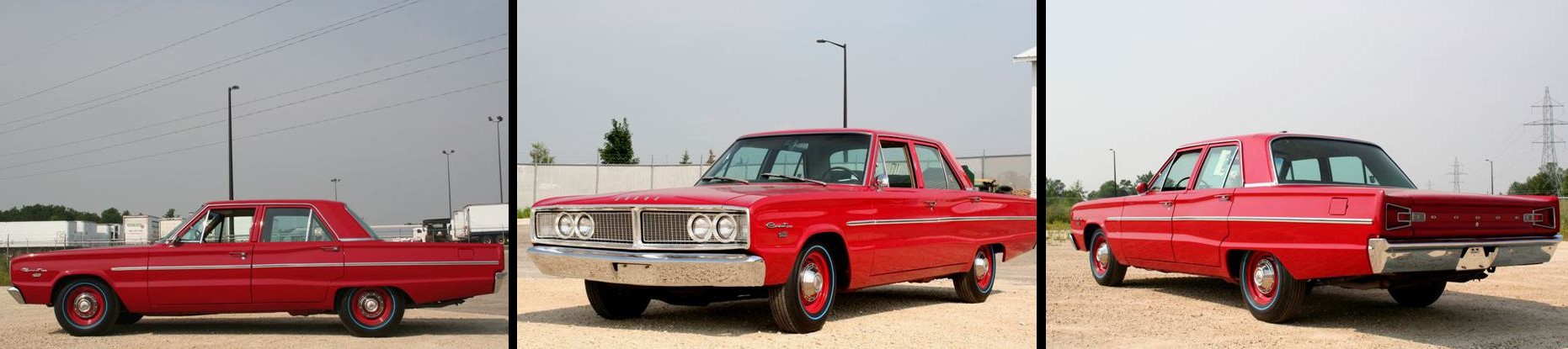
In the fashion business there have been a number of products named “Monica” and it’s likely this often was for no reason other than it was thought appropriately feminine and pleasing to use.  There is also an automotive footnote, the Monica 560 a French-built luxury car which was the last of what often are referred to as the "first generation" of trans-Atlantic hybrids which, combining elegant European coachwork with robust, powerful, very cheap (and very thirsty) US-sourced drive-trains, flourished between the mid-1950s and the first oil shock two decades later.  They weren't really the "first generation" because there were manufacturers of such things during the 1930s but the sales volumes were tiny.  It’s often said the Monica was an attempt to resurrect the much lamented Facel Vega (1954-1964) but the founder was more nostalgic still, the industrialist Jean Tastevin (1919-2016) recalling the pre-war Delahayes, Bugattis Delages & Buccialis, French cars which ranked with the world’s finest.  However, when in the late 1960s Monsieur Tastevin surveyed the scene, even the more expensive French cars, whatever their other virtues (some of which were admittedly well concealed), were under-powered and although in many ways sophisticated, lacked the power and refinement of the British, US & European competition.  His core business was the large conglomerate Compagnie française de produits métallurgiques (CFPM) which specialized in building freight rail wagons, his imaginative business model including leasing them, a form of vertical integration which provided a stable revenue stream during periods of diminished demand.  

One of the valve cover castings for a Martin V8 installed in a prototype Monica.

With this industrial capacity and financial infrastructure, he reasoned building a car to compete with the other speciality builders (and he included in that the upper-range Mercedes-Benz, Jaguars and such) was within CFPM’s capacity and in that he may have been correct but a combination of bad decisions, bad luck and bad timing doomed the project.  The first mistake was to try to match Maserati & Ferrari in the use of a bespoke engine rather than the US V8s pragmatically adopted by Jensen, Bristol, Iso, Monteverdi and others; Tastevin wanted a thoroughbred, not a bastard.  What was available was a V8 designed by the gifted English engineer Ted Martin (1922-2010) and it was in many ways outstanding being robust, compact, powerful and light.  Convinced, Tastevin bought the rights along with the collateral contract under which Rolls-Royce agreed to handle the production, the prestige of a “Rolls-Royce-built engine” another thing which appealed.  Unfortunately, Monsieur Tastevin subsequently demanded of Rolls-Royce they guarantee the power output of each unit, an underwriting the company declined on the basis that as a manufacturing and assembly contractor of something they’d not designed and tested, they were not prepared to guarantee someone else’s work.  His contract well-written, Ted Martin kept the money and Tastevin had to find another engine.

The first (left) and second (centre) Monica prototypes and the Amiot 143M (1931-1944), a French five-seat reconnaissance bomber (right).

By early 1968, that was still to happen and prototypes were built with the Martin V8.  There was progress in that the chassis and most of the underpinnings were in close to their final form but the all-important styling was still a work in progress although that is being charitable, the appearance of the early prototypes in the tradition of some of the inter-war bombers built for the French Air Force which to this day remain among the ugliest aircraft ever to fly.  The English were involved in the appearance of the early cars so blame can be shared and it wasn’t until the Italian carrozzeria Vignale became involved, something like the final, sleek form emerged although the work would be brought to fruition by others because Vignale subsequently was shuttered.  One thing which was deemed right as soon as the decision was made was the car’s name: Madam Tastevin’s name was Monique.


The Monica stand, Paris Motor Show, 1972.

The Monica made its debut at the Paris Motor Show, late in 1972 and impressed many with the look of its jewel-like V8 and sumptuous interior although the price raised a few eyebrows, costing as much as two Citroën SMs, then France's most expensive car in series-production.  In the way of such things, the sales projections were optimistic, suggesting as many as 500 Monicas annually even though the market for big, expensive four-door saloons had become crowded; not only were specialists like Iso, Monteverdi and De Tomaso offering fully-developed and well-established models with reliable US V8s, Jaguar’s V12-powered XJ12 had set a dynamic benchmark at an extraordinarily low price and Mercedes-Benz were rumoured to be preparing a 7.4 litre (452 cubic inch) version of their epoch making S-Class (W116) (post-oil shock, eventually it would in 1975 surface as the 450 SEL 6.9).  Still, in 1972, generally, there was still faith in the future.

1973 Monica 560 interior.  The engine was from the US, the leather & burl walnut was English, it was styled in Italy and the gearbox was German (or from the US if automatic).  It had a "French flavor". 

There optimism was still in the air in 1973 (the oil wouldn’t stop flowing until October) but by then the hunt was on for a new engine.  The contractual squabble with Rolls-Royce was one thing but by then, it had anyway finally occurred to Tastevin’s inexperienced team that the Martin V8, an enlarged racing engine, was never going to possess the characteristics needed in a luxury car.  It was noisy, at its best with a manual gearbox and at anything but high revs (where it needed to operate to produce the required power), somewhat rough.  In the early 1960s the Maserati Quattroporte had been much the same and it sold well but then there were few alternatives and the world had moved on; what buyers now wanted was the turbine-like smoothness of the XJ12 or the effortless torque of the big-displacement V8 hybrids.  The 3.4 litre (209 cubic inch) Martin V8 was a vibrant thing which would have been entertaining in a sports car but it wasn't what the target market now expected in a luxury saloon.  Tastevin’s original plan had been to build a high-performance sports car and the switch to four-door coachwork came early in the development process.  Of all the hybrids built in the era, the Monica was the only one never offered as a coupé. 

One of the few: 1974 Monica 560 Berlina.  The flowing lines were much admired and clearly not forgotten because the motifs re-appeared early in the next century on the Maserati Quattroporte V (Tipo M139, 2003-2012), that shape from Pininfarina's studio.

Surrendering to the inevitable, Tastevin phoned Detroit and arranged to purchase a batch of Chrysler’s 340 cubic inch (5.6 litre) (LA) V8s, one of the best of the small-block engines of the era and equally adaptable either to the company’s TorqueFlite automatic transmission or the ZF five-speed manual which still had real appeal for some.  Although by then somewhat detuned from its peak during the muscle car years, the 340 could be run in Europe without most of the power-sapping anti-pollution gear insisted on by US regulators (things were different then) and the performance was sparkling; in deference to Europeans for whom cubic inches were mysterious, the car was named the Monica 560 (an allusion to the V8's 5.6 litre displacement).  In 1974, the finished product was ready for sale although inflation meant the already high price had risen by over 50% since 1972 and the four-fold increase in the price of oil in the wake of the embargo had punished demand for fast, thirsty, cars, especially those from a previously unknown manufacturer.  By late 1974, many of the makers of the trans-Atlantic hybrids were either closed or in the throes of what would for most be a not long-protracted demise.  After 17 Monicas were sold in a few months, it was obvious the math was wrong and in February 1975, the company’s closure was announced, one of many such press-releases that year and while a handful of uncompleted chassis were brought to a finished state by a contracted third party, it’s never been clear how many.  Had the Monica 560 been brought to market in 1968 or 1969, it might have enjoyed some years of modest success although there’s no reason to believe it would have weathered the winds of change which blew through the 1970s any better than others blown away.

Friday, October 28, 2022

Ensorcell

Ensorcell (pronounced en-sawr-suhl)

(1) To bewitch; to cast a spell.

(2) Figuratively, (ie not involving witchcraft proper), a  woman's ability to captivate or enchant another (historically a man or men).

1535–1545: From the French ensorceller, from the Middle French ensorceler (to bewitch), a dissimilated variant of the Old French ensorcerer, the construct of which was en- (from Old French en-, a prefixation of Latin in (in, into)) + the verb from sorcier (sorcerer; wizard).  The ultimate root of sorcier was the Latin sors (fate, lot; oracular response; destiny, fate or fortune of an individual), from the primitive Indo-European ser- (to bind).  The alternative spelling is ensorcel.  Ensorcell & ensorcelling  are verbs, ensorcelled is a verb & adjective and ensorcellment is a noun; the noun plural is ensorcellments.  In English, the French verb ensorceler has been used as a noun.  

Despite the pedigree of the words from which it comes reaching back to antiquity. the verb ensorcell (to cast a spell or bewitch) didn’t appear in English until the sixteenth century and then only briefly, use not revived until the nineteenth century when the explorer Sir Richard Burton (1821-1890) included it in The Tale of the Ensorcelled Prince, a translation of a title of one of the Arabian Nights Tales (1885).  Ensorcell had appeared in Henry Torrens’ (1806-1852) earlier (partial translation) The Book of The Thousand Nights and One Nights (1838) which Burton had read and admired.  Prior to this, the only known instance in English was in George Puttenham's (1529-1590) Arte of English Poesie (1589), which was reprinted in the early nineteenth century and Torrens may have picked it up from there.  Thanks to the efforts of Burton, Torrens and others, in the imagination of the West, the art of ensorcellment became much associated with the women of the East, one of the themes Edward Said (1935-2003) would explore in his still controversial Orientalism (1979).

Victims

She came forward swaying from side to side and coquettishly moving and indeed she ravished wits and hearts and ensorcelled all eyes with her glances.  (The Tale of the Ensorcelled Prince in Arabian Nights stories (1885) by "Scheherazade", translated by Sir Richard Burton).

Ensorcell is one of those words in English which may have proved useful had it ever come into general use but it remained rare and now inhabits the niche of translations of exotic texts or tales of witchcraft and sorcery.  For most purposes the many alternatives are preferable:  hypnotize, fascinate, enthrall, stupefy, tickle, bewitch, captivate, please, delight, beguile, cajole, wow, enrapture, attract, mesmerize, enamor, gratify, charm, entice & thrill.  However, the word can be used to discuss men who are victims of beguiling women and there have been many:

Men who have been victims of ensorcellment, clockwise from top left: Bill Clinton (b 1946; US president 1993-2001) with Monica Lewinsky (b 1973); Barnaby Joyce (b 1967; thrice (between local difficulties) deputy prime minister of Australia 2016-2022) with Vikki Campion (b 1985), Welsh actor Richard Burton (1925–1984) with Elizabeth Taylor (1932–2011) (depicted here by Grant Bowler (b 1968) with Lindsay Lohan (b 1986) on-set in Cleopatera (1963) (Liz & Dick, 2012); & Daryl Maguire (b 1959, MLA (Liberal) for Wagga Wagga 1999-2018) with Gladys Berejiklian (b 1970; Premier (Liberal) of New South Wales 2017-2021).

Bill Clinton was one of the best & brightest minds ever to become POTUS but he was way too simple for Washington DC.  Anyone from New York could have told him there are low-risk ways to have affairs but if you have a fling with with a Jewish girl from Beverly Hills it's going to cost you something sometime.  So he's a victim but has only himself to blame, having already been ensorcelled by crooked Hillary Clinton (b 1947; US secretary of state 2009-2013).

Barnaby Joyce was a happily married man with four daughters until ensorcelled by his media advisor (a profession which appears to regard ensorcellment as a calling given their history with other National Party politicians).  Still, the adulterous couple later married and their two children were able to attend the wedding so all's well that end's well.

The other Richard Burton was the Welsh actor ensorcelled by fellow thespian Elizabeth Taylor.  As his turbulent life would suggest he wasn't one to learn from his mistakes because she managed twice to ensorcell him, their first marriage (1964-1974) enduring a little over ten years, the second (1975-1976) a bare ten months.  It was Dr Johnson (Samuel Johnson (1709-1784)) who said A second marriage is a triumph of hope over experience.” and Burton doubtless knew of the quote so he too has only himself to blame.  When he died at 58 after decades of heavy drinking, it was said of him his body was like that of Randolph Churchill (1911-1968) who expired at 57: "Everything was just worn-out."

Gladys Berejiklian's ensorcellment of Daryl Maguire didn't end well with the former premier resigning after being found by the NSW Independent Commission against Corruption (ICAC) to have acted corruptly for, inter alia, an act of Billigung.  In the court of public opinion she did rather better, the consensus being something between "she was too good for him" and "what on earth was she doing with him?"  On-line and in print, there was much sympathy for her from other ensorcelers, anxious to assure her she wasn't alone and "every woman has had a Daryl"  Nobody seemed to express any sympathy for Mr Maguire so clearly the verdict was to "blame the victim".

Thursday, April 29, 2021

Invert

Invert (pronounced in-vurt)

(1) To turn upside down.

(2) To reverse in position, order, direction, or relationship.

(3) To turn or change to the opposite or contrary, as in nature, bearing, or effect; to turn something inward or back upon itself; to turn inside out.

(4) In chemistry, to a subject a substance to a reaction in which a starting material of one optical configuration forms a product of the opposite configuration; subjected to a reaction in which a starting material of one optical configuration forms a product of the opposite configuration.

(5) In music, to subject to musical inversion, the transposition between the upper voice part and the lower (to move the root note of a chord up or down an octave, resulting in a change in pitch).

(6) In phonetics, to articulate as a retroflex vowel; to turn the tip of the tongue up and back.

(7) In formal logic, to form the inverse of a categorical proposition.

(8) In psychology & psychiatry, a person who adopts the role of the opposite sex (historically used in clinical practice and law enforcement as an alternative word for homosexual.

(9) In civil engineering (particularly hydrology), the lower inner surface of a drain or sewer; the lowest point inside a pipe at a certain point.

(10) In Architecture, an arch that is concave upwards, especially one used in foundation work; the base of a tunnel on which the road or railway may be laid and used when construction is through unstable ground (and may be flat or form a continuous curve with the tunnel arch).

(11) A sometimes used synonym for divert in certain contexts; to convert to an incorrect use.

(12) In anatomy, to turn the foot inwards.

(13) In biochemistry, as invertasome, a nucleoprotein complex that causes inversion of a DNA sequence.

(14) In skateboarding, a technique in which the skater grabs the board and plants a hand on the coping so as to balance upside-down on the lip of a ramp.

(15) In zoology, an informal term for an invertebrate.

1525–1535: From the Middle French invertir, from the Latin invertere (to turn upside down or inside out), the construct being in- (in) + vertere (to turn), an inflection of vertō (I turn; I change; I reverse), from the Proto-Italic wertō, from the primitive Indo-European wértti from the root wer- (to turn; to bend).  It was cognate with the Sanskrit वर्तते (vártate (to turn)), the Sanskrit वर्तयति (vartáyati (to turn)), the Avestan varət, the Proto-Slavic vьrtěti, the Old Church Slavonic врьтѣти (vrĭtěti (to turn around)), the Polish wiercić (to drill; to fidget), the Russian вертеть (vertetʹ (to rotate)), the Proto-Baltic wert-, the Lithuanian ver̃sti, the Persian گرد‎ (gard (grow; turn)), the Proto-Germanic werþaną (to become), the Old English weorþan (to happen), the English worth and the Old Irish dofortad (to pour out).  The prefix -in is quirky because it can act either to negate or intensify.  The general rule is that when pre-pended to a noun or adjective, it reinforces the quality signified and when pre-pended to an adjective, it negates the meaning, the latter mostly in words borrowed from French.  The Latin prefix in- was from the Proto-Italic en-, from the primitive Indo-European n̥- (not), the zero-grade form of the negative particle ne (not) and was akin to ne-, nē & nī.  In Modern English it is from the Middle English in-, from Old English in- (in, into), from the Proto-Germanic in, from the primitive Indo-European en.  In the Classical Latin, invertere had the literal sense of "turn upside down, turn about; upset, reverse, transpose" and was used figuratively to suggest "pervert, corrupt, misrepresent" while when used of words it implied "being used ironically". Invert, invertibility & inverting are nouns, verbs & adjectives, inversion, inversion & inverter are nouns, inverted is a verb & adjective, invertible & inversive are adjectives and invertedly is an adverb; the noun plural is inverts.

Pittsburgh Police arrest card #25747, from 1932 which circulated on the internet after being published in Least Wanted: A Century of American Mugshots (2006) by Mark Michaelson, Steven Kasher & Bob Nickas.  Some thought the “Crime” noted was “Invert” (and thus suggesting the offence was homosexuality) or the word was “Invest” what was police slang for “investigate”.  There appears to have been a typo and the correct letter could be either “v” or “s” but it seems most likely he was being investigated as a suspected communist.

Richard Fridolin Joseph Freiherr Krafft von Festenberg auf Frohnberg, genannt von Ebing (1840-1902) was a German psychiatrist remembered for his seminal work Psychopathia Sexualis: eine Klinisch-Forensische Studie (Sexual Psychopathy: A Clinical-Forensic Study) (1886).  Fortunately for all, for most purposes he shortened his name to Richard von Krafft-Ebing and was recognized as perhaps the first acknowledged expert on matters of sexual deviance, his publications either creating or formalizing the diagnostic categories which would remain influential for decades and some of his work remains recognizable in the literature even today.  One of his terms was "sexual inversion" which he used to describe homosexuality and it appeared in the first edition of the American Psychiatric Association's (APA) Diagnostic and Statistical Manual of Mental Disorders (DSM), published in 1952.  Dr von Krafft-Ebing had used sexual inversion as a purely descriptive term for homosexuality, reflecting the academic tone he adopted in the hope those other than in the professions of medicine or law would be discouraged from turning the pages.  Very much seriously minded, he didn’t write to satisfy prurient interest.  He did however definitely regard sexual inversion as deviant and in this sense it carried over to the DSM where it was listed as a mental disorder although the operation of the linguistic treadmill meant that when the DSM-II was issued in 1968, the term was replaced with “homosexuality”.  From then on, the profession moved in the last quarter of the twentieth century as legislative change would unfold in the Western world, sometimes moving ahead of the law, sometimes following.  When the fourth edition of the DSM-II was published in 1974, the APA tested the waters by introducing a sort of diagnostic ambivalence about the matter and with the coming of the DSM-III (1980), homosexuality ceased to be considered a mental disorder and was treated as just another variation in the human condition.

Lindsay Lohan contemplating the subliminal messaging of The McDonalds big “M”, McDonald's drive-thru, Santa Monica, California, December 2011.  The car is a Porsche Panamera.

A contemporary of Dr von Krafft-Ebing was of course the Austrian psychoanalyst Sigmund Freud (1856-1939), someone who thought much about the centrality of sex to the human condition and, famously, the role of mothers in its formation.  One admirer (though by no means an uncritical one) of Dr Freud was the Russian-born, US-based clinical psychologist Louis Cheskin (1907-1981) who systematized a process of analysis which tracked the relationship between the aesthetic elements (ie the packaging) of products with customers’ perceptions of the content; this he called “sensation transference”.  Some of his best known work was in colors, working out how people generally understood the messages conveyed by different hues and he applied his findings with great success to product wrappings, corporate logos and even the interior color schemes for department stores and restaurants.  According to him, a restaurant which wants its customers to linger might use blue while a fast-food outlet which wants a high turnover of it chairs and tables should favor orange or yellow.

A practical application of Freud via Cheskin: Charlotte McKinney’s (b 1993) famous advertisement for Carl's Jr. Restaurants LLC, Super Bowl XLIX, 2015.

Already famous from his work with the Ford Motor Company, notably for his collaborations with the company’s general manager Lee Iacocca (1924–2019) during which he conducted the research which contributed to the marketing campaigns for the wildly successful Mustang (1964) and Lincoln’s Continental Mark III (1968), Cheskin was retained as a consultant by McDonald’s, then in the throes of one of their periodic changes to the corporate logo.  At the time, McDonald’s management wanted to refocus the business and one aspect of this was to change the stylized “M” (the golden arches), then thought dated.  In this case Louis Cheskin followed Freud and wrote one of his persuasive papers which convinced the executives the big “M” was a asset because, as well as the obvious association with the McDonald’s name, there was also a culinary cum anatomical link: If the “M” was inverted, it summoned in the mind the nurturing image of a mother’s breasts, “subconsciously making hungry customers feel comforted and at home”.  Whether the chain’s slogan at the time (Give mum a night off) was influential in the decision to retain the (uninverted) “M” isn’t clear.”

Evolution of the big “M” since 1942 (left) and inverted (right).  One can see what Louis Cheskin was getting at.

Thursday, May 7, 2020

Gate

Gate (pronunced geyt)

(1) A movable barrier, usually on hinges, closing an opening in a fence, wall, or other enclosure.

(2) An opening permitting passage through an enclosure.

(3) A tower, architectural setting, etc., for defending or adorning such an opening or for providing a monumental entrance to a street, park etc.

(4) Any means of access or entrance.

(5) A mountain pass.

(6) Any movable barrier, as at a tollbooth or a road or railroad crossing.

(7) A sliding barrier for regulating the passage of water, steam, or the like, as in a dam or pipe; valve.

(8) In skiing, an obstacle in a slalom race, consisting of two upright poles anchored in the snow a certain distance apart.

(9) The total number of persons who pay for admission to an athletic contest, a performance, an exhibition or the total revenue from such admissions.

(10) In cell biology, a temporary channel in a cell membrane through which substances diffuse into or out of a cell; in flow cytometry, a line separating particle type-clusters on two-dimensional dot plots.

(11) A sash or frame for a saw or gang of saws.

(12) In metallurgy, (1) a channel or opening in a mold through which molten metal is poured into the mold cavity (also called ingate) or (2), the waste metal left in such a channel after hardening; (written also as geat and git).

(13) In electronics, a signal that makes an electronic circuit operative or inoperative either for a certain time interval or until another signal is received, also called logic gate; a circuit with one output that is activated only by certain combinations of two or more inputs.

(14) In historic British university use, to punish by confining to the college grounds (largely archaic).

(15) In Scots and northern English use, a habitual manner or way of acting (largely archaic).

(16) A path (largely archaic but endures in historic references).

(17) As a suffix (-gate), a combining form extracted from Watergate, occurring as the final element in journalistic coinages, usually nonce words, that name scandals resulting from concealed crime or other alleged improprieties in government or business.

(18) In cricket, the gap between a batsman's bat and pad, used usually as “bowled through the gate”.

(19) In computing and electronics, a logical pathway made up of switches which turn on or off; the controlling terminal of a field effect transistor (FET).

(20) In airport or seaport design, a (usually numerically differentiated) passageway or assembly point with a physical door or gate through which passengers embark or disembark.

(21) In a lock tumbler, the opening for the stump of the bolt to pass through or into.

(22) In pre-digital cinematography, a mechanism, in a film camera and projector, that holds each frame momentarily stationary behind the aperture.

(23) A tally mark consisting of four vertical bars crossed by a diagonal, representing a count of five.

Pre 900:  From the Middle English gate, gat, ȝate & ȝeat, from the Old English gæt, gat & ġeat (a gate, door), from the Proto-Germanic gatą (hole, opening).  It was cognate with the Low German and Dutch gat (hole or breach), the Low German Gatt, gat & Gööt, the Old Norse gata (path) and was related to the Old High German gazza (road, street).  Yate was a dialectical form which was an alternative spelling until the seventeenth century; the plural is gates.  Many European languages picked up variations of the Old Norse to describe both paths and what is now understood as a gate.  The Old English geat (plural geatu) was used to mean "gate, door, opening, passage, hinged framework barrier", as was Proto-Germanic gatan, and the Dutch gat; in Modern German, it emerged as gasse meaning “street”; the Finnish katu, and the Lettish gatua (street) are Germanic loan-words.  Interestingly, scholars trace the ultimate source as the Primitive European ǵed (to defecate).

The meaning "money from selling tickets" dates from 1896, a contraction of 1820’s gate-money.  The first reference to uninvited gate-crashers is from 1927 and gated community appears in 1989; that was Emerald Bay, Laguna Beach, California although conceptually similar defensive structures had for millennia been built in many places.

G Gordon Liddy (1930–2021) was the CREEP lawyer convicted of conspiracy, burglary, and illegal wiretapping for his role in the Watergate Affair.  Receiving a twenty-year sentence, he served over four, paroled after Jimmy Carter (b 1924; US President 1977-1981) commuted the term to eight years.  He was one of the great characters of the affair.

The practice of using -gate as a suffix appended to a word to indicate a "scandal involving," is a use abstracted from Watergate, the building complex in Washington DC, which, in 1972, housed the national headquarters of the Democratic Party.  On 17 June, it was burgled by operatives found later to be associated with Richard Nixon's (1913-1994; US president 1969-1974) Campaign to Re-elect the President committee (CREEP).  Since Watergate, there have been at least dozens of –gates.

Notable Post-Watergate Gates

Billygate: In 1980, US President Jimmy Carter's brother, Billy (1937-1988), was found to have represented the Libyan government as a foreign agent.  Cynics noted that, unlike his brother, Billy at least had a foreign policy.  Crooked Hillary Clinton (b 1947; US secretary of state 2009-2013) has provided the lexicon many "-gates".

A marvelous linguistic coincidence gave us Whitewatergate, a confusing package of real estate deals later found technically to be lawful and Futuregate was a reference to some still inexplicable (and profitable) dabbles in her name in the futures markets.  Servergate was the mail server affair which featured mutually contradictory defenses to various allegations, the Benghazi affair and more.  There was also a minor matter but one which remains emblematic of character.  Crooked Hillary Clinton, after years of fudging, was forced to admit she “misspoke” when claiming that to avoid sniper-fire, she and her entourage “…just ran with our heads down to get into the vehicles to get to our base” when landing at a Bosnian airport in 1996.  She admitted she “misspoke” only after a video was released of her walking down the airplane’s stairs to be greeted by a little girl who presented her with a bouquet of flowers.  Even her admission was constructed with weasel words: “…if I misspoke, that was just a misstatement”.  That seemed to clear things up and the matter is now recorded in the long history of crooked Hillary Clinton's untruthfulness as Snipergate.  Most bizarre was Pizzagate, a conspiracy theory that circulated during the 2016 US presidential campaign, sparked by WikiLeaks publishing a tranche of emails from within the Democrat Party machine.  According to some, encoded in the text of the emails was a series of messages between highly-placed members of the party who were involved in a pedophile ring, even detailing crooked Hillary Clinton’s part in the ritualistic sexual abuse of children in the basement of a certain pizzeria in Washington DC.  Among the Hillarygates, pizzagate was unusual in that she was innocent of every allegation made; not even the pizzeria's basement existed.

Closetgate: References the controversy following the 2005 South Park episode "Trapped in the Closet", a parody of the Church of Scientology in which the Scientologist film star Tom Cruise (b 1962) refuses to come out of a closet.  Not discouraged by the threat of writs, South Park later featured an episode in which the actor worked in a confectionery factory packing fudge. 

Grangegate: In Australia in 2014, while giving evidence to the state's Independent Commission against Corruption (ICAC), Barry O'Farrell (b 1959; Premier of New South Wales 2011-2014) forget he’d been given a Aus$3,000 bottle of Penfolds Grange (which he drank without disclosing the gift as the rules required).  He felt compelled to resign.

Perhaps counterintuitively, there seems never to have been a Lindsaygate or LohangateIn that sense, Lindsay Lohan may be said to have lived a scandal-free life.

Irangate: Sometimes called contragate, this was the big scandal of Ronald Reagan's (1911-2004; US president 1981-1989) second term.  As a back channel operation, the administration had sold weapons to the Islamic Republic of Iran and diverted the profits to fund the Contra rebels opposing the Sandinista government of Nicaragua.  Congress had earlier cut the funding.

Nipplegate: Sometimes called boobgate, this was a reaction to singer Janet Jackson’s (b 1966) description of what happened at the conclusion of her 2004 Superbowl performance as a “wardrobe malfunction”.  In Europe, they just didn't get what all the fuss was about.

Monicagate: The most celebrated scandal of President Bill Clinton’s (b 1946; US President 1993-2001) second term.  Named after White House intern Monica Lewinsky (b 1973), with whom the president “…did not have sexual relations…”.

1973 Pontiac Trans-Am SD 455.

Dieselgate: In 2015, Volkswagen was caught cheating on emissions tests used to certify for sale some eleven-million VW diesel vehicles by programming them to enable emissions controls during testing, but not during real-world driving.  Manufacturers had been known to do this.  In 1973 Pontiac tried to certify their 455 Super Duty  engine with a not dissimilar trick but the Environmental Protection Authority (EPA) weren’t fooled which is why the production 455SD was rated at 290 horsepower rather than 310.  Later, manufacturers in the Fourth Reich turned out to be just as guilty and, in that handy phrase from German historiography "they all knew".  Including the fines thus far levied, legal fees and the costs associated with product recalls, the affair is estimated so far to have cost VW some US$27 billion but the full accounting won't be complete for some time.  Other German manufacturers were also affected but Daimler (maker of Mercedes-Benz) avoided a penalty by snitching on the others. 

In Australia, Utegate was a 2009 campaign run by opposition leader Malcolm Turnbull (b 1954; prime-minister of Australia 2015-2018) and his then (they're no longer on speaking terms) henchman, Eric Abetz (b 1958, Liberal Party senator for Tasmania, Australia 1994-2022), which accused Dr Kevin Rudd (b 1957; Australian prime-minister 2007-2010 & 2013) of receiving a backhander from a car dealer, the matters in question revolving around an old and battered ute (pick-up).  Based on documents forged by Treasury official Godwin Grech (b 1967), it led to the (first) downfall of Turnbull.  Abetz went on to bigger things but Turnbull neither forgot nor forgave, sacking Abetz during his second coming (which started well but ended badly).  Abetz however proved he still has the numbers which matter, gaining preselection and in 2024 winning a seat in the Tasmanian Legislative Assembly (the state's lower house).  He now serves as minister for business, industry & resources and minister for transport as well as leader of the house in the minority Liberal Party government.  

The first Nutellagate arose at Columbia University early in 2013 with allegations of organized, large-scale theft by students of the Nutella provided in the dining halls. Apparently students, unable to resist the temptation of the newly available nutty spread, were (1) consuming vast quantities, (2) pilfering it using containers secreted in back-packs and (3) actually purloining entire jars from the tables.

In the spirit of the investigative journalism which ultimately brought down President Nixon, the Columbia Daily Spectator, breaking the story, reported that, based on a leak from their deep throat in the catering department, the crime was costing some US$5,000 per week, the hungry students said ravenously to be munching their way through around 100 pounds (37 or 45 KG (deep throat not specific whether the losses were weighed on the avoirdupois or troy scale)) of Nutella every seven days.  The newspaper noted the heist was on such a scale that, unless addressed, the cost to the university would be US$250,000 a year, enough to buy seven jars for every undergraduate student.

The national media picked up the story noting, apart from the criminality, there were concerns about the relationship between the wastage of food, excessively expensive student services, the exorbitant cost of tuition fees and a rampant consumer culture.  It seemed a minor moral panic might ensue until the student newspaper (now a blog) deconstructed the Spectator’s numbers and worked out the caterers must be paying 70% more for Nutella than that quoted by local wholesalers, casting some doubt on the matter.  The university authorities responded within days, issuing a press release headed “Nutellagate Exposed: It's a Smear!"  Their audit revealed that the accounting system had booked US$2,500 against Nutella purchases in the first week of term but that was the usual practice when stocking inventory and that consumption was around the budgeted US$450 in subsequent weeks.  Deep throat (Nutella edition) lost face and was discredited.

Nutellagate II broke in 2017 when a consumer protection organization released a report noting the recipe had, without warning, been changed, the spread now having more sugar and milk powder but less cocoa and, as a result, was now of a lighter hue.  Ferrero’s crisis-management operative responded on twitter, tweeting “our recipe underwent a fine-tuning and continues to deliver the Nutella fans know and love with high quality ingredients,”… adding “…sugar, like other ingredients, can be enjoyed in moderation as part of a balanced diet.”

#Nutellagate soon trended and users expressed displeasure, many invoking the memory of New Coke or the IBM PS/2, two other products which appeared also to try to fix something not broken.  The twitterstorm soon subsided, the speculation being that, because it contained more sugar, consumers would become more addicted and soon forget the fuss.  So it proved, sales remaining strong.  Nutella though remains controversial because of the sugar content and the use of palm oil, a product harvested from vast monocultural plantations and associated with social and environmental damage.  Ferrero has now and again suggested they may be ceasing production but the user base has proved resistant although, recent movements in the hazelnut price may test the elasticity of demand.

Open-Gate Ferraris

The much admired but now almost extinct open-gate shifters were originally purely functional before becoming fetishized.  At a time when more primitive transmissions and shifter assemblies were built with linkages and cables which operated with much less precision than would come later, the open-gates served as a guidance mechanism, making the throws more uniform and ensuring the correct movement of the controlling lever.  Improvements in design actually made open-gates redundant decades ago but they'd become so associated with cars such as Ferraris and Lamborghinis that they'd become part of the expectations of many buyers and it wasn't hard to persuade the engineers to persist, even though the things had descended to be matters purely of style.  A gimmick they may have become but, cut from stainless steel and often secured with exposed screw-heads, they were among the coolest of nostalgia pieces.  

Reality eventually bit when modern, fast electronics meant automatic transmissions both shifted faster and were programmed always to change ratios at the optimal point and no driver however skilled could match that combination.  Once essential to quick, clear shifts, by the late 1990s, the open-gate had actually become a hindrance to the process and while there were a few who still relished the clicky, tactile experience, such folk were slowly dying off and with sales in rapid decline, manufacturers became increasingly unwilling to indulge them with what had become a low-volume, unprofitable option.  

Not all the Ferraris with manual gearboxes used the open-gate fitting, some of the grand-touring cars using concealing leather boots but both are now relics, the factory recently retiring the manual gearbox because of a lack of demand.  The 599 GTB Fiorano was made between 2006-2012 and included the option but of the 3200-odd made, only 30 buyers specified the manual.  That run of 30 was however mass-production compared with the California (2009-2014) which was both the first Ferrari equipped with a dual-clutch transmission and the last to offer a manual, ending the tradition of open gate-shifters which stretched back 65 years.  Testing the market, a six-speed manual option had been added to the hard-top convertible in 2010 and the market spoke, the factory dropping it from the order sheet in 2012 after selling just three cars in three years.  The rarity has however created collectables; on the rare occasions an open gate 599 or California is offered at auction, they attract quite a premium and there's now an after-market converting Ferraris to open gate manuals.  It's said to cost up to US$40,000 depending on the model and, predictably, the most highly regarded are those converted using "verified factory parts".

2012 Ferrari California (top) and 2012 Cadillac CTS-V sedan.

So the last decade at Maranello has been automatic (technically “automated manual transmission”) all the way and although a consequence of the quest for ultimate performance, it wasn’t anything dictatorial and had customer demand existed at a sustainable level, the factory would have continued to supply manual transmissions.  There is however an alternative, Cadillac since 2004 offering some models with manual transmission for the first time since the 1953 Series 75 (among the Cadillac crowd the Cimarron (1982-1988) is never spoken of except in the phrase "the unpleasantness of 1982" ) and by 2013, while one could buy a Cadillac with a clutch pedal, one could not buy such a Ferrari.  For most of the second half of the twentieth century, few would have thought that anything but improbable or unthinkable.

Ferrari open-gate shifter porn 

1965 250 LM

1967 330 GTC

1968 275 GTS/4 NART Spyder

1969 365 GTC

1972 365 GTB/4

1988 Testarossa

1991 Mondial-T Cabriolet

1994 348 Spider

2011 599 GTB Fiorano

2012 California