Showing posts sorted by relevance for query Prompt. Sort by date Show all posts

Tuesday, December 5, 2023

Prompt

Prompt (pronounced prompt)

(1) Something done, performed, delivered etc at once or without undue delay.

(2) Ready & quick to act as the circumstances demand (archaic).

(3) Quick or alert.

(4) Punctual.

(5) To move or induce to action; to occasion or incite (often as “prompted”).

(6) To assist by suggesting something.

(7) To remind someone of what has been forgotten (formalized in live performance (the stage, singing etc) where a “prompt” is a supplied from the wings to remind a performer of a missed cue or forgotten line (the noun prompter can indicate both a person employed to deliver cues or the device used (printed or on a screen).

(8) In computing, the message or symbol on the screen which indicates where an entry is require, the most basic of which is the “command prompt” of text-based operating systems which stood ready to receive a structured command.

(9) In computing, in artificial intelligence (AI), machine learning algorithms (MLI) and related systems, to request particular output by means of instructions, questions, examples, context, or other input.

(10) In commercial use, a time limit given for payment of an account for produce purchased, this limit varying with different goods (archaic).

(11) In futures trading, the “front” (closest or nearest).

(12) The act of prompting.

1350-1400: From the Middle English prompte (ready, eager (adjective) & prompten (verb), from the French prompt, all forms ultimately from the Latin prōmptus (evident; manifest, at hand, ready, quick, prepared), participle of prōmō (to take or bring out or forth, produce, bring to light) and the adjectival use of past participle of prōmere (to bring forth, deliver, set forth), the construct being from prō- (forth, forward; for; on behalf of, in the interest of, for the sake of; before, in front of; instead of; about; according to; as, like; as befitting), a combining form of the preposition prō, from the Proto-Italic pro-, from the primitive Indo-European pro-, o-grade of per-) + emere (to buy, obtain, take).  The synonyms can include urge, spur, remind, refresh, instigate, impel, punctual, quick, rapid, hasty & timely.  Modifiers are applied as requited including over-prompt, quasi-prompt & un-prompt.  Prompt is a noun, verb & adjective, promptness & prompter are nouns, prompter & promptest are adjectives, promptly is an adverb and prompting & prompted are verbs; the noun plural is prompts.

The noun (in the phrase “in prompte”) emerged in the early fifteenth century in the sense of “readiness" and was from the Latin verb prōmptus while the more familiar meaning “hint, information suggested, act of prompting” dates from the mid-1500s.  The formal use of prompt in the sense of the indicator on a screen ready to accept user input dates only from 1977 although the concept had been in use for decades.  The ideas of coaching (someone) or assisting them by providing a reminder of that which clearly had been forgotten (or imperfectly learned) was first used in the early fifteenth century, the best-known use in live theatre (to assist a speaker with lines) dating from the 1670s.  The adjectival use (ready, prepared (to do something), quick to act as occasion demands) was from the thirteenth century Old French prompt and directly from Latin prōmptus (brought forth), hence “visible, apparent, evident, at hand”, a use now obsolete.  The commercial sense of the noun prompt “a time limit given for payment for merchandise purchased" dates from the mid-eighteenth and while the concept remains, the word is no longer formally use although the phrase “prompt payment requested” often remains as a reminder.  It remains unclear whether the verb was derived from the adjective or vice-versa and another oddity is that the first recorded instance of “prompting”, the gerund (the verbal noun logically derived from prompt and meaning “incitement or impulse to action” is from 1402, a quarter of a century before the verb.

The formal use of prompt in the sense of the indicator on a screen ready to accept user input dates only from 1977 although the concept had been in use for decades and predates screens, prompts emerging as soon as user input switched from the flicking of switches to character-based entries via a keyboard or similar input device.  The first prompts were those which sat (undifferentiated) on a plotter or printer, awaiting user input.  Command prompts were familiar from the late 1970s and appeared in early versions of Apple and CP/M systems among others but it was the IBM PC which introduced them to what was then the (still small) mainstream.  When the IBM PC was released in 1981, the user interface was exclusively text-based and the PC-DOS (or MS-DOS) command prompt was (almost) the only way for users to interact with their hardware and software.  The quirky exception to that was that on genuine IBM machines, the BIOS (Basic Input/Output System) included a BASIC (the Beginners All-Purpose Symbolic Instruction Code programming language) interpreter so it was possible to do certain things with the hardware even if an operation system (OS) wasn’t present.  IBM’s lawyers guarded their BIOS with rare efficiency so the numerous PC clones almost all needed an OS to be useful.

While programmers, nerds, and other obsessive types understood the charm of the command prompt and took to it fondly, most users had no wish to memorize even part of the sometime arcane command set needed and modern capitalism soon responded, menu systems soon available which allowed users to interact with their machine while hiding the essential ugliness beneath.  In time, these were augmented by graphical environments (some of which frankly overwhelmed the OS) and ultimately, the most successful of these would evolve into OSs, some of which included the ability to run multiple command prompts which at first contained and later emulated PC-MS-DOS.  The most elaborate of these was IBM’s OS/2 2.0 (and its successors) which permitted on a single machine literally hundreds of simultaneous command prompt sessions in a mix of 8, 16 & 32-bit flavors, some of which could even been launched as a bootable virtual machine, started from a floppy-diskette image.  Technically, it was an impressive achievement but around the planet, there were only a relative handful of organizations which needed such capabilities (typically those with megalomaniacs seduced by the idea of replacing perhaps dozens of MS-DOS based PCs each housing an interface handler of some type with one machine).  That could be made to work but the aggregate need was so limited that the direction proved a cul-de-sac.

The command prompt (with long file names, left) and the PowerShell prompt (right).  Both use the classic $p$g configuration.

The prompt didn’t however go away and in one form or another most OSs include one, Microsoft’s PowerShell (introduced in 2006 on Windows and ported to cross-platform compatibility within .NET in 2016) in its default configuration almost identical to that of the IBM-PC-1, all those years ago.  PowerShell included an enhanced list of commands but the earlier prompts were also not static and many options became available to customize the look, the list changing from release to release but a typical version included:

$Q (equal sign).
$$ $ (dollar sign).
$T (Current time).
$D (Current date).
$P (Current drive and path).
$V (OS version number).
$N (Current drive).
$G> (greater than sign).
$L & (less than sign).
$B| (pipe).
$E (Escape code (ASCII code 27)).
$_ (Carriage return and line feed).

Few actually customized their line beyond $P$G (so they would know the active sub-directory and that became the default with which most versions of PC/MS-DOS shipped) but $t $d$_$p$g had its followers (its displayed the time and the date above the prompt when in DOS.  Those for who aesthetics mattered could even set text and background colors and there were some genuinely nostalgic types who liked to emulate the bright orange or acid green screens they remembered from the world of the mainframes.  Most pleasing though was probably bright blue on black.

Prompt was one of the finalists for the Oxford University Press (OUP) 2023 Word Of The Year (WotY) although it didn’t make the cut for the shortlist.  Prompt was there not because the selection committee noted either a new international interest in punctuality or Microsoft’s PowerShell convincing a new generation to start enjoying a CLI (command-line interpreter) but because of the social and technological phenononom that is generative AI (artificial intelligence), the best-known of which is ChatGPT.  Of course, even those who weren’t dedicated command-line jockeys have for decades been interacting with the prompts of search engines but the influence of generative AI has been extraordinary and nudging “prompt” to OUP’s WotY finals is just a footnote, the editors noting even the emergence of a new job description: prompt engineer although, given the implications of generative AI, it might be a short-lived profession.  OUP also explained the expansion of meaning was a development of a wider sense: “Something said or done to aid the memory; a reminder” and that the earlier sense “prepared, ready” was long extinct although many clearly think of ChatGPT in this way.

Prompt would have been a worthy WotY and it’ll be with us for the foreseeable future, not something guaranteed for the winner: “Rizz”.  In its explanatory note, OUP sid rizz was “a popular Gen Z internet slang term”, a shortened form of the word “charisma”, used to describe someone’s ability to attract another person through style or charm, able also to be used as a verb (such as to “rizz up”, meaning to attract or chat up another person.  Rizz has about it the whiff of something which may quickly become cheugy (something once cool which became uncool by becoming too widely used by those who will never be cool) and the imprimatur of OUP’s WotY might be a nail in its coffin.  Time will tell but additionally, rizz is probably better click-bait than prompt, something to which even OUP's editors probably aren’t immune.  The other six finalists were:

Situationship: This describes a relationship (which may be sexual or romantic or neither) not thought (by the participants) formal or established (ie outside what are regarded as society’s conventions).  So, the state of relationship it describes in hardly new but it’s a clever use of language (the construct a portmanteau of situation + (relation)ship and it seems to have existed since around 2008-2011 (the sources differ) but its only recently that the use on social media and various dating apps and television shows that it’s achieved critical mass.

The anyway statuesque Taylor Swift, adding to the effect in 4 inch (100 mm) heels.

Swiftie: A (devoted / enthusiastic / obsessive etc) fan of the singer Taylor Swift (b 1989).  It was once pop culture orthodoxy that the particular conjunction of technological, demographic, economic and social conditions which were unique to the Western world in the 1960s meant what was described as the “claustrophobic hothouse” which produced “Beatlemania” couldn’t again happen.  While various pop-culture figures developed fan-bases which picked up descriptors (such as the “Dead Heads” associated with the Grateful Dead), the particular fanaticism surrounding the Beatles has never quite been replicated.  The Swifties however are said in devotion to go close and their numbers probably greater, Taylor Swift’s appeal truly cross-cultural and international; probably only the ayatollahs and such are unmoved.  Etymologically, “Swiftie” is a conventional affectionate diminutive and among Swifties there are factions including die-hard Swifties, hardcore Swifties and self-proclaimed Swifties.  Someone a little ashamed of their fondness would presumably be a “confessed Swiftie” but none appear to exist and her appeal seems to transcend the usual pop-music boundaries.  Her songs are said to be "infectiously catchy" (a pleonasm she'd probably not allow in her lyrics).

Beige flag: Beige flag has a range and can be a trait which while not something distasteful or shocking, is of a nature which makes one pause and perhaps reconsider one’s relationship with whomever exhibits it.  It can be something which does little more than indicate the person isn’t interesting and is thus a adaptation of “red flag” and thus something to which the only rational reaction is an immediate sundering of a relationship.  So a red flag might be being a Scientologist, a Freemason or listening to country & western music whereas a beige flag might be driving a front wheel drive car; undesirable but perhaps not a deal-breaker.  It can also mean something which suggests someone is just not interesting though not actually evil.  Of late however, the meaning of beige flag has shifted, thus it’s making OUP’s list of finalists.  Now, it appears to be used to reference traits which can be thought “neutral” and it’s been further adapted to cover those situations or objects which cause one briefly to pause, before moving on and probably forgetting what they’ve just seen.  It just wasn’t interesting.

Lindsay Lohan, de-influencing.

De-influencing: De-influencing is one which will probably annoy the pedants.  In the social media era, the word influencer has come to mean “someone who seeks to influence the consumption, lifestyle, political behavior etc of their online audience by the creation of social media content, often as a part of a marketing campaign”.  A de-influencer is “someone who attempts to discourage consumption of particular products or consumption in general using the same platforms”.  So the de-influencers are the latest in the long tradition of anti-materialists who have existed at least since Antiquity, whole schools of philosophy sometimes constructed around their thoughts.  There’s said to be a discernible increase in their presence on the socials and many are linked also the various movements concerned with environmental concerns, notably climate change.  The pedants will object because the de-influencers are of course trying to exert influence but OUP are right to note the trend and the associated word.

Heat dome: A heat dome is a persistent high-pressure weather system over a particular geographic area, which traps a mass of hot air below it.  The weather phenomenon, the physics of which have for decades been understood by climate modelers and meteorologists, suddenly entered general in the high (northern) summer of 2023 when much of the northern hemisphere suffered from prolonged, unusually high temperatures, July measured as the hottest month ever recorded.  Under a heat dome, the atmospheric pressure aloft prevents the hot air from rising and dissipating, effectively acting as a lid or cap over the area, thus the image of a dome sitting over the land and they create their own feedback loop: Static areas of high pressure (which already contain warm or hot air trapped under the high) will become hotter and hotter, creating a heat dome.  Hot air will rise into the atmosphere, but high pressure acts as a lid and causes the air to subside or sink; as the air sinks, it warms by compression, and the heat builds. The ground also warms, losing moisture and making it easier to heat even more.  This is climate change in action and heat dome may well become as common an expression as “cyclone” or “hurricane”.

The UK's Royal Meteorological Service's simple illustration of the physics of a heat dome.  Heat domes are also their own feedback loop.  A static areas of high pressure which already contains warm or hot air trapped under the high will become hotter and hotter, creating a heat dome.  Hot air will rise into the atmosphere, but high pressure acts as a lid and causes the air to subside or sink; as the air sinks, it warms by compression, and the heat builds. The ground also warms, losing moisture and making it easier to heat even more.

When one attempts transform a parasocial relationship into something conventional, one sometimes becomes a stalker.

Parasocial: The adjective parasocial designates a relationship characterized by the one-sided, unreciprocated sense of intimacy felt by a viewer, fan, or follower for a well-known or prominent figure (typically a pop-culture celebrity), in which the follower or fan comes to feel something similar to knowing the celebrity as they might an actual friend.  The parasocial is really a variation of fictosexual (an identity for someone for whom the primary form of sexual attraction is fictional characters) in that the pop-culture celebrity is also an at least partially fictional construct and the relationship is just as remote.  It’s almost irrelevant that one is flesh & blood and parasocial relationships do have certain advantages in that never having to have actual contact, one can never be rejected.  What appears most to have interested OUP is the idea that our relationship with celebrity culture is changing to something more intimate, presumably because the medium is the cell phone (mobile), increasingly our most personally intimate possession.

Wednesday, May 4, 2022

Inspire

Inspire (pronounced in-spahyuhr)

(1) To fill with an animating, quickening, or exalting influence.

(2) Too produce or arouse (a feeling, thought etc).

(3) To fill or affect with a specified feeling, thought etc.

(4) To influence or impel; to animate, as an influence, feeling, thought, or the like, does.

(5) To infuse into the mind; to communicate to the spirit; to convey, as by a divine or supernatural influence; to disclose preternaturally; to produce in, as by inspiration.

(6) To prompt or instigate (utterances, acts, etc) by influence, without avowal of responsibility.

(7) To give rise to, bring about, cause, etc.

(8) In medicine and physiology, to take (air, gases, etc.) into the lungs in breathing; inhale (now rare).  The antonym in this context is expire; only between physicians should inspire & expire be used to refer to breathing.

(9) In medicine, to infuse (breath, life, etc) by breathing (usually followed by into); to breathe into or upon (archaic).

1300–1350: From the Middle English inspiren & enspiren (to fill (the mind, heart etc, with grace etc) & also "to prompt or induce (someone to do something)"), from the Old French enspirer & inspirer (variant of espirer, from the Latin inspīrāre (to breathe upon or into(and figuratively "inspire, excite, inflame”))), present active infinitive of īnspīrō (inspire), itself a loan-translation of Biblical Ancient Greek πνέω (pnéō (also as pnein)) (breathe), the construct being in- + spīrō (breathe), from the primitive Indo-European (s)peys- (to blow, breathe).  The construct of inspīrāre was in- (The prefix -in is quirky because it can act either to negate or intensify.  The general rule is that when pre-pended to a noun or adjective, it reinforces the quality signified and when pre-pended to an adjective, it negates the meaning, the latter mostly in words borrowed from French.  The Latin prefix in- was from the Proto-Italic en-, from the primitive Indo-European n̥- (not), the zero-grade form of the negative particle ne (not) and was akin to ne-, nē & nī.  In Modern English it is from the Middle English in-, from Old English in- (in, into), from the Proto-Germanic in, from the primitive Indo-European en) + spīrāre (to breathe).  The general sense of inspire meaning "influence or animate with an idea or purpose" dates from the late fourteenth century and in Middle English, was sometimes also used in literal sense.

The adjective inspired dates from circa 1400 in the sense of “communicated by divine or supernatural powers" and was the past-participle adjective of the verb inspire; from the 1660s the meaning extened to "infused with seemingly supernatural influence".  The noun inspirer came into use circa 1500 as the agent noun of the verb.  Inspirator, a Late Latin form, has existed in English since the seventeenth century in the Latin figurative sense but from 1890 was used literally as the name of a component of (a double injector (or a pair of injectors combined and working in unison, one raising the water from the pump-chambers or reservoirs and delivering it to the other which forces it into the boiler).  In modern theology, dating from 1846, an inspirationist was "one who believes in the inspiration of the Scriptures”.  Inspiratrix, the feminine form of inspirer, has been in use since 1819.  The adjective inspirational in the sense of “tending to inspire” dates from 1878 but was by 1839 also being used to mean “influenced by inspiration" and by 1888 “pertaining to inspiration” and earlier, it was used in the writings of spiritualism.  To convey the meaning “tending to inspire” there were inspirative (1770) & inspiring (1640s).  Inspire is a noun & verb, inspirable & inspirative are adjectives, inspirer is a noun and inspiringly an adverb.

Crooked Hillary Clinton, the Met Gala and inspiration

Crooked Hillary Clinton, Met Gala 2001.

Crooked Hillary Clinton provided an unexpected photo-opportunity at the 2022 Met Gala, twenty-one years after her last appearance.  The theme in 2001 had been Jacqueline Kennedy: The White House Years and in that spirit (the then pre-crooked) Hillary choose a leopard-print taffeta gown paired with an olive-green and gold wrap augmented by a somewhat haphazard arrangement of jewels.  It was blingish but most seemed to like the look and though the relationship to Camelot may have been strained, that’s hardly rare on the Met red carpet.  The 2001 appearance was presumably to celebrate having taken possession of the New York senate seat to which she felt entitled, an exercise in public legitimization for taking the presidency in 2008, another office to which she’d come to think was her entitlement.  Events in 2008 didn’t go as planned but, in fairness, by the time of the 2016 election, a majority of those who voted agreed she was entitled but not enough of them lived among the “deplorables” in the states she’d either ignored or taken for granted.

Crooked Hillary Clinton, Met Gala 2022.

The Met’s theme in 2022 was In America: An Anthology of Fashion, said to be a sequel to last year’s similarly vague In America: A Lexicon of Fashion but, twenty-one years on, the voluminous Bordeaux-colored dress, designed by Joseph Altuzarra (b 1983) was politely received.  Much admired was the detail work in the subtle pleating which showed a sense of restraint, the designer resisting the temptation to do too much which can be hard to resist with all that fabric.  The choice of color too seemed inspired; it's hard to imagine anything else so suiting the cut.  At the edges of bertha collar and the hemline were embroidered the names of sixty women from America’s past, all of whom crooked Hillary claimed had been an inspiration to her, including:

Abigail Adams (1744–1818; wife of John Adams (1735-1826; US president 1797-1801 and thus de facto First Lady 1797-1801).

Sacagawea (circa 1788–1812 or 1884; Lemhi Shoshone woman associated with early exploration).

Harriet Tubman (circa 1822–1913; American abolitionist and social activist).

Eleanor Roosevelt (1884–1962; diplomat and wife of Franklin Roosevelt (1882-1945, US president 1933-1945) and thus First Lady 1933-1945).

Shirley Chisholm (1924–2005; US politician & civil rights activist).

Rosa Parks (1913-2005; US civil rights activist).

Ruth Bader Ginsburg (1933–2020; associate justice of the US Supreme Court 1993-2020).

Madeleine Albright (1937–2022; US secretary of state 1997-2001).

Lady Bird Johnson (1912-2007; wife of Lyndon Johnson (1908-1973; US president 1963-1969) and thus First Lady 1963-1969)).

Dorothy Rodham (1919-2011; mother of crooked Hillary Clinton).

There was a racial DEI (diversity, equity and inclusion) in the list notably wider than that in the neighborhoods where she and her husband choose to live or spend their frequent vacations (apart from the help of course) but that may be coincidental.  What was not was that all on the list are dead, avoiding any embarrassment which might have been caused had anyone living been included who might have asked to be removed, not happy with the association.  Crooked Hillary claimed that had she included the living, the sheer number would have “filled the entire dress” so, she added “…I decided to stick with women who are no longer with us because that would have made it really impossible to have even one dress if I had everyone on it I admired".  That cleared up any misunderstandings.

The small print: Embroidered names on the bertha collar.

The designer’s take on the embroidered names and their link to the Met’s theme was more technical, reflecting his interest in the tradition of “friendship quilts” which for generations women have crafted with embroidered sayings, phrases or the names of friends and family members.  Altuzarra noted that his creation “…paid homage to the homemakers and seamstresses” who had long been a neglected part of the history of American fashion.  Sometimes, to mark a special occasion, a village would make a quilt, a community would quilt together, signing their names in ink or embroidery and family quilts would serve as mementos of the dead or former homes.  The quilt was an opportunity for women to get together and have this social interaction”, Altuzarra explained and “they were often a kind of memory for women of their community and families, especially if they didn’t stay in one place all their life.”  The making of friendship quilts flourished between the 1840s and the early twentieth century and there is an International Quilt Museum devoted to their preservation.

Inspiration is where it's found.  Some sources endlessly continue to to inspire.

Best part of the Met Gala coverage however came from Olx Praca which reported “the dress was embroidered with the names of sixty women who Clinton said find her inspirational.”  Olx Praca is a news aggregator presumably not staffed by politically aware journalists and these days there are no sub-editors so the mistake (unless crooked Hillary “misspoke” as does seem to happen a bit) is perhaps understandable and probably there are on Earth sixty women who find crooked Hillary inspirational.  Olx Praca may however be onto something; maybe crooked Hillary really does still believe most women find her inspirational.

Tuesday, February 18, 2020

Herringbone

Herringbone (pronounced her-ing-bohn)

(1) A pattern, the weave resembling the skeleton of a herring fish, consisting of adjoining vertical rows of slanting lines, any two contiguous lines forming either a V or an inverted V, used in masonry, textiles, embroidery etc and .  Also called chevron, chevron weave, herringbone weave; a type of twill weave having this pattern.

(2) A fabric constructed with this weave.

(3) A garment made from such a fabric, applied especially to jackets and coats.

(4) In skiing, a method of going up a slope in which a skier sets the skis in a form resembling a V, and, placing weight on the inside edges, advances the skis by turns using the poles from behind for push and support.

(5) A type of cirrocumulus cloud.

1645–1655: The construct was herring + bone.  Herring was from the Middle English hering, from the Old English hǣring, from the Proto-West Germanic hāring (herring) of unknown origin but it may be related to the Proto-Germanic hērą (hair) due to the similarity of the fish’s fine bones to hair. It was cognate with the Scots hering & haring, the Saterland Frisian Hiering & Häiring, the West Frisian hjerring, the Dutch haring, the German and Low German Hereng & Hering, the French hareng, the Norman ĥéren and the Latin haringus; all borrowings from the Germanic.  Bone is from the Middle English bon, from the Old English bān (bone, tusk; bone of a limb), from the Proto-Germanic bainą (bone), from bainaz (straight), from the primitive Indo-European bheyhz (to hit, strike, beat).  It was cognate with the Scots bane, been, bean, bein & bain (bone), the North Frisian bien (bone), the West Frisian bien (bone), the Dutch been (bone; leg), the Low German Been & Bein (bone), the German Bein (leg), the German Gebein (bones), the Swedish ben (bone; leg), the Norwegian and Icelandic bein (bone), the Breton benañ (to cut, hew), the Latin perfinēs (break through, break into pieces, shatter) and the Avestan byente (they fight, hit). It was related also to the Old Norse beinn (straight, right, favorable, advantageous, convenient, friendly, fair, keen) (from which Middle English gained bain, bayne, bayn & beyn (direct, prompt), the Scots bein & bien (in good condition, pleasant, well-to-do, cozy, well-stocked, pleasant, keen), the Icelandic beinn (straight, direct, hospitable) and the Norwegian bein (straight, direct, easy to deal with).  The use to describe a type of cirrocumulus cloud dates from 1903.  The alternative form is herring-bone (not herring bone which would be a bone of a herring).

The herringbone shape (left) and a herring's bones (right).

The herringbone pattern picked up its rather fanciful name because of a resemblance to the fine bones of the fish.  First used in masonry, the motif has for centuries been used in wallpaper, mosaics, upholstery, fabrics, clothing and jewellery.  In engineering, the pattern is found also in the shape cut for some gears but this functionally deterministic.

Roman herringbone brickwork, Villa Rustica, Mehring, Trier-Saarburg, Rhineland, Germany.

The original herringbone design was a type of masonry construction (called opus spicatum, literally "spiked work”) used first in Ancient Rome, widely adopting during medieval times and especially associated with Gothic Revival architecture; it’s commonly seen today.  It's defined by bricks, tiles or cut stone laid in a herringbone pattern and is a happy coincidence of style and structural integrity.  Although most associated with decorative use, in many cases the layout was an engineering necessity because if tiles or bricks are laid in straight lines, the structure is inherently weak whereas if built using oblique angles, under compression, loads are more evenly distributed.  One of the reasons so much has survived from antiquity is the longevity of the famously sticky Roman concrete, the durability thought in part due to chemical reactions with an unusual Roman ingredient: volcanic ash.

1974 Holden HQ Monaro GTS (308) in Barbados Green over Doeskin vinyl with Herringbone cloth inserts (left & right) and reproduction fabric (centre) is available from Global Trim.  Holden in 1973 had replaced the previous houndstooth cloth insert option with one in a herringbone pattern (Ranier, option code 30Y), the most popular combination early in the availability being 1854-30Y (black vinyl + herringbone cloth inserts); the factory code for an all vinyl interior in black was 1854-30X.  At the time, option 30Y listed at Aus$75.00 (4 seats) and Global Trim's reproduction fabric lists at Aus$330 per metre (the bolts 1.5m wide); to re-trim an interior to factory specifications demands 2m.

Although in 1974 the 350 cubic inch (5.7 litre) Chevrolet small-block V8 remained on the option list, it was by then available only with an automatic transmission.  The HQ's new, coil-sprung rear suspension had never been equal to the task of delivering the 350's power to the ground and this the automatic disguised by acting as a fluid cushion between torque and tarmac; quietly, and with no public announcement, late in 1973 the option of pairing the 350 with a manual transmission was withdrawn.  Coincidently, by 1974, the 350 (fully-imported in US specification) could satisfactorily have again been paired with the manual because, now compliant with US emission regulations, output had dropped so much the 350 offered little over Holden's locally-manufactured 308 (5.0) V8 other than additional cost, weight and fuel consumption;  with the coming of the HJ range in October, 1974, the 350 was deleted from the option list.  In mid-1976, Australia introduced more stringent emissions regulations which meant the now less toxic 308 became thirstier and less powerful so the 350 would again have offered additional performance but, in the post oil-shock world, its reintroduction was never contemplated and Chevrolet V8 would not again be used in Holdens until 1999 when, after 30 years, local production of the V8 ended.   

Lindsay Lohan in herringbone flat-cap.

Of gears

Although the term “herringbone cut gears” is more poetic, to engineers they’re known as double helical gears.  In both their manufacturing and operation they do present challenges, the tooling needed in their production demanding unusually fine tolerances and in use a higher degree of alignment must be guaranteed during installation.  Additionally, depending on use, there is sometimes the need periodically to make adjustments for backlash (although in certain (usually lower-speed) applications they can be designed to minimize this).  However, because of the advantages the herringbone structure offers over straight cut, spur or helical gears, the drawbacks can be considered an acceptable trade-off, the principle benefits being:

(1) Smoothness of operation and inherently lower vibration:  The herringbone shape inherently balances the load on the teeth, reducing vibration and generated noise.

(2) A high specific load capacity: The symmetrical design of herringbone gears offers a high surface area and an even distribution of load, meaning larger and more robust teeth may be used, making the design idea for transmitting high torque or power.

(3) A reduction in axial thrust: Probably the reasons engineers so favour the herringbone is that axial thrust can be reduced (in certain cases to the point of effective elimination).  With helical gears, the axial force imposed inherently acts to force gears apart whereas the herringbone gears have two helical sections facing each other, the interaction cancelling the axial thrust, vastly improving mechanical stability.

(4) Self-regulating tolerance for misalignment. Herringbone handle small variations in alignment better than spur gears or single helical gears, the opposing helix angles assisting in compensating for any axial misalignment, contributing to smoother gear meshing and extending the life of components.

(5) Heat dissipation qualities: The symmetrical structure assists heat dissipation because the opposing helices create a distribution of heat through a process called mutual heat-soak, reducing the risk of localized overheating, something which improves thermal efficiency by making the heat distribution pattern more uniform.

Gears: helical (left), herringbone (or double helical) (centre) and straight-cut (right).  Although road cars long ago abandoned them, straight-cut gears are still used in motorsport where drivers put up with their inherent whine and learn the techniques needed to handle the shifting.

Tuesday, September 8, 2020

Ping

Ping (pronounced ping)

(1) To produce a short, high-pitched resonant sound, like that of a bullet striking a sheet of metal (as a verb used without object).

(2) In computing, to send an echo-request packet to an IP address and use the echo reply to determine whether another computer on the network is operational and the speed at which the data is being transferred.

(3) Informally, to make contact with someone by sending a brief electronic message (text messages and later variations).  A ping can also be a notification in response to a message.

(4) A pinging sound.

(5) An infrasonic or ultrasonic sound wave created by sonar in echolocation or an acoustic signal transmitted to indicate a location.

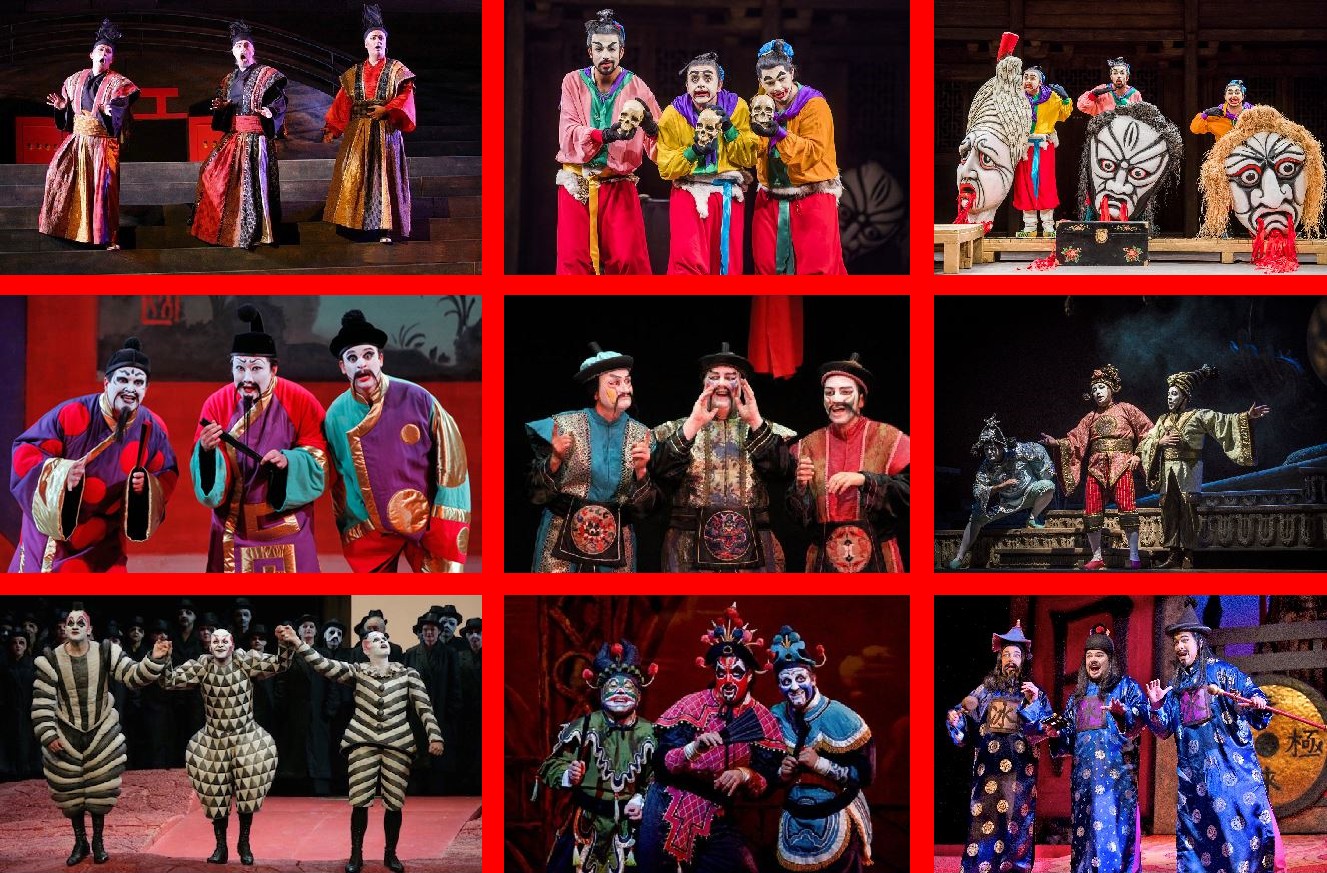
(6) The Lord Chancellor, one of the courtiers in Giacomo Puccini's (1858-1924) opera Turandot (1926).

(7) In colloquial use, to flick something, usually with a finger-tip.

(8) In colloquial use, to be detected committing an offence (by a police officer, an umpire or referee) and subsequently penalized.

(9) In internal combustion engines (also referred to as pinking, knocking or detonation), when the combustion of the fuel/air mixture in the cylinder does not begin correctly in response to ignition by the spark plug.  The usual form in this context is the adjective "pinging".

1835: Partly onomatopoeic (imitative of the sound of a bullet whistling through the air or striking something sharply) and partly reflecting the influence of the (continuing) Middle English pingen (to push, shove, pierce, stab, prod, goad, urge, feel remorse, incite), from the Old English pyngan (to prick); used as a verb since 1855.  The meaning "short, high-pitched electronic pulse" is attested from 1943, the reference being to the sonar systems used on both submarines and surface vessels.  The noun plural was pings, the present participle pinging, the past participle pinged.  The non-standard forms are pang & pung (past participle) although one can understand why those learning English might assume they should exist.  Pingdemic was an invention of computer programmers.

The noun ping-pong was also based on sound and dates from 1901 as Ping-Pong, the trademark for table tennis equipment registered by Parker Brothers, both words imitative of the sound of the ball hitting a hard surface (said by some to have been attested since 1823; the game was much in vogue in the US 1900-1905.  In the figurative sense of "move or send back and forth without progress, resolution, or purpose", use dates from 1952, later extended (though a little more hopefully) to “ping-pong diplomacy” which referred to the US and the PRC (Communist China) agreeing to exchange ping-pong teams before sending diplomats.  The electronic arcade game “Pong” (1972) was an abbreviation of ping-pong although there is evidence pong had for some years been a truncated reference to the game proper.

Sample pings.

Ping is one of a small subset of commands which constitute the lingua franca of computer network administration software, included in almost all network tool bundles regardless of the local or network operating systems.  It is a utility which tests the connectivity and speed of a host running on any Internet Protocol (IP) network by measuring the round-trip time for messages sent from the originating host to a destination computer, echoed back to the source.  Originally run exclusively from a command prompt, GUI (graphical user interface) versions have long been available and are handy for infrequent users who have never needed to memorize the syntax.  Ping sends Internet Control Message Protocol (ICMP) echo request packets to the target host and waits for an ICMP echo reply, reporting errors, packet loss, and a statistical summary of the results, most usefully the duration (in milliseconds) of the minimum, maximum & mean round-trips.

The name ping was a borrowing from naval sonar terminology that sends a pulse of sound and listens for the echo to detect objects under water to determining their location, direction and speed.  The sonar systems used at sea included audible pings and some computer ping utilities include one as a novelty.  The original software was a Q&D (quick & dirty) utility created in 1983 to diagnose tiresome problems on a network, the name chosen because the method was analogous with sonar's echolocation.  The occasionally mentioned Packet InterNet Groper is a backronym created some years after the first versions of ping were distributed.

Turandot

Turandot (1926) was Giacomo Puccini's (1858-1924) last opera and one which remained uncompleted at his death.  Puccini based the opera on the play Turandot (1762) by Venetian playwright Count Carlo Gozzi (1720–1806) which borrowed from one of the seven stories in the epic-length work by Persian poet Nizami (circa 1141–1209), the motif of seven aligned with the days of the week, the Persian seven-color scheme and the seven planets at that time known.  Turandot as told by Nizami is the story attached to Tuesday, the protagonist a Russian princess (Turan-Dokht (daughter of Turan)), a name often used in Persian poetry for Central Asian princesses.  Puccini seems to have moved the site of his Opera to China for no reason other than his interest in incorporating into the work Chinese musical themes, much as he’d been attracted to Japanese sounds for his earlier Madama Butterfly (1904).  Most people on the planet have never heard of Puccini and his operas but many will be at least vaguely familiar with one fragment of Turandot, Nessun dorma (Let no one sleep), among the most famous of the tenor arias, because of the global broadcast of a performance during the 1990 FIFA World Cup.

Puccini completed the three-act structure before his death and it was in this form it was first performed at La Scala in Milan in April 1926, conducted by Arturo Toscanini (1867-1957), the conductor refusing to go beyond the point where Puccini stopped.  With an ending added by Franco Alfano (1875-1954), it was presented again the very next evening but performances have varied over the years, a few sticking to the original, some using one of the variations written by Alfano and others with different ending entirely, some better received than others.  Opera buffs and professional musicians have always been drawn to Turandot because it’s Puccini at his most musically innovative but audiences have never embraced it quite as they did the seductive butterfly which is a set-piece love story packed with melodies.  However, it’s now viewed also through a political lens, the specter of cultural appropriation and accusation of racial stereotyping looming over every aria.

From various stage productions: Ping, Lord Chancellor (baritone), Pang, Chief Steward of the Imperial Household (tenor) & Pong, Executive Chef of the Imperial Kitchen (tenor) are the triumvirate of courtiers in Puccini's Turandot.

The critique is that the depiction of a barbaric Chinese princess is an outdated orientalist construct of Chinese people and the idea of white people dressing and being made up as caricatures of those from the far east goes beyond mere cultural appropriation, the use of Chinese music, traditional dress and the perpetuating historical Western imagery being demeaning.  Beyond that, white audiences who are either oblivious to these concerns or dismissive of them are (at the very least) guilty of committing microaggressions and are casually asserting cultural superiority, if not actual white supremacy.

Monday, December 13, 2021

Paramount

Paramount (pronounced par-uh-mount)

(1) Chief in importance or impact; supreme; pre-eminent; of the highest importance.

(2) Above others in rank or authority; superior in power or jurisdiction.

(3) A supreme ruler; overlord (now rare thought often in historic texts).

(4) In law (in a hierarchy of rights), having precedence over or superior to another.

1525-1526: From the Anglo-Norman paramount & paramount (pre-eminent; above), the construct being the Old French par & per (by) + amont & amunt (upward).  Par was from the Latin per (by means of, through), from the primitive Indo-European per- (to go through; to carry forth, fare).  Amont & amunt were from the Latin ad montem (to the mountain; upward), the construct being ad (up to), ultimately from the primitive Indo-European héd (at; to) + montem (the accusative singular of mōns (mount, mountain), ultimately from the primitive Indo-European men- (to stand out, tower).  Synonyms include predominant, preeminent, outstanding, capital, cardinal, chief, commanding, controlling, crowning, dominant, eminent, first, foremost, leading, main, overbearing, predominate, premier, preponderant utmost & prevalent while the most common antonyms are insignificant, secondary & unimportant (in historic land law, the antonym paravail was from the Old French par aval (below), the construct being par + aval (down), the construct being the Latin a(d) + val (a valley), from the Latin vallis; of feudal tenants, it referred to those at the bottom of the hierarchy of rights).  Paramount is a noun & adjective, paramountcy, paramountship & paramountness are nouns, paramountly is an adverb; the noun plural is paramounts.

Paramount logo of the Viacom era.

Introduced in 1914 and now the oldest Hollywood film studio logo still in use, the Paramount Pictures “mountain peak” was based on a sketch of Ben Lomond, Utah (elevation 9716 feet (2961 m); a peak in the northern portion of the Wasatch Mountains) by William Wadsworth "W.W." Hodkinson (1881-1971), the founder of Paramount Pictures.  Many versions have appeared over the years and the text used in conjunction with the image has varied with the company’s ownership structure.  The semi-circles of stars partially encircling the peak originally numbered 24, an allusion to the two-dozen film stars then signed to Paramount under the Hollywood studios’ “star system” (a restrictive contractual arrangement that, in much diminished form, lasted until the 1960s).

Paramount (1986), oil on canvas by Dario Campanile (b 1948, pictured).

In 1986, to mark the company’s 75th anniversary, Paramount Pictures commissioned Italian artist Dario Campanile to paint the famous corporate symbol.  Technology in 1986 was not as capable as later it would become (Intel’s 32-bit 80386 chip had just been released) and, as the artist later explained: “Paramount could not use my painting in video, but they constructed a three-dimensional model of it and filmed that.”  Now of course, anyone with a smartphone can prompt generative AI (artificial intelligence) to create such a video in less than a minute but forty years ago it demanded the skills of a film studio’s model-makers and editing production crew laboring for several days; over four decades there has been good and bad but also much progress.  Born in Rome, Dario Campanile wholly was “self-taught” but if one wants to learn to the craft of the painter, there are few better places because, hanging in the Eternal City’s churches, museums and galleries are the works by masters dating back to Antiquity.  Talent and aptitude are of course still required, but the collections in Rome are a fine “school of fine art” and in summing up his training, Sig Campanile said: “I studied by visiting the churches and museums in Rome.  I used to just stare for hours.  That was my school.

Land law and freehold title

Paramount Pictures promotional poster for Mean Girls (2004).  Then part of Viacom, it was one of the rare occasions the Paramount logo was rendered in pink (probably described by most as "hot pink" or "fuchsia". 

Paramount was originally a term in feudal land-title law.  It described the lord paramount, the one who held absolute title to his fiefdom, not as a grant dependent upon (or revocable by) a superior lord.  A paramount lord was thus superior to a mesne lord (a landlord who has tenants holding under him, while himself the subject of the holding of a superior lord (a kind of sub-letting), mesne being the general legal principle of something intermediate or intervening) whose title to a fief existed ultimately at the pleasure of a superior. The concept endures in modern land law where titles are listed in documents and, even today, there exist jurisdictions where land, said to enjoy an indefeasible title, can still be subject to “paramount interests” which, despite being unregistered, can prevail over those formalized.  In land law, a lord paramount could be male or female but in a charming quirk, in the sport of archery, the noun "lady paramount" (the plural being ladies paramount) is the title awarded to the woman who achieves the highest score.

In Australia, the lord paramount is not the abstraction of "the Crown" but the person of the sovereign.  In the strict legal sense, the king or queen (of Australia) “owns” all the land & waters that constitutes the nation of Australia and those who “own” their own little piece by virtue of holding a valid freehold title (in "fee simple"), in the narrow technical sense, actually hold only a revocable grant from the crown (via some instrument of the state) exercising rights delegated by the king or queen.  Although of no practical significance, it’s not a legal fiction and the position of Queen Elizabeth II (1926-2022; Queen of the UK and other places, 1952-2022) as lord paramount in the system of land tenure in Australia was affirmed by the HCA (High Court of Australia) in Mabo v Queensland (No 2) (1992), one of the landmark cases entrenching in Australian law the concept of native title.

What the judgment in Mabo did was overturn the old doctrine of terra nullius (an old precept from the Legal Latin terra nūllīus (literally “nobody's land”) meaning "land belonging to no one") that European governments during the colonial era had used to justify annexation of lands inhabited by peoples either indigenous to the place or long in occupation.  The legal basis of that was if there was no formal (ie structured, written documents) system of land title there could be no concept of "ownership of land" (in the Western sense) and, widening the implications of this, the colonizers decided that meant often there was no "sovereign government" and thus sovereignty could be claimed and asserted by any power with the firepower to subdue any contesting of that decision.  Noting claims by colonizers, missionaries and such that because the "natives" did not "use" or "own" the land in any "civilized" way (structured agriculture, permanent settlements etc), when asked what was the "purpose" of the British Empire, the author George Orwell (1903-1950, who had served as a colonial policeman in Burma (in 1886 annexed to the British Raj by Lord Randolph Churchill (1849–1895 and then Secretary of State for India) who had triggered the not especially bloody but ultimately costly Third Anglo-Burmese War (1885)) replied: "Theft".  It was the Mabo decision in 1992 that recognized (1) the continent's  indigenous inhabitants had, prior to European settlement, existed in societies in which something recognizable as a form of "collective tribal ownership" (source of the modern term "first nations") prevailed and (2) except where extinguished by modern freehold titles, that "native title" could in certain circumstances endure and continue to co-exist with forms of title overlaid since the beginning of colonial settlement.

Portrait of Victor Christian William Cavendish, ninth Duke of Devonshire (1868–1938) (1928), oil on canvas by Anglo-Hungarian painter Philip Alexius László de Lombos (1869–1937 and known professionally as Philip de László).  Famed for his abilty to produce a "flattering result", de László was the leading "society portraitist" of his time.

In the history of colonial oppression, the dispossession of the indigenous inhabitants of Australia was one of many wrongs were done but, at least in the heart of the empire, there was occasionally an indication the “white man’s burden” should be discharged in a manner owing something to the Christian traditions colonists liked often to invoke and impose on their new subjects.  Although a Conservative, the ninth Duke of Devonshire was at heart a Liberal and, in mind, really a Whig and while serving as Secretary of State for the Colonies (1922 to 1924), in 1923 he left his Whiggish mark in the Colonial Office’s timber-lined corridors by issuing his “Declaration of Paramountcy”, known at the time as the “Devonshire White Paper” or “Devonshire Declaration”.  What this did was clarify the status of the rights of natives settlers in the Kenya Colony and (because of the way the administration there operated) East Africa generally:

Primarily, Kenya is an African territory, and His Majesty's Government think it necessary definitely to record their considered opinion that the interests of the African natives must be paramount and that if, and when, those interests and the interests of the immigrant races should conflict, the former should prevail. Obviously the interests of the other communities, European, Indian or Arab, must severally be safeguarded.... But in the administration of Kenya His Majesty's Government regard themselves as exercising a trust on behalf of the African population, and they are unable to delegate or share this trust, the object of which may be defined as the protection and advancement of the native races.

So, under this ministerial edict, whenever the interests of native Africans clashed with those of Asian, European or Arab settlers, those of the native Africans should prevail and thus be treated as “paramount”.  Because of shifts in political feeling in London, the view hardly was revolutionary although a “codification” of the hierarchy of rights in such explicit language was unexpected.  While there were many idealists (some even in the Conservative Party) who welcomed the statement, there were also realists who understood it was likely to “frighten the horses” in East Africa and there were fears what would happen were such a notion to spread throughout the empire.  However, despite much lobbying by those with a vested interest in “maintaining flexibility in matter of colonial administration”, the duke stood firm and neither amended nor withdrew the declaration.  Viewed at the time as a “liberal” position, critics subsequently have re-characterized the Declaration of Paramountcy as a “classic colonial fix”, designed to mediate between the claims of European and Indian interests although it’s conceded it did have the effect of somewhat ameliorating the living conditions of native East Africans and did ensure the Colonial Office retained control of Kenya, ensuring white minority rule (achieved and enforced by “the splutter of musketry”) wasn’t imposed, as happened in South Africa and Southern Rhodesia.  So, unlike some colonial fixes, there were at least some benefits for the native population although, as the post-war “winds of change” blew across Africa, in Kenya too, things ended badly.  As a footnote, the author of the famous “Winds of Change” speech was Harold Macmillan (1894–1986; UK prime-minister 1957-1963), the duke’s son-in-law.

Winds of Change, 1914-1939 (1966) by Harold Macmillan.

Macmillan’s Winds of Change speech (1960) was about the mood for decolonization growing among native populations in what remained of the European empires but he re-purposed the phrase as the title for the first of his six volumes memoirs.  It covered the period between the outbreak of World War I (1914-1938) and that of World War II (1939-1945), describing how the blast of war had ended the pre-1914 world that had seemed (at least to those of his class) so stable and hopeful, the 1920s & 1930s both more troubled.  In an example of the way in which the effect of a speech can be determined as much by time and place as content, Macmillan had delivered the Winds of Change speech in Ghana without it attracting much comment but when, on 3 February, 1960, he read the same text to those assembled in the Parliament of South Africa, it echoed around the world.  In little more than a year, South Africa's white minority government had left the Commonwealth and the country had become a republic.