Showing posts sorted by date for query Kestrel. Sort by relevance Show all posts

Friday, January 26, 2024

Brand

Brand (pronounced brand)

(1) The kind, grade, or make of a product or service, as indicated by a stamp, trademark, or such.

(2) A mark made by burning or otherwise, to indicate kind, grade, make, ownership (of both objects and certain animals) etc.

(3) A mark formerly put upon slaves or criminals, made on the skin with a hot iron.

(4) Any mark of disgrace; stigma.

(5) A kind or variety of something distinguished by some distinctive characteristic.

(6) A set of distinctive characteristics that establish a recognizable image or identity for a person or thing.

(7) A conflagration; a flame.  A burning or partly burned piece of wood (now rare except regionally although the idea of brand as “a flaming torch” still exists as a poetic device).  In the north of England & Scotland, a brand is a torch used for signalling. 

(8) A sword (archaic except as a literary or poetic device).

(9) In botany, a fungal disease of garden plants characterized by brown spots on the leaves, caused by the rust fungus Puccinia arenariae

(10) A male given name (the feminine name Brenda was of Scottish origin and was from the Old Norse brandr (literally “sword” or “torch”).

(11) To label or mark with or as if with a brand.

(12) To mark with disgrace or infamy; to stigmatize.

(13) Indelibly to impress (usually in the form “branded upon one’s mind”)

(14) To give a brand name to (in commerce including the recent “personal brand).

Pre 950: From the Middle English, from the Old English brond & brand (fire, flame, destruction by fire; firebrand, piece of burning wood, torch (and poetically “sword”, “long blade”) from the Old High German brant, the ultimate source the primitive Indo-European bhrenu- (to bubble forth; brew; spew forth; burn).  It was cognate with the Scots brand, the Dutch & German Brand, the Old Norse brandr, the Swedish brand (blaze, fire), the Icelandic brandur and the French brand of Germanic origin.  The Proto-Slavic gorěti (to burn) was a distant relation.  Brand is a noun & verb, brander is a noun, brandless is an adjective, branded is a verb and branding is a noun & verb; the noun plural is brands.  Forms (hyphenated and not) like de-brand, non-brand, mis-brand & re-brand are created as required and unusually for English, the form brander seems never to have been accompanied by the expected companion “brandee”.

Some work tirelessly on their “personal brand”, a term which has proliferated since social media gained critical mass.  Lindsay Lohan’s existence at some point probably transcended the notion of a personal brand and became an institution; the details no longer matter.

The verb brand dates from the turn of the fifteenth century in the sense of “to impress or burn a mark upon with a hot iron, cauterize; stigmatize” and originally described the marks imposed on criminal or cauterized wounds, the used developed from the noun.  The figurative use (often derogatory) of “fix a character of infamy upon” emerged in the mid-fifteenth century, based on the notion of the association with criminality.  The use to refer to a physical branding as a mark of ownership or quality dates from the 1580s and from this developed the familiar modern commercial (including “personal brands”) sense of “brand identity”, “brand recognition”, “brand-name” etc.  Property rights can also attach to brands, the idea of “brand-equity”.

Although it’s unknown just when the term “branding iron” (the (almost always) iron instrument which when heated burned brands into timber, animal hides etc) was first used (it was an ancient device), the earliest known citation dates only from 1828.  The “mark made by a hot iron” was older and in use since at least the 1550s, noted especially of casks and barrels”, the marks indicating variously the maker, the type of contents, the date (of laying down etc) or the claimed quality..  By the early-mid nineteenth century the meaning had broadened to emphasise “a particular make of goods”, divorced from a particular single item and the term “brand-name” appears first to have been used in 1889, something significant in the development of the valuable commodity of “brand-loyalty” although that seems not to have been an acknowledged concept in marketing until 1961.  The idea of “brand new” is based on the (not always accurate) notion a brand was the last thing to be applied to a product before it left the factory.

BMC ADO16 brands, clockwise from top left: Wolseley 1300, Riley Kestrel 1300, MG 1300, Austin 1300 GT, Morris 1100 and Vanden Plas Princess 1300.

The British Motor Corporation's (BMC) ADO16 (Austin Drawing Office design 16) was produced between 1962-1974 and was a great success domestically and in many export markets, more than two million sold in 1.1 & 1.3 litre form.  The Austin & Morris brands made up the bulk of the production but versions by Wolseley, Riley, MG & Vanden Plas versions were at various times available.  All were almost identically mechanically with the brand differentiation restricted to the interior trim and the frontal panels.  This was the high (or low) point of the UK industry's “badge engineering”.  The abbreviation ADO is still sometimes said to stand for “Amalgamated Drawing Office”, a reference to the 1952 creation of BMC when the Austin & Morris design & engineering resources were pooled.  Like many such events subsequently, the amalgamation was more a “takeover” than a “merger” and the adoption of “Austin Drawing Office” reflected the priorities and loyalties of Leonard Lord (later Lord Lambury, 1896–1967), the former chairman of Austin who was appointed to head the conglomerate.  The appearance of “Amalgamated Drawing Office” appears to be a creation of the internet age, the mistake still circulating.

US market 1964 MG Princess 1100 brochure.  The advertising theme may have been ambitious but BMC also described MG's other US market ADO16 (a LHD (left-hand-drive) version of the home market MG 1100) as a "sports sedan" which, although legally "mere puffery", seems at least misleading.

BMC's six-brand spread for ADO16 is well-known and often used as a case-study for the way the approach should and should not be pursued.  A neglected footnote in the multi-brand ADO16’s tale was the MG Princess 1100, sold in the US between 1964-1966.  The MG Princess was the by then familiar Vanden Plas 1100 (all with a manual transmission, no automatic ever offered) modified to the extent of being adorned with an MG badge on the trunk (boot) lid and hubcaps although it must have been though that wasn't getting the message across because in mid-1964 the octagonal symbol was added also to the Vanden Plas grill.  The rationale behind this curious hybrid was the perception the US market would respond well to a “luxury version” of the basic vehicle (and how the US industry would handle that notion in the next two decades proved the idea was sound) but the “Vanden Plas” name was essentially unknown in the US whereas MG had strong “brand recognition” because of the post-war success of first the updated pre-war “square riggers” (the TC, TD & TF (1945-1955)) and the later MGA (1955-1962), Midget (1961-1979) & MGB (1962-1980) sports cars.  Thus the MG Princess 1100 was introduced in February 1964 at the New York Motor Show but while the sports cars enjoyed strong demand, BMC shifted a paltry 156 of the MG Princess and in 1966 the model was withdrawn from the US market.  As the Austin America, the ADO16 would later be sold in the US between 1968-1972; it was not a great success.

Since the beginnings of mass-production made possible by powered industrial processes and the ability to distribute manufactured stuff world-wide, brand-names have become (1) more prevalent and (2) not of necessity as distinctive as once they were.  Historically, in commerce, a brand was an indication of something unique but as corporations became conglomerates they tended to accumulate brands (sometimes with no other purpose than ceasing production in order to eliminate competition) and over time, it was often tempting to reduce costs by ceasing separate development and simply applying a brand to an existing line, hoping the brand loyalty would be sufficient to overlook the cynicism.  The British car manufactures in the 1950s use the idea to maintain brand presence without the expense of developing unique products and while originally some brand identity was maintained with the use of unique mechanical components or coachwork while using a common platform, by the late 1960s the system had descended to what came to be called “badge engineering”, essentially identical products sold under various brand-names, the differences restricted to minor variations in trim and, of course, the badge.

Grounds of the Mercedes-Benz factory decorated in honor of a visit to Stuttgart by Adolf Hitler (1889-1945; Führer (leader) and German head of government 1933-1945 & head of state 1934-1945), the display visible from his aircraft (1936, top left), a Mercedes-Benz showroom in Munich, Lenbachplaz (1935, top right) and 1938 Mercedes-Benz W125 Rekordwagen (bottom).  Although, tucked away in a corner of the corporate website there is a single page which contains a rather perfunctory acknowledgement of company’s complicity in some of the crimes against humanity committed by the Nazi regime between 1933-1939 there’s little attempt to discuss the matter, an understandable reticence and quite a gap in the otherwise extensively documented history which dates back to 1886 with the debut of what is claimed to be the world’s “first automobile”.  Brand-management can be as much about what is left unsaid or hidden as what is projected. 

When used in events other straight-line speed record attempts (ie where corners needed to be negotiated) the streamlined version of the W125 Formel-Rennwagen (race car built in accord with defined rules) didn’t use the spats (fender-skirts) covering the wheels.  It was used thus on Berlin’s high-speed Avusrennen with its two, uniquely long straights and differed from the conventional W125 in that it was powered by V12 engine rather than the usual big-bore straight-eight, the lower hood (bonnet) line further reducing drag.  Fitted with the spats, W125 Rekordwagen (record car) was used in 1938 to achieve a speed of 432.7 km/h (269 mph) over the flying kilometre, then the fastest timed speed achieved on a public road and a record which stood until 2017.  It’s now on display in the Mercedes-Benz Museum in Stuttgart, although, the swastika with which it was once adorned has been removed from the aluminum skin (displays of the swastika banned in Germany except as authorized).

Australia Day vs Invasion Day: The case for a re-brand

Although it came to be known as “Australia’s national day” and in some form or other had been celebrated or at last marked since the early nineteenth century, as a large-scale celebration (with much flag waving) it has been a thing only since the 1988 bi-centennial of white settlement.  What the day commemorated was the arrival in 1788 in what is now Sydney of the so-called “First Fleet” of British settlers, the raising of the Union Flag the first event of legal significance in what ultimately became the claiming of the continental land-mass by the British crown.  Had that land been uninhabited, things good and bad would anyway have happened but in 1788, what became the Commonwealth of Australia was home to the descendants of peoples who had been in continuous occupation sine first arriving up to 50,000 years earlier (claims the history extends a further 10,000 remain unsupported by archaeological evidence); conflict was inevitable and conflict there was, the colonial project a violent and bloody business, something the contemporary records make clear was well understood at the time but which really entered modern consciousness only in recent decades.

What the colonial authorities did was invoke the legal principle of terra nullius (from the Latin terra nūllīus (literally “nobody's land”)) which does not mean “land inhabited by nobody” but “land not owned by anyone”.  The rational for that was the view the local population had no concept of land “ownership” and certainly no “records” or “title deeds” as they would be understood in English law.  Given that, not only did the various tribes not own the land but they had no system under which they could own land; thus the place could be declared terra nullis.  Of late, some have devoted much energy to justifying all that on the basis of “prevailing standards” and “accepted law” but even at the time there were those in London who were appalled at what was clearly theft on a grand scale, understanding that even if the indigenous population didn’t understand their connection to the land and seas as “ownership” as the concept was understood in the West, what was undeniable by the 1830s when the doctrine of terra nullius was formally interpolated into colonial law was that those tribes understood what “belonged” to them and what “belonged” to other tribes.  That’s not to suggest it was a wholly peaceful culture, just that borders existed and were understood, even if sometimes transgressed.  Thus the notion that 26 January should better be understood as “Invasion Day” and what is more appropriate than a celebration of a blood-soaked expropriation of a continent is there should be a treaty between the colonial power (and few doubt that is now the Australian government) and the descendants of the conquered tribes, now classified as “first nations”.  Although the High Court of Australia in 1992 overturned the doctrine of terra nullius when it was recognized that in certain circumstances the indigenous peoples could enjoy concurrent property rights to land with which they could demonstrate a continuing connection, this did not dilute national sovereignty nor in any way construct the legal framework for a treaty (or treaties).

The recognition that white settlement was an inherently racist project based on theft is said by some to be a recent revelation but there are documents of the colonial era (in Australia and elsewhere in the European colonial empires) which suggest there were many who operated on a “we stole it fair and square” basis and many at the time probably would not have demurred from the view 26 January 1788 was “Invasion Day” and that while it took a long time, ultimately that invasion succeeded.  Of course, elsewhere in the British Empire, other invasions also proved (militarily) successful but usually these conflicts culminated in a treaty, however imperfect may have the process and certainly the consequences.  In Australia, it does seem there is now a recognition that wrong was done and a treaty is the way to offer redress.  That of course is a challenging path because, (1) as the term “first nations” implies, there may need to be dozens (or even hundreds according to the count of some anthropologists) of treaties and (2) the result will need to preserve the indivisible sovereignty of the Commonwealth of Australia, something which will be unpalatable to the most uncompromising of the activists because it means that whatever the outcome, it will still be mapped onto the colonial model.

As the recent, decisive defeat of a referendum (which would have created an constitutionally entrenched Indigenous advisory body) confirmed, anything involving these matters is contentious and while there are a number of model frameworks which could be the basis for negotiating treaties, the negotiating positions which will emerge as “the problems” are those of the most extreme 1% (or some small number) of activists whose political positions (and often incomes) necessitate an uncompromising stance.  Indeed, whatever the outcome, it’s probably illusory to imagine anything can be solved because there are careers which depend on there being no solution and it’s hard to envisage any government will be prepared to stake scare political capital on a venture which threatens much punishment and promises little reward.  More likely is a strategy of kicking the can down the road while pretending to be making progress; many committees and boards of enquiry are likely to be in our future and, this being a colonial problem, the most likely diversion on that road will be a colonial fix.

One obvious colonial fix would be a double re-branding exercise.  The New Year’s Day public holiday could be shifted from 1 January to December 31 and re-branded “New Year’s Eve Holiday”, about the only practical change being that instead of the drinking starting in the evening it can begin early in the day (which for many it doubtless anyway does).  Australia Day could then be marked on 1 January and could be re-branded to “Constitution Day” although given the history that too might be found objectionable.  Still, the date is appropriate because it was on 1 January 1901 the country and constitution came into existence as a consequence of an act of the Imperial Parliament, subsequently validated by the parliament of the Commonwealth of Australia (an institution created by the London statute).  It’s the obvious date to choose because that was the point of origin of the sovereign state although in the narrow technical sense, true sovereignty was attained only in steps (such as the Statute of Westminster (1931)), the process not complete until simultaneously both parliaments passed their respective Australia Acts (1986).  The second re-branding would be to call 26 January “Treaty Day” although the actual date is less important than the symbolism of the name and Treaty Day could be nominated as the day on which a treaty between the First Nations and the Commonwealth could be signed.  The trick would be only to name 26 January as the date of the signing, the year a function of whenever the treaty negotiations are complete.  The charm of this approach is the can can be kicked down the road for the foreseeable future.  Any colonial administrator under the Raj would have recognized this fix.

Saturday, January 7, 2023

Kestrel

Kestrel (pronounced kes-truhl)

(1) In ornithological taxonomy, a common small falcon (especially the Falco tinnunculus), of northern parts of the Eastern Hemisphere, notable for hovering in the air with its head to the wind, its primary diet the small mammals it plucks from the ground.

(2) Any of a number of related small falcons.

(3) A brand-name, used severally (initial upper case).

1400–1450: From the late Middle English castrell, from the Middle English castrel & staniel (bird of prey), from the Middle French cresserelle & quercerelle (bird of prey), a variant of the Old French crecerelle, from cressele (rattle; wooden reel), from the unattested Vulgar Latin crepicella & crepitacillum, a diminutive of crepitāculum (noisy bell; rattle), from the Classical Latin crepitāre (to crackle, to rattle), from crepāre (to rustle). The connection with the Latin is undocumented and based on the folk belief their noise frightened away other hawks.  However, some etymologists contest the connection with the Latin forms and suggest a more likely source is a krek- or krak- (to crack, rattle, creak, emit a bird cry), from the Middle Dutch crāken (to creak, crack), from the Old Dutch krakōn (to crack, creak, emit a cry), from the Proto-West Germanic krakōn, from the Proto-Germanic krakōną (to emit a cry, shout), from the primitive Indo-European gerg- (to shout).  It was cognate with the Old High German krahhōn (to make a sound, crash), the Old English cracian (to resound) and the French craquer (to emit a repeated cry, used of birds).  All however concur the un-etymological -t- probably developed in French.  Kestrel is a noun; the noun plural is kestrels.

A kestrel in flight.

In taxonomy, the variations include the American kestrel (Falco sparverius), the banded kestrel (Falco zoniventris), the common kestrel (Falco tinnunculus), the greater kestrel (Falco rupicoloides), the grey kestrel (Falco ardosiaceus), the lesser kestrel (Falco naumanni), the nankeen kestrel (Falco cenchroides), the Seychelles kestrel (Falco araeus) and the spotted kestrel (Falco moluccensis).  Although the bird had earlier been described as the castrell, in the early seventeenth century the small falcons were more commonly known as windhovers, the construct being wind + hover, reflecting the observations of the ability of the birds literally to hover when facing into the wind.  A now more memorable term however was the one dating from the 1590s: The windfucker (or the fuckwind).  In English, for almost two centuries, any use of the F-word could be controversial and its very existence seemed to make uncomfortable one faction of lexicographers who at one point managed to strike it from almost all dictionaries of English.  They were also revisionists of historical interpretation and claimed windfucker & fuckwind were errors in transcription, the original folk-names being windsucker & suckwind.  To give theis theory a bit of academic gloss, they assembled charts of regionally specific pronunciation in the Late Middle and early Modern English to illustrate the extent to which the archaic long S character ( ſ ) often took the place of an < s > at both the beginnings and middle of words, the argument being the long S was misread as a lowercase ( f ).

It was an intellectually clever way to attempt to remove vulgarity from English but etymologists today give little credence to the theory, noting that the undisputed French sources provide no support.  It may be assumed kestrels came to be called windfuckers & fuckwinds because when displaying their expertise at hovering in the air when facing into the wind, the movements of their bodies does make it look as if airborne copulation is in progress.  Of note too is that in the sixteenth and seventeenth centuries, the same disapprobation didn’t always attach to “fuck” which, although there was a long history of meaning “fornication”, it had also been in figurative use to describe anything from “plough furrows in a field” to “chop down a tree”.  Fuck was from the Middle English fukken and probably of Germanic origin, from either the Old English fuccian or the Old Norse fukka, both from the Proto-Germanic fukkōną, from the primitive Indo-European pewǵ- (to strike, punch, stab).  It was probably the popularity of use as well as the related career as a general-purpose vulgar intensifier which attracted such disapproval.  By 1795 it had been banished from all but the most disreputable dictionaries, not to re-appear until the more permissive 1960s.

Fieseler Fi 156 Storch, Gran Sasso d'Italia massif, Italy, during the mission to rescue Mussolini from captivity, 12 September 1943.  The Duce is sitting in the passenger compartment.

Windfucker thus became archaic but not wholly extinct because it appears in at least one British World War II (1939-1945) diary entry which invoked the folk-name for the bird to describe the German liaison & communications aircraft, the Fieseler Fi 156 Storch (stork), famous for its outstanding short take-off & landing (STOL) performance and low stalling speed of 30 mph (50 km/h) which enabled it almost to hover when faced into a headwind.  The Storch’s ability to land in the length of a cricket pitch (22 yards (20.12 m)) made it a useful platform for all sorts of operations, the most famous of which was the daring landing on a mountain-top in northern Italy to rescue the deposed Duce (Benito Mussolini, 1883-1945; Duce (leader) & prime-minister of Italy 1922-1943).  So short was the length of the strip of grass available for take-off that even for a Storch it was touch & go (especially with the Duce’s not inconsiderable weight added) but with inches to spare, the little plane safely delivered its bulky cargo.

A kestrel windfucking.

Riley was one of the storied names of the British motor industry, beginning as a manufacturer of bicycles in 1896, an after some early experiments as early as 1899, sold its first range of cars in 1905.  Success followed but so did troubles and by 1938, the company had been absorbed into the Nuffield organization.  Production continued but in the post-war years, Riley joined Austin, Morris, Wolseley and MG as part of the British Motor Corporation (BMC) conglomerate and the unique features of the brand began to disappear, the descent to the era of “badge engineering” soon complete.  The last Rileys were the Elf (a tarted-up Mini with a longer boot which was ascetically somehow wrong) and the Kestrel (a tarted-up Austin 1300), neither of which survived the great cull when BMC was absorbed by the doomed British Leyland, marque shuttered in 1969, never to return.  The rights to the Riley brand name are now held by BMW which has never even hinted there may be a revival, their unhappy (and costly) experience with Rover presumably a cautionary tale still told in Bavaria. 

Pre-war Riley Kestrels: 1938 1½ litre four-light Kestrel Sports Saloon (left), 1939 2½ litre Kestrel fixed head coupé (with post-war coachwork) (centre) and 1937 1½ litre 12/4 Kestrel Sprite Special Sports (right).

It was a shame because the pre-war cars in particular had been stylish and innovative, noted for an unusual form of valve activation which used twin camshafts mounted high in the block (thus not “overhead camshafts (OHC)”) which provided the advantages of short pushrods & optimized valve placement offered by the OHC arrangements without the weight and complexity.  Also of interest were their pre-selector transmissions, a kind of semi-automatic gearbox.  Among the most admired had been the 1½ & 2½ litre Kestrels (1934-1940), most of which wore built with saloon coachwork in four or six-light configurations although there were also fixed head (FHC) and drop head coupés (DHC) as well as a few special, lightweight roadsters.

The Kestrel Beer Company's "Flying Kestrel", built by Webster Race Engineering.

Of late, one 1935 Riley Kestrel has enjoyed an unusual afterlife.  In 2020, Scotland’s Kestrel Beer Company commissioned the UK’s Webster Race Engineering to create from one something to use as a land speed record (LSR) contender.  Dubbed “Flying Kestrel”, it’s powered by a turbocharged 2.5 litre (151 cubic inch) Audi TSI inline-five attached to an Audi A6 manual transmission, the power delivered to a Ford 9-inch differential, for decades a mainstay of drag-racing and anywhere else big power and torque needs to be handled.  After setting seven records during a 2021 campaign, the Flying Kestrel returned to Webster for fine-tuning including a new exhaust manifold, turbocharger blanket, and nitrous system for boost and cooling, a key gaol to reduce engine-bay heat.  On the dynamometer, the inline-five registered 991 horsepower (739 Kw) & 753 foot-pounds of torque (1022 Nm) and thus configured an attempt will be made on 17 June 2024 to achieve 200 (322 km/h).  LSR vehicles with much less power have often exceeded 200 mph but typically they have used bodywork with aerodynamic properties more obviously suited for the purpose.  It’s not clear if Webster’s Riley has been subject to much wind-tunnel testing but it may be assumed the shape is far from ideal as an LSR competitor and for some runs it has been fitted with rear fender skirts (spats), a trick in use since the 1920s.

Flying Kestrel with rear spats fitted during 2021 campaign.  Note the holes in the fenders which were added, not as a weight-saving measure (a la the frame of the Mercedes-Benz SSKL (1929-1932)) but to reduce lift at speed, the fenders tending otherwise to act as "parachutes".  The same technique was used by Zora Arkus-Duntov when trying to counter the alarming tendency of the front end of the Chevrolet Corvette Grand Sport (GS, 1962-1964) to "take off" as it approached 150 mph (240 km/h).  For reasons unrelated to aerodynamics, the GS programme proved abortive and of the planned run of 100-125 for homologation purposes, only five were built, all of which survived to become multi-million dollar collectables.      

The spats are one of the rare instances where adding weight increases speed, attested by the tests conducted during the 1930s by Mercedes-Benz and Auto-Union, both factories using spats front and rear on their LSR vehicles, extending the use to road cars although later Mercedes-Benz would admit the 10% improvement claimed for the 1937 540K Autobahn-kurier (highway cruiser) was just “a calculation” and it’s suspected even this was more guesswork than math.  Later, Jaguar’s evaluation of the ideal configuration to use when testing the 1949 XK120 (1948-1954) on Belgium roads revealed the rear spats added about 3-4 mph to top speed though they precluded the use of the lighter wire wheels and did increase the tendency of the brakes to overheat in severe use so, like many things in engineering, it was a trade-off.  More significantly perhaps, when travelling at speeds around 200 mph, “lift” is an issue and one which has afflicted many cars which have adhered well to the road at lower speeds.  Succinctly, the problem was in a 1971 interview explained by the General Motors’ (GM) engineer Zora Arkus-Duntov (1909-1996) who described the 1962-1967 (C2) Chevrolet Corvette as having “just enough lift to be a bad airplane.”  At speed, it’s another trade-off: the desire to lower aerodynamic drag versus the need for sufficient downforce for the tyres to remain sufficiently in contact with the earth’s surface for a driver to retain control, those few square inches of rubber the difference between life & death, especially at around 200 mph.  It’s hoped the “Flying Kestrel” proves a "windfucker" and lives up to the name figuratively, but not literally.

1935 Riley 1½ litre Kestrel (Chassis 22T 1238, Engine SL 4168) with custom coachwork (2004)

The intriguing mechanical specifications and the robust chassis has made the pre-war cars attractive candidates for re-bodying as an alternative to restoration.  Not all approve of such things (the originality police are humorless puritans as uncompromising as any ayatollah) but some outstanding coachwork has been fashioned, almost always the result of converting a saloon or limousine to a coupé, convertible or roadster.  The 1935 1½ litre Kestrel above began life as a four-door saloon which was converted to a DHC during 2004 and the lines have been much-admired, recalling (obviously at a smaller scale) some of the special-bodied Mercedes-Benz SS (1928-1933), the more ostentatious of the larger Buccialis (1928-1933) and the Bugatti Royale (1927-1933).

Thursday, March 10, 2022

Whirlwind

Whirlwind (pronounced wurl-wind)

(1) Any of several relatively small masses of air rotating rapidly around a more or less vertical axis and advancing simultaneously over land or sea, as a dust devil, tornado, or waterspout.

(2) Anything resembling a whirlwind, as in violent action or destructive force; an impetuously active person

(3) Any rush or violent onward course.

(4) As “like a whirlwind” as in speed or force; to move or quickly travel.

1300-1350: From the Middle English whirlewind & whirlewynde, the construct being whirl + wind.  Source was probably the Old Norse hvirfilvindr which was cognate with the German wirbelwind.  From the Old Norse came the Icelandic hvirfilvindur, the Norwegian Nynorsk kvervelvind, the Norwegian Bokmål virvelvind & the Norwegian Nynorsk virvelvind.  Whirly-wind was (probably now extinct) nineteenth century Australian slang for a whirlwind, cyclone, tornado or dust devil and was from the Yindjibarndi wili wili (and it may have existed also in other First Nations languages in north-west Australia).  Whirlwind is a noun& adjective and whirlwindy & whirleindish are adjectives; the noun plural is whirlwinds.

Whirl was from the Middle English whirlen, contracted from the earlier whervelen, possibly from the Old English hweorflian, a frequentative form of the Old English hweorfan (to turn), from the Proto-Germanic hwerbaną (turn) or possibly the Old Norse hvirfla (to go round, spin).  It was cognate with the Dutch wervelen (to whirl, to swirl), the German wirbeln (to whirl, to swirl), the Danish hvirvle (to whirl), the Swedish virvla (the older spelling of which was hvirfla) and the Albanian vorbull (a whirl).  It’s related to the modern whirr and wharve.  Wind was from the Middle English wynd & wind, from the Old English wind (wind), from the Proto-Germanic windaz, from the primitive Indo-European hwéhn̥tos (wind), from the earlier hwéhn̥ts (wind), derived from the present participle of hweh (to blow). It was cognate with the Dutch wind, the German Wind, the West Frisian wyn, the Norwegian and Swedish vind, the Icelandic vindur, the Latin ventus, the Welsh gwynt, the Sanskrit वात (vā́ta), the Russian ве́тер (véter) and, more speculatively, the Albanian bundë (strong damp wind).  It’s related to the modern vent.

The phrase, "They that sow the wind, shall reap the whirlwind", comes from the Old Testament (Hosea 8:7).  It means that for all of us, one’s choices and decisions have consequences; one’s actions will one day return to haunt one.  Cynics tend to phrase it as: “For everything you do there’s a price to be paid”.  It’s sometimes confused with the Epistle to the Galatians (6:7) in the New Testament: “Be not deceived; God is not mocked: for whatsoever a man soweth, that shall he also reap”.  Whirlwind is thus popular in figurative use and in saying she had a "whirlwind of garbage around" herself, Lindsay Lohan conveyed the image of a life made difficult by a swirling vortex of undesirable baggage.  In noting her problems were of her own creation she added she was "my own worst enemy" but, at the time, that may have been unfair to Paris Hilton.    

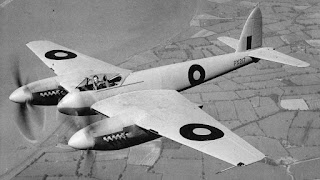
RAF Westland Whirlwind (1939-1943).

A fine, if complex, airframe and a design ahead of its time, the Whirlwind never achieved its potential because of problems, essentially those of the doomed engine around which it was designed.  It was the Royal Air Force’s (RAF) first single-seat, twin-engined fighter, a layout explored by many air forces as a means of fielding a machine with sufficient range, armament and speed to counter the new generation of twin-engined bombers which, by the mid-1930s had proved able to out-pace most fighters then in service.  The prototype flew first in 1938 and had seemed promising, with many innovative features anticipating later designs, the radiators housed in the leading edges of the slim wings and the pilot’s afforded outstanding visibility by virtue of a large, clear bubble canopy.  Intended as a long-range escort fighter, the Whirlwind's firepower was impressive, boasting four 20mm cannons clustered in the nose which made it at the time the most potent fighter in the world.  Test pilots reported excellent handling characteristics, the only deficiencies noted as a lack of power and a very high landing speed which limited the number of airfields from which it could operate.

The Whirlwind was designed to use two Rolls-Royce Peregrine engines, a development of the well-regarded Kestrel but the manufacturer, absorbed with the refinement and production of the much more promising Merlin, was unable to devote sufficient resources and development of the Peregrine first stagnated and then ceased, the demand for the Merlins (used by the strategically vital Spitfire & Hurricane) so great that all of Rolls-Royce's productive capacity had to be dedicated to their supply.  As a result, there existed sufficient engines to build only 112 Whirlwinds which equipped two squadrons where they saw limited service between 1940-1943, mostly in a ground-attack role after being converted to (Mark 1A specification) fighter-bombers.  They were used in an escort role on a low-level raid to Cologne in August 1941 but the unsuitability of the then available bombers to undertake daytime operations was exposed when the attacking force lost almost a quarter of their aircraft, an unsustainable rate of loss.  Not suitable as a night-escort and hampered by the underpowered Peregrines which meant they couldn’t be deployed against single-engined fighters in a defensive role, the Whirlwinds were instead allocated to low-level sorties across the Channel, opportunistically attacking shipping, trains and physical infrastructure.

RAF 
de Havilland Hornet, 1946.

Interestingly, the fine high-altitude characteristics reported by the test pilots when flying the prototypes didn't translate to the production versions but in 1940, such was the urgency of the military situation the Whirlwinds were pressed into service without any attempt at rectification.  Blamed at the time either on the engines or the wing design, it was only years later that private research revealed it was a change in propeller specification which affected the performance, the prototype using Rotol units while the production aircraft were fitted with de Havilland propellers designed for a different aircraft, such mixing and matching far from unusual in wartime conditions.  The replacement propellers were thicker, the issue being that a rotating propeller blade pushes air aside and the thicker a blade, the more air needs to be moved and, all else being equal, that means that the air has to move faster and at a certain point, the air has to move faster than the speed of sound.  At that point (the sound barrier), shock waves are created which induces massive drag.  Propellers are designed to compensate for this effect but on the de Havilland units, the constant speed mechanism would react to the slowdown in airspeed caused by drag by altering the pitch of the blade which would create a feedback loop in the Peregrine, inducing erratic performance and the higher the altitude, the lower the speed of sound, thus the more unsatisfactory the performance of the Whirlwind at altitude.  On the engine for which they were designed, the de Havilland propellers worked well but the Peregrine had different characteristics.

Gloster Meteor (1944-1984).

The end of Peregrine production meant the Whirlwind was a cul-de-sac, the design of the airframe so tied to the characteristics of the engine that thoughts entertained in 1941 of a re-design with Merlin engines were abandoned as the extent of the engineering required became quickly apparent.  It would have been a time-consuming and labor-intensive task and, recovering from the losses incurred in the Battle of Britain, every Merlin-engined Whirlwind would have meant two fewer Spitfires or three fewer Hurricanes.  Westland pursued the idea, later producing a few dozen Welkins which performed well but by then the allies were well-supplied with long-range, high-speed interceptors.  However, the basic concept had proved impressive and the potential was realized in the later de Havilland Hornet (1946), the lineage visible too in the Gloster Meteor, the UK’s first Jet fighter which, having learned lessons from the Whirlwind, used a very different wing shape to lower the landing speed without compromising other aspects of performance.  Although popular with pilots, the Whirlwinds were retired from active service in 1943 before being declared obsolete and scrapped the following year.

Yugoslav Air Force Westland Whirlwind, 1959.

Between 1953-1966 Westland revived the Whirlwind name for a version of the Sikorsky S-55/H-19 Chickasaw, built under license from the US company.  Over four-hundred were produced and they were used by military and civilian operators in a dozen countries.  Although the early versions were underpowered, a switch to turbine engines transformed the Whirlwind and robust, easy to maintain and reliable, it enjoyed a long service with the Royal Navy's Fleet Air Arm as both a carrier-based anti-submarine platform during the High Cold War and latterly in air-sea rescue, the ability to transport six fully-configured stretchers unique in the UK's military inventory.  In Royal Air Force (RAF) service, the last Whirlwinds weren't retired until 1982.

Tuesday, December 21, 2021

Funicular

Funicular (pronounced fyoo-nik-yuh-ler)

(1) Of or relating to a rope or cord, or its tension.

(2) Worked by a rope or the like.

(3) In physics and geometry, the curve an idealized hanging chain or cable assumes under its own weight when supported only at its ends (also known as a catenary).

(4) A type of cable car, usually described as a funicular railway which tends to be constructed on steep slopes and consist of a counterbalanced car sat either end of a cable passing round a driving wheel at the summit.

(5) Of or relating to a funicle.

(6) In medicine, of or pertaining to the umbilical cord.

(7) In botany, having a fleshy covering of the seed formed from the funiculus, the attachment point of the seed.

1655-1665: From the Latin funicle (a small cord) from the Latin funiculus (a slender rope), diminutive of funis (a cord, rope) of unknown etymology but possibly related to the Latin filum (thread), a doublet of file and (in anatomy), a filamentous anatomical structure.

The Funicular Railway

Castle Hill Funicular, Budapest, Hungary.  Opened in 1870, It ascends and descends 167 feet (51m) through a track of 312 feet (95m) in around ninety seconds.

A funicular railway employs (usually) two passenger vehicles pulled on a slope by the same cable which loops over a pulley wheel at the upper end of a track.  The vehicles are permanently attached to the ends of the cable and counterbalance each other. They move synchronously: while one is ascending, the other descends.  The use of two vehicles is what distinguishes funiculars from other types of cable railways although more complex funiculars have been built using four.  The first was built in 1874.

In 1943, Benito Mussolini (1883-1945; Duce (leader) & prime-minister of Italy 1922-1943) was deposed by a meeting of the Fascist Ground Council, a kind of senate he'd made the mistake of not dissolving when he had the chance.  In farcical circumstances, the Duce was arrested and spirited away and almost immediately, Fascism in Italy "burst like a bubble", a not inaccurate assessment but one which caused some embarrassment to Colonel-General Alfred Jodl (1890–1946; Chief of the Operations Staff OKW (Oberkommando der Wehrmacht (high command of the armed forces)) 1939-1945) who made the mistake of blurting it out in the presence of  Adolf Hitler (1889-1945; Führer (leader) and German head of government 1933-1945 & head of state 1934-1945).  Not wanting the contagion to spread, Hitler ordered Mussolini be rescued so he could be established as a "puppet Duce" somewhere to try to preserve the illusion the "pact of steel" between the two fascist states remained afoot.    

Seeking a place to imprison the deposed Duce secure from any rescue attempt, the new Italian government locked him up at the Hotel Campo Imperatore, a mountain resort in Abruzzo accessible only by a funicular railway, judged (correctly) by the military authorities to be easily defensible against ground troops and without the facilities to support landings by aircraft.  However, a rapidly improvised operation using glider-borne Waffen-SS troops and a STOL (short take-off & landing) airplane staged a daring raid and freed the captive though it proved a brief reprieve, the Duce and his mistress executed by a mob less than two years later.

Fieseler Fi 156 Storch, Gran Sasso d'Italia massif, Italy, during the mission to rescue Mussolini from captivity, 12 September 1943.  The Duce is sitting in the passenger compartment.

The German liaison & communications aircraft, the Fieseler Fi 156 Storch (stork) was famous for its outstanding short take-off & landing (STOL) performance and low stalling speed of 30 mph (50 km/h) which enabled it almost to hover when faced into a headwind.  It was one of the classic aircraft designs of the era and so close to perfect it remained in production for years after the end of hostilities and re-creations are still often fabricated by those attracted by its close to unique capabilities.  The Storch’s ability to land in the length of a cricket pitch (22 yards (20.12 m)) made it a useful platform for all sorts of operations and while the daring landing on for a mountain-top rescue-mission in northern Italy was the most famous, for all of the war it was an invaluable resource; it was the last Luftwaffe (German air force) aircraft to land in Berlin during the last days of the Third Reich.  In 1943, so short was the length of the strip of grass available for take-off that even for a Storch it was touch & go (especially with the Duce’s not inconsiderable weight added) but with inches to spare, the little plane safely delivered its cargo.

In one of the war's more obscure footnotes, it was the characteristics of the Fieseler Storch which led to what was may have been the first appearance (in writing) for centuries of an old piece of Middle English slang, dating from the 1590s.  In sixteenth century England, the ability of the Kestrel (a common small falcon) to hover in even a light breeze meant it came to be known (in certain circles) as "the windfucker" and the similar ability of the Storch was noted in one British wartime diary entry in which the folk-name for the bird was invoked to describe the little aircraft seemingly "hanging in the air".