Longevity (pronounced lon-jev-i-tee)
(1) A long individual life; great duration of individual
life.
(2) The length or duration of life.
(3) Length of service, tenure etc; seniority.
(4) Duration of an individual life beyond the norm for
the species.
1605-1615: From the Late Latin longaevitatem (nominative longaevitās), from longaevus (ancient, aged; long-lived (the feminine was longaeva and the neuter longaevum)), the construct being longus (long) + aevum (age) (from PIE primitive Indo-European root aiw- (vital force, life; long life, eternity); longevous was the adjective. The construct of longaevitās was longaevus + -itās (the suffix from the Proto-Italic -itāts & -otāts (-tās added to i-stems or o-stems, later used freely) and ultimately from the primitive Indo-European -tehats. The adjectival form, the Latin longevous (also as longevously) is now rare in English but does occasionally appear as a poetic or literary device. (the comparative more longevous, the superlative most longevous). The less common antonym is shortgevity and the plural longevities; there’s not an exact synonym, the closest being probably durability, endurance & lastingness. Longevity is a noun; the noun plural is longevities

Among monarchs, longevity is not uncommon, Louis XIV (1638–1715; le Roi Soleil (the Sun King), King of France 1643-1715) holding the world record by setting the mark at 72 years, 110 days. All a latter day king, queen or emperor need to have a crack the record is (1) assume the throne at an early and age and avoid (1) dropping dead, (2) suffering regicide, (3) being compelled th abdicate because of some scandal or (4) being deposed and historically most have managed most or all of those but, despite that, Louis XIV’s record had stood for more than three centuries. In fields where “what one does” rather than “how long one stays alive” determines longevity, long careers are less common but many do long endure. In the minds of some, Lindsay Lohan (b 1986 must seem to have “been around forever” and in terms of her industry, that’s a reasonable way of putting it. Signed at the age of three to the agency Ford Models, her early gigs were in print advertising before she appeared in dozens of television commercials and at seven, she was in episode 3358 (29 March 1995) of Sesame Street which first aired in the US in 1969. By 2026, aged 39, Ms Lohan had been in the business for 36 years and counting. On paper, there have been impressively long military careers but many are a bit of a fudge because of the tradition “a field marshal does not retire”. Field Marshal August von Mackensen (1849–1945) joined the Prussian Army in 1869 so over three-quarters of a century, his career spanned service to Kingdom of Prussia, the North German Confederation, the German Empire, the Weimar Republic, the Third Reich, the so-called “Dönitz administration” and the post-war Allied occupation.

Politics being a sordid, nasty business, old Enoch Powell’s (1912–1998) dictum that “all political careers end in failure” is fulfilled often enough to be thought a rule but circumstances can occur which can make even a relatively brief seem impressively long. Remarkably, Schwerin von Krosigk (1887-1977) served continuously in cabinet as finance minister between 1932-1945, ending his government service as chancellor (prime minister), the previous appointee to that role Dr Joseph Goebbels (1897-1945; Nazi propaganda minister 1933-1945) having committed suicide, something at the time fashionable among Nazis. Von Krosigk thus served as a minister under the Weimar Republic, the Third Reich and the Dönitz administration, proving something of a “Vicar of Bray” in troubled times; he was quite a survivor and Winston Churchill (1875-1965; UK prime-minister 1940-1945 & 1951-1955) even contemplated maintaining the Dönitz administration as a short-term German government so briefly there was the prospect of von Krosigk serving yet another master. Churchill also benefited from the times coming to suit him. As early as 1929 his political career had been dismissed as “a failure” yet it was the dramatic events of 1939-1945 which revived his prospects and late in life, his success was extraordinary. First holding office in “the glittering Liberal ministry” of Sir Henry Campbell-Bannerman (1836–1908; UK prime minister 1905-1908), 50 years later he finally retired (not entirely willingly) from the premiership. In politics, longevity of half a century-odd (off and on) is not unique but certainly untypical.
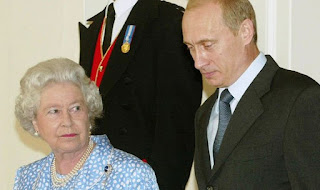
In political terms, Vladimir Vladimirovich Putin (Vladimirovich the patronymic, Putin the family name, b 1952; president or prime minister of Russia since 1999) has displayed an extraordinary longevity. While it's true some of his Tsarist and Soviet predecessors ruled for longer, they were operating under systems, though sometimes violently dangerous, which made the maintenance and retention of power in many ways a different sort of task. Since 1999 he has served either as prime-minister or president of Russia, at one point swapping between the offices to circumvent a tiresome constitutional clause which placed limitations on consecutive presidential terms. In 2021, after a well-done referendum, constitutional amendments were effected which will permit Mr Putin to seek election twice more which, providing the elections are well-run, means he could retain the presidency until 2036. Should he defy the odds which tend to increase against any politician as the years roll by and still be in rude good health as 2036 looms, there is the suggestion he might be unwilling to relinquish office; there may be a need for more constitutional reform.


No comments:
Post a Comment