Showing posts sorted by relevance for query Swirl. Sort by date Show all posts

Saturday, March 30, 2024

Swirl

Swirl (pronounced swurl)

(1) A twist, as of hair around the head or of trimming on a hat; a whorl or curl.

(2) Any curving, twisting line, shape, or form.

(3) A descriptor of a state or confusion or disorder.

(4) A swirling movement; whirl; eddy; to turn or cause to turn in a twisting spinning fashion (used especially of running water).

(5) In fishing, the upward rushing of a fish through the water to take the bait.

(6) To move around or along with a whirling motion; a whirl; an eddy.

(7) To feel dizzy or giddy (the idea of a “spinning head”).

(8) To cause to whirl; twist.

(9) To be arranged in a twist, spiral or whorl.

(10) Figuratively, to circulate, especially in a social situation.

(11) In AAVE (African-American Vernacular English), to in some way mingle interracially (dating, sex, marriage etc) (dated; now rare).

(12) In internal combustion engines (ICE), as “swirl chamber”, a now generic term for a type of combustion chamber design.

1375-1425: From the late (northern) Middle English swirlen (to eddy, swirl) which was probably from the Old Norse svirla (to swirl), a frequentative form of Old Norse sverra (to swing, twirl).  It was cognate with the Scots swirl & sworl (to eddy, swirl), the Norwegian Nynorsk svirla (to whirl around; swirl), the Swedish sorla (to murmur, buzz) and the Dutch zwirrelen (to swirl).  Related forms included the dialectal German schwirrlen (to totter), the West Frisian swiere (to reel, whirl), the Dutch zwieren (to reel, swing around), the German Low German swirren (to whizz, whirl or buzz around), the German schwirren (to whirr, whizz, buzz), the Swedish svirra (to whirr about, buzz, hum), the Danish svirre (to whizz, whirr) and the English swarm.  The construct may be understood as the Germanic root swir- + -l- (the frequentative suffix).  Swirl is a noun & verb, swirled is a verb & adjective, swirling is a noun, verb & adjective, swirly is a noun & adjective, swirler is a noun and swirlingly is an adverb; the noun plural is swirls.

In English, the late (northern) Middle English noun swirlen (to eddy, swirl) seems originally to have come from a Scottish word, the origin of which is undocumented but etymologists seem convinced of the Scandinavian links.  The sense of a “whirling movement” emerged in the early nineteenth century although the meaning “a twist or convolution (in hair, the grain of wood etc)” was in use by 1786.  The verb as a transitive in the sense of “give a swirling or eddying motion to” was in use in the early sixteenth century but it may by then long have been in oral use, one text from the fourteenth containing an example and the source of that may have been either Germanic (such as the Dutch zwirrelen (to swirl) or the Norwegian Nynorsk svirla (to whirl around; swirl) or it may have evolved from the English noun.  The intransitive sense (have a whirling motion, form or whirl in eddies) dates from 1755.  The adjective swirly existed by 1785 in the sense of “twisted or knotty” but by the middle of the next century it had come also to describe anything “whirling or eddying”, applied especially to anything aquatic.  By 1912, it was used also to mean “full of contortions or twists” although “swirling” in this sense had by then been in (gradually increasing) use for a century.

Of curls & swirls: Lindsay Lohan with curls (left) and swirls (right).

In hairdressing, although customers sometimes use the words “curl” and “swirl” interchangeably, to professionals the use should be distinct.  A swirl is a movement or pattern in which hair is styled or arranged, typically with a rounded or circular pattern and swirls can be natural (the pattern at the crown of the head where the hair grows in a circular direction) or stylized (the look deliberately created and most obvious in “up-dos) or the formal styles associated with weddings and such).  The end result is a wide vista and the swirl is more a concept than something which exists within defined parameters.  A curl is (1) a type of hair texture or (2) the act of creating a curl with techniques using tools and/or product.  Some people (and there’s a strong ethnic (ie genetic) association) naturally have curly hair due to the shape of their follicles and within the rubric of what used to be called the ulotrichous, hairdressers classify curls as tyree types: (1) tight (small, corkscrew-like structures), (2) medium (tighter curls but with a softer appearance) and (3) long spirals with a large diameter).  Some commercial product also lists “ringlets” as a type but as tight, well-defined spirals, they’re really a descriptive variation of the tight or medium.  So, the essential difference is that a swirl is a pattern or movement of the hair, while a curl describes texture or shape and while a swirl is a matter or arrangement, a curl demands changing the hair’s natural texture or shape.  Swirls are very much set-piece styles associated with formal events while curls are a popular way to add volume, texture, and movement to the hair.

In internal combustion engines (ICE), the “swirl chamber is a now generic term used to describe a widely-used type of combustion chamber when upon introduction, the fuel-air mixture “swirls around” prior to detonation.  The design is not new, Buick’s straight-8 “Fireball” cylinder head using a simple implementation as long ago as the 1920s and it would serve the corporation into the 1950s.  The critical aspect of the engineering was the interaction between a receded exhaust valve and a rising in the top of the piston which “pushed” most of the fuel-air mixture into what was a comparatively small chamber, producing what was then called a “high-swirl” effect, the “Fireball” moniker gained by virtue of the actual combustion “ball of fire” being smaller in volume than was typical at the time.  The benefit of the approach was two-fold: a reduction in fuel consumption because less was required per power-stroke and (2) a more consistent detonation of the poor quality fuel then in use.  As fuel improved in quality and compression ratios rose (two of the dominant trends of the post-war years), the attraction of swirl chambers diminished but the other great trend was the the effective reduction in the cost of gasoline (petrol) and as cars became larger & heavier and roads more suited to higher speeds, the quest was for power.

Swirling around: The swirl process in a diesel combustion chamber.

Power in those years usually was gained by increased displacement & combustion chamber designs optimized for flow; significantly too, many popular designs of combustion chamber (most notably those in the so-called “wedge” heads) were cheaper to produce and in those years, few gave much thought to air-pollution.  The cars of the 1950s & 1960s had really toxic exhaust emissions.  By the mid 1960s however, the problem of air pollution in US cities was so obvious and the health effects were beginning to be publicized, as was the contribution to all of this by motor vehicles.  Regulations began to appear, California in 1961 (because of the high vehicle population and certain geographical & climatic phenomena, Los Angeles & San Francisco were badly affected by air pollution) passing the first statute and the manufacturers quickly agreed to adopt this standard nationally, fearing other states might begin to impose more onerous laws.  Those however arrived by mid-decade and although there was specific no road-map, few had any doubts the rules would become stricter as the years passed.  The industry’s only consolation was that these laws would be federal legislation so they would need to offer only one specification for the whole country (although the time would come when California would decide things should be tougher and by the 1970s there were “Californian cars” and “49 state cars”).  K Street wasn’t the force then it later became and the manufacturers conformed with (relatively) little protest.

Fuel was still cheap and plentiful but interest in swirl chambers was revived by the promise of cleaner burning engines.  Because it wasn’t new technology, the research attracted little attention outside of the engineering community but in 1970, German-born Swiss engineer Michael May (b 1934) demonstrated a Ford (Cologne) Capri with his take on the swirl chamber in a special cylinder head.  In a nod to the Buick original, May nick-named his head design the “Fireball” (professional courtesy a thing among engineers).  What Herr May had done was add a small groove (essentially a channel surrounding the intake valve) to the chamber, meaning during the last faction of a second of piston movement, the already swirling fuel-air mixture got a final nudge in the right direction: instead of there being a randomness to the turbulence of the mix, the shape was controlled and was thus able to be lower in volume (a smaller fireball) and precisely controlled at the point at which the spark triggered detonation; May called this a “higher swirl”.  Not only did this reduce exhaust emissions but it also cut fuel consumption for a given state of tune so designers could choose their desired path: more power for the same fuel consumption or the same power for less and within a short time, just about the whole world was taking great interest in fuel consumption.

Detail of the original "flathead" cylinder head of the Jaguar V12 (left) and the later "Fireball" head with swirl chambers (right).

A noted use of May’s design was its adoption in 1981 on Jaguar’s infamously thirsty V12 (1971-1997), an innovation celebrated by the addition of the HE (High Efficiency) label for the revised power-plant.  The notion of “high efficiency” was comparative rather than absolute and the V12 remained by most standards a thirsty beast but the improvement could be in the order of 40% (depending on conditions) and it was little worse than the similar displacement Mercedes-Benz V8s of the era which could match the Jaguar for power but not the turbine-like smoothness.  Threatened with axing due to its profligate ways, the swirl chambers saved the V12 and it survived another sixteen years which included two severe recessions.  Debuting even before the Watergate scandal, it lasted until the Monica Lewinsky affair.  In the decades since, computer simulations and high-speed photography have further enhanced the behavior of swirl & turbulence, the small fireballs now contained in the center of the chamber, prevent heat from radiating to the surrounding surfaces, ensuring the energy (heat) is expended on pushing the piston down to being the next cycle, not wasting it by heating metal.  The system is popular also in diesel engines.

Thursday, March 10, 2022

Whirlwind

Whirlwind (pronounced wurl-wind)

(1) Any of several relatively small masses of air rotating rapidly around a more or less vertical axis and advancing simultaneously over land or sea, as a dust devil, tornado, or waterspout.

(2) Anything resembling a whirlwind, as in violent action or destructive force; an impetuously active person

(3) Any rush or violent onward course.

(4) As “like a whirlwind” as in speed or force; to move or quickly travel.

1300-1350: From the Middle English whirlewind & whirlewynde, the construct being whirl + wind.  Source was probably the Old Norse hvirfilvindr which was cognate with the German wirbelwind.  From the Old Norse came the Icelandic hvirfilvindur, the Norwegian Nynorsk kvervelvind, the Norwegian Bokmål virvelvind & the Norwegian Nynorsk virvelvind.  Whirly-wind was (probably now extinct) nineteenth century Australian slang for a whirlwind, cyclone, tornado or dust devil and was from the Yindjibarndi wili wili (and it may have existed also in other First Nations languages in north-west Australia).  Whirlwind is a noun& adjective and whirlwindy & whirleindish are adjectives; the noun plural is whirlwinds.

Whirl was from the Middle English whirlen, contracted from the earlier whervelen, possibly from the Old English hweorflian, a frequentative form of the Old English hweorfan (to turn), from the Proto-Germanic hwerbaną (turn) or possibly the Old Norse hvirfla (to go round, spin).  It was cognate with the Dutch wervelen (to whirl, to swirl), the German wirbeln (to whirl, to swirl), the Danish hvirvle (to whirl), the Swedish virvla (the older spelling of which was hvirfla) and the Albanian vorbull (a whirl).  It’s related to the modern whirr and wharve.  Wind was from the Middle English wynd & wind, from the Old English wind (wind), from the Proto-Germanic windaz, from the primitive Indo-European hwéhn̥tos (wind), from the earlier hwéhn̥ts (wind), derived from the present participle of hweh (to blow). It was cognate with the Dutch wind, the German Wind, the West Frisian wyn, the Norwegian and Swedish vind, the Icelandic vindur, the Latin ventus, the Welsh gwynt, the Sanskrit वात (vā́ta), the Russian ве́тер (véter) and, more speculatively, the Albanian bundë (strong damp wind).  It’s related to the modern vent.

The phrase, "They that sow the wind, shall reap the whirlwind", comes from the Old Testament (Hosea 8:7).  It means that for all of us, one’s choices and decisions have consequences; one’s actions will one day return to haunt one.  Cynics tend to phrase it as: “For everything you do there’s a price to be paid”.  It’s sometimes confused with the Epistle to the Galatians (6:7) in the New Testament: “Be not deceived; God is not mocked: for whatsoever a man soweth, that shall he also reap”.  Whirlwind is thus popular in figurative use and in saying she had a "whirlwind of garbage around" herself, Lindsay Lohan conveyed the image of a life made difficult by a swirling vortex of undesirable baggage.  In noting her problems were of her own creation she added she was "my own worst enemy" but, at the time, that may have been unfair to Paris Hilton.    

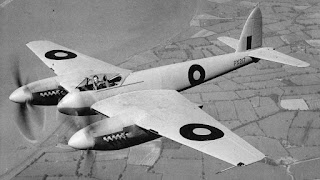
RAF Westland Whirlwind (1939-1943).

A fine, if complex, airframe and a design ahead of its time, the Whirlwind never achieved its potential because of problems, essentially those of the doomed engine around which it was designed.  It was the Royal Air Force’s (RAF) first single-seat, twin-engined fighter, a layout explored by many air forces as a means of fielding a machine with sufficient range, armament and speed to counter the new generation of twin-engined bombers which, by the mid-1930s had proved able to out-pace most fighters then in service.  The prototype flew first in 1938 and had seemed promising, with many innovative features anticipating later designs, the radiators housed in the leading edges of the slim wings and the pilot’s afforded outstanding visibility by virtue of a large, clear bubble canopy.  Intended as a long-range escort fighter, the Whirlwind's firepower was impressive, boasting four 20mm cannons clustered in the nose which made it at the time the most potent fighter in the world.  Test pilots reported excellent handling characteristics, the only deficiencies noted as a lack of power and a very high landing speed which limited the number of airfields from which it could operate.

The Whirlwind was designed to use two Rolls-Royce Peregrine engines, a development of the well-regarded Kestrel but the manufacturer, absorbed with the refinement and production of the much more promising Merlin, was unable to devote sufficient resources and development of the Peregrine first stagnated and then ceased, the demand for the Merlins (used by the strategically vital Spitfire & Hurricane) so great that all of Rolls-Royce's productive capacity had to be dedicated to their supply.  As a result, there existed sufficient engines to build only 112 Whirlwinds which equipped two squadrons where they saw limited service between 1940-1943, mostly in a ground-attack role after being converted to (Mark 1A specification) fighter-bombers.  They were used in an escort role on a low-level raid to Cologne in August 1941 but the unsuitability of the then available bombers to undertake daytime operations was exposed when the attacking force lost almost a quarter of their aircraft, an unsustainable rate of loss.  Not suitable as a night-escort and hampered by the underpowered Peregrines which meant they couldn’t be deployed against single-engined fighters in a defensive role, the Whirlwinds were instead allocated to low-level sorties across the Channel, opportunistically attacking shipping, trains and physical infrastructure.

RAF 
de Havilland Hornet, 1946.

Interestingly, the fine high-altitude characteristics reported by the test pilots when flying the prototypes didn't translate to the production versions but in 1940, such was the urgency of the military situation the Whirlwinds were pressed into service without any attempt at rectification.  Blamed at the time either on the engines or the wing design, it was only years later that private research revealed it was a change in propeller specification which affected the performance, the prototype using Rotol units while the production aircraft were fitted with de Havilland propellers designed for a different aircraft, such mixing and matching far from unusual in wartime conditions.  The replacement propellers were thicker, the issue being that a rotating propeller blade pushes air aside and the thicker a blade, the more air needs to be moved and, all else being equal, that means that the air has to move faster and at a certain point, the air has to move faster than the speed of sound.  At that point (the sound barrier), shock waves are created which induces massive drag.  Propellers are designed to compensate for this effect but on the de Havilland units, the constant speed mechanism would react to the slowdown in airspeed caused by drag by altering the pitch of the blade which would create a feedback loop in the Peregrine, inducing erratic performance and the higher the altitude, the lower the speed of sound, thus the more unsatisfactory the performance of the Whirlwind at altitude.  On the engine for which they were designed, the de Havilland propellers worked well but the Peregrine had different characteristics.

Gloster Meteor (1944-1984).

The end of Peregrine production meant the Whirlwind was a cul-de-sac, the design of the airframe so tied to the characteristics of the engine that thoughts entertained in 1941 of a re-design with Merlin engines were abandoned as the extent of the engineering required became quickly apparent.  It would have been a time-consuming and labor-intensive task and, recovering from the losses incurred in the Battle of Britain, every Merlin-engined Whirlwind would have meant two fewer Spitfires or three fewer Hurricanes.  Westland pursued the idea, later producing a few dozen Welkins which performed well but by then the allies were well-supplied with long-range, high-speed interceptors.  However, the basic concept had proved impressive and the potential was realized in the later de Havilland Hornet (1946), the lineage visible too in the Gloster Meteor, the UK’s first Jet fighter which, having learned lessons from the Whirlwind, used a very different wing shape to lower the landing speed without compromising other aspects of performance.  Although popular with pilots, the Whirlwinds were retired from active service in 1943 before being declared obsolete and scrapped the following year.

Yugoslav Air Force Westland Whirlwind, 1959.

Between 1953-1966 Westland revived the Whirlwind name for a version of the Sikorsky S-55/H-19 Chickasaw, built under license from the US company.  Over four-hundred were produced and they were used by military and civilian operators in a dozen countries.  Although the early versions were underpowered, a switch to turbine engines transformed the Whirlwind and robust, easy to maintain and reliable, it enjoyed a long service with the Royal Navy's Fleet Air Arm as both a carrier-based anti-submarine platform during the High Cold War and latterly in air-sea rescue, the ability to transport six fully-configured stretchers unique in the UK's military inventory.  In Royal Air Force (RAF) service, the last Whirlwinds weren't retired until 1982.

Wednesday, February 24, 2021

Polysphere

Polysphere (pronounced pol-ee-sfeer)

(1) In mathematics, a product of spheres.

(2) In mechanical engineering, a design of combustion chamber formed by the two shallow concave domes under the intake and exhaust valve seats.

1955: A compound word, the construct being poly + sphere.  Poly is from the Ancient Greek πολύς (polús or polys) (many, much), from the primitive Indo-European polhiús (much, many) from the root pele (to fill), akin to the Old English fela (many).  Sphere is from the Middle English spere, from the Old French spere, from the Late Latin sphēra, from the Classical Latin sphaera (ball, globe, celestial sphere), from the Ancient Greek σφαρα (sphaîra) (ball, globe), of unknown origin.  Despite spread of the myth by some medieval writes, sphere is not related to superficially similar Persian سپهر‎ (sepehr) (sky).  Poly, in modern English (especially in industrial and scientific application) use became a word-forming element meaning "many, much, multi-, one or more" with derivatives referring to multitudinousness or abundance.  It was equivalent to the Latin multi- and should properly be used in compounds only with words of Greek origin but this, etymologically slutty English ignores.  Polysphere is a noun and polyspheric is an adjective; the noun plural is polyspheres.

Lindsay Lohan with polyspheric hair.  Polyspheric hair styles are possible, the classic example of which is the symmetrical “twin dome” look which is difficult exactly to achieve and harder still to maintain for more than a brief time.  They’re thus seen usually only at photo-shoots or for one-off events but the design element is popular with asymmetric styles.

Chrysler, the poly, the hemi and the hemi which is really a poly

Chrysler didn’t invent hemispherical combustion chambers but they certainly made a cult of them.  In internal combustion engines (ICE) of the mid-late twentieth century, especially as the availability of higher octane gas (petrol) made possible higher compression ratios, the hemispherical combustion chamber was one of the best designs with with to provide an efficient burn-space while minimizing thermal loss and permitting the use of large diameter, canted-valves to optimize intake and exhaust flow.  The early Chrysler Hemi V8s (1951-1958) were the most powerful of their generation but there were drawbacks.  To take advantage of the large valves at diverging angles, the valve train assembly was both bulky and heavy, needing two rocker shafts rather than the single unit possible with in-line arrangements and adding to the cost and complication were the inherently more expensive casting and machining processes required to produce the hemispherical shape of the combustion chambers in the cylinder heads.  To enable the mass-production of a less expensive V8 to use in their lower-priced lines, Chrysler created new cylinder heads with what they named polyspheric (two shallow concave domes under the in-line valves) which, as a companion to the Hemi, quickly was nicknamed "“Poly”.  Although less powerful than the Hemis, the Polys, with  more quickly machined combustion chambers and a single rocker shaft, enjoyed significantly lower unit production costs so the economics were attractive although it wouldn’t be until the 1960s Chrysler standardized engines across their divisions; an early adoption of such economies of scale might have saved the corporation more money than retaining an exclusively Hemi-headed line would have cost.

The Hemi, 1951-1958 & 1964-1971 (left), the Polyspheric, 1955-1967 (centre) and the new "Hemi" which is really a swirl Chamber, 2003- (right).

The Poly however proved a cul-de-sac.  In an era of cheap gas, larger capacity engines proved a more attractive route to horsepower than sophisticated combustion chamber design and the Hemis were retired in 1958, replaced by engines of larger displacement with wedge-shaped chambers, used by other manufacturers and much more suited to mass-production.  Consigned to the grave with the Hemi were almost all the Polys, only the 318 V8 (5.2 litre) retained as a rare oddity until 1967.  The Hemi would in 1964 return, available as a 426 cubic inch (7.0 litre) race engine (there were also some reduced displacement versions to satisfy local rules) which, for homologation purposes would in 1966 be released in (slightly) detuned form detuned for street use, remaining an expensive option in certain Dodges and Plymouths until 1971.  The name however held such an allure it was in 2003 revived in 2003 (although the corporation's Australian arm between 1970-1981 produced a straight-six "Hemi" (which was really a "semi-hemi")) for Chrysler's new (and perhaps final) generation of V8s.  Like the highly-regarded Australian engine, in the narrow technical sense, the use of "Hemi" for the new V8 (dubbed "Generation III to capitalize on the name's storied legacy") really was a marketing than an engineering term because the combustion chambers were something of a hemispheric cum polyspheric hybrid, the general term describing them for the last fifty-odd years being swirl chambers, a design which, in combination with modern electronic engine management systems (EMS), makes possible autput of power, low emissions and economy which would have been thought impossible to achieve as recently as the 1980s.

Street Muscle's helpful summary of the strange tale of the “318 Poly”; note the unusual arrangement in which the exhaust valve runs parallel to the bore while the intake valve is canted toward the intake manifold.

When Chrysler in 1964 introduced the 273 cubic inch (4.5 litre) V8 as the first of its LA-Series (that would begat the later 318, 340 & 360 (the V10 Magnum used in the Dodge Viper also as descendent)), the most obvious visual difference from the earlier A-Series V8s was the noticeably smaller cylinder heads.  The A engines used a skew-type valve arrangement in which the exhaust valve was parallel to the bore with the intake valve tipped toward the intake manifold (the classic polyspherical chamber).  For the LA, Chrysler rendered all the valves tipped to the intake manifold and in-line (as viewed from the front), the industry’s standard approach with a wedge combustion chamber.  The reason for the change was the decision had been taken to offer the compact (in contemporary US terms; it would have seemed pretty big in most of the planet) Valiant with a V8 but it had been designed to accommodate only a straight-six and the wide-shouldered polyspheric head A-Series V8s simply wouldn’t fit.  So, essentially, wedge-heads were bolted atop the old A-Series block but the “L” in LA stood for light and the engineers wanted something genuinely lighter for the Valiant.  Accordingly, in addition to the reduced size of the heads and intake manifold, a new casting process was developed for the block (the biggest, heaviest part of an engine) which made possible thinner walls.  With the exception of the Hemis, the new big-block engines used wedge-heads and the small block polyspheres (the A-Series) were replaced by the LA except for an export version of the 313 (5.1 litre) which, in small batches, was manufactured until 1965 and the 318, the last of which was fitted in 1967.  Confusingly, the replacement LA engine was also a 318, a product of carrying over certain components, both the 318-A & 318-LA sharing the same bore & stroke.  In an example of production-line rationalization, when Chrysler Australia bored out their 245 cubic inch (4.0 litre) Hemi-six to create the 265 (4.3), the bore chosen was the same as the 318s so pistons could have been shared with the V8 although for technical reasons this wasn't actually done.  The Australian "Hemi" straight sixes used another variation of the combustion chamber in that chambers sat in upper third of the globe, hence the "low hemispherical" slang which wasn't wholly accurate but Ford's Boss 429 V8 had already been dubbed the "semi-hemi" and linguistic novelty was becoming hard to concoct.

Upon release in 1955, the Polyspheric V8s were thought such a novelty they generated much publicity, not only in trade or specialist publications but also in the mainstream press.  Although not yet the “space age”, it was already the “jet age” and there was genuine public fascination with apparently new or innovative products, even if many were really variations of something old and the advertising copy was sometimes the most adventurous aspect.  To help the journalists, included in Chrysler’s press-kits were full-color diagrams explain the theory, illustrating the unseen cycle of fluid dynamics happening under the hood (bonnet) thousands of times a second.  However pleasing the graphics, not all were impressed by the name, Motor Trend magazine in their February 1955 edition publishing a letter from a Mr Hal Julian of Los Angeles whose objection was the word “polyspherical” didn’t exist and what Chrysler should have used was “hemispheroid” (used variously to mean (1) having a roughly hemispheric shape and (2) half of a spheroid), definitions of the latter appearing in dictionaries.  However, while it may not have appeared in the shorter (abridged) dictionaries, polysphere (in mathematics & geometry “a product of spheres”) did have entries in both supplements to the twelve volume Oxford English Dictionary (1933) and Webster's New International Dictionary (1934) which weighed in with over 600,000 words and was an impressive eight-odd inches (200 mm) thick.

Drie bollen I (Three Spheres I), houtgravure (wood engraving) (1945) by Dutch graphic artist Maurits Cornelis "M.C." Escher (1898–1972).  The final engraving (left) may be compared with the pencil on paper study (right).  This was one of a number of works in which Escher explored how, with the greatest precision, a three-dimensional form could be represented on a flat surface.

Polyspherical seems first to have appeared in print in the 1920s in papers published by British physicist Sir Edmund Whittaker (1873–1956) and US physical chemist Gilbert Lewis (1875–1946), the latter remembered also for having in 1926 coined the word “photon” to describe the smallest unit of radiant energy.  The two both used “polyspherical” in the context of what they termed “polyspherical coordinates”, used as devices to solve puzzles in partial differential equations in higher-dimensional spaces, an arcane field understood, even now, only by a few although most of us benefit from the implications.  It’s a fork of the discipline replete with terms baffling to most but the experts note “polyspherical coordinates” by the mid-1930s became formalized in its use to refer to systems “generalizing spherical coordinates to higher dimensions using nested angular parametrizations”.  Sounds simple enough.

Friday, July 30, 2021

Probe

Probe (pronounced prohb)

(1) To search into or examine thoroughly; question closely; an investigation, especially by a legislative committee, of suspected illegal activity.

(2) To examine or explore with or as if with a probe; the act of probing.

(3) A slender surgical instrument for exploring the depth or direction of a wound, sinus, or the like.

(4) In aerospace, an unmanned exploration spacecraft.

(5) A projecting, pipe-like device on a receiving aircraft used to make connection with and receive fuel from a tanker aircraft during refuelling in flight.

(6) A device, attached by cord to an oven that can be inserted into food so the oven shuts off when the desired internal temperature of the food is reached.

(7) In biochemistry, any identifiable substance that is used to detect, isolate, or identify another substance, as a labelled strand of DNA that hybridizes with its complementary RNA or a monoclonal antibody that combines with a specific protein.

(8) In electronics, a lead connecting to or containing a measuring or monitoring circuit used for testing; a conductor inserted into a waveguide or cavity resonator to provide coupling to an external circuit

1555–1565: From the Medieval Latin proba (examination (“test” in Late Latin)), derivative of probāre (to test, examine, prove), from probus (good).  The Spanish tienta (a surgeon's probe) came from tentar (try, test).  The dual meanings in Latin ((1) instrument for exploring wounds etc and (2) an examination) persist in English.  The sense "act of probing" is from 1890, from the verb; the figurative sense of "penetrating investigation" is from 1903.  The use to describe a "small, unmanned exploratory spacecraft" is attested from 1953; unrelated to this is the curious popularity of aliens subjecting humans to examinations with anal probes in stories of alien abduction.  Probe is a noun & verb, probing & probed are verbs, probeable is an adjective and probingly is an adverb; the noun plural is probes.

The Voyager 1 space probe, launched by NASA in 1977.

Originally (with companion probe Voyager 2) a twelve-year mission, it’s expected to remain a functional scientific instrument until 2025 and is now some 24 billion km (15 billion miles) away, the most distant human-made object from Earth (only our radio waves have travelled further).  There are some who claim the probes have already reached inter-stellar space while other astronomers  maintain the edge of our solar system extends much further than was once thought and they're travelling still through a sort of cosmic limbo.  The Voyager probes, even after they're long inert, may continue their journeys for thousands or millions of years because, although the universe is a violent, destructive swirl, there is vast distance between threatening stuff.

Of the many inconsistencies in English spelling, none must be seem more mystifying to anyone learning the language than those words affected by the “mute e rule”: the inflections and derivatives formed from words ending in a “silent e”.  The question always is: to e or not to e?  Deciding whether to retain or omit the last letter is easier than once it was because dictionaries seem now to be more consistent in their approach, presumably one of the benefits of their shift to becoming on-line resources although, for historic reasons, we seem stuck with what seem ancient, arbitrary decisions such as ageing and icing continuing in peaceful co-existence.  So, there are words where centuries of particular spellings have become entrenched that to suggest a change would be absurd and that means any rule would have both examples which conform and those which defy.  Henry Fowler (1858–1933) in his A Dictionary of Modern English Usage (1926) acknowledged the impossibility of constructing a rule of absolute validity but as a guide offered (1) an indicative rule and (2) a guide to the exceptions.  The (1) rule was “when a suffix is added to a word ending in a mute e, the mute e should be dropped before a vowel but not before a consonant”.  The condition for (2) an exception was “the mute e should be kept even before a vowel if it is needed to indicate the soft sound of a preceding g or c or to distinguish a word from another with the same spelling”.  Probe is such an exception because if one has a probe, it’s helpful to know if something (or someone according to those who have been abducted by aliens) is probeable and that adjective can’t be spelled “probable” because that has another meaning.

The Mazda MX-6-based Ford Probe (1988-1997, left) and the car it was once mooted to replace, the long-serving “Fox” Mustang (1978-1993).

A competent, inoffensive coupé, the Ford Probe probably would for a decade existed as a moderate success and then, having been discontinued without a direct replacement, been soon forgotten, had it not been for the furore which erupted when the idea surfaced it might be the company’s replacement for the Mustang.  In 1987, by means of a “controlled leak” the pro-Mustang faction (the beer drinkers) within the corporation let it be known Ford was planning to replace the Mustang with a re-badged Mazda (championed by the chardonnay faction).  The reaction was vociferous & voluminous, Ford’s mailbox (and in 1987 mail came in envelopes with postage stamps stuck on) soon overflowing with complaints, the idea of a FWD (front-wheel-drive) Mustang anathematic, the absence of a V8 apparently beyond comprehension (although the Mustang II (1973-1978) had suffered that fate between 1973-1975).

Newspaper headline writers like the word “probe”.  Within the industry, short, punchy words like “probe”, “jab”, “fix”, “bid” etc are part of a subset of English called “headline language”.

The correspondents also put their money where their poison pens were because the previously moribund sales of Mustangs suddenly spiked, the thought that this might be the last chance to buy a “proper” RWD (rear-wheel-drive), V8-powered Mustang enough to push the thing back up the sales chart.  The flow of letters and cash proved enough to persuade Ford and the platform was reprieved, the Mustang surviving to this day as a unique and highly profitable niche; indeed, by 2026 it was the only traditional "car" Ford manufactured in the US.  The Mazda co-project however was well advanced so the decision was taken to proceed and offer both; badged as the Ford Probe, the modified Mazda lasted a decade-odd and it’s doubtful it cannibalized much of the Mustang’s market, its competition the other mid-sized, FWD Japanese coupés which had become popular.  A typical Japanese product, well engineered with a high build-quality, the Probe was a success (though it never realised Ford’s hopes in overseas markets) and when production ended, the only reason it wasn’t replaced was the demographic buying the things had shifted to other segments, notably the SUVs (sports utility vehicles) which would soon dominate.

1969 M-505 Adams Brothers Probe 16 (Durango 95)

The still controversial film A Clockwork Orange (1971) was based on the dystopian 1962 novel of the same name by Anthony Burgess (1917–1993).  At the time shocking in its depiction of violence, it's set some time in the future and as part of the verisimilitude the car used in the "driving scene" was a M-505 Adams Brothers Probe 16, one of three built.  Only 34 inches (864 mm) high (the prototype was 5 inches (125 mm) lower!), it emerged from the studios of the designers of the quirky Marcos sports cars which were idiosyncratic even by the standards of the cottage industry of low-volume sports cars which flourished in the UK until the early 1970s.  Although utterly impractical (passengers entered and exited through a sliding glass roof) it certainly looked futuristic but performance was disappointing because of the limited power. To create the mid-engined Probe, the designers used the engine and gearbox from the modest Austin 1800, moving the FWD package amidships, an approach later adopted by a number of manufacturers.  Had it been built using the mechanicals from the contemporary Cadillac Eldorado (which improbably had a 472 cubic inch (7.7 litre) V8 driving the front wheels through a chain-drive transaxle), assuming such a thing could be made to fit, it would have offered performance to match the promise of the looks.  In the film, the Probe was given the name “Durango 95” a name which seems to have chosen for no particular reason although the “95” may have been an allusion to 1995, decades away when the book was written.  Although A Clockwork Orange is perhaps not something with which manufacturers would like their products to be associated, many have since used the Durango name for a variety of purposes.

Driving scene in A Clockwork Orange (1971): 1969 M-505 Adams Brothers Probe 16 (Durango 95).

Friday, December 17, 2021

Adjunct

Adjunct (pronounced aj-uhngkt)

(1) Something added to another thing but not essential to it; an appendage; something attached to something else in a subordinate capacity.

(2) A person associated with lesser status, rank, authority, etc., in some duty or service; assistant; things joined or associated, especially in an auxiliary or subordinate relationship.

(3) In higher education, a person working at an institution but not enjoying full-time or permanent status (exact status can vary between institutions).

(4) In systemic English grammar, a modifying form, word, or phrase depending on some other form, word, or phrase, especially an element of clause structure with adverbial function; part of a sentence other than the subject, predicator, object, or complement; usually a prepositional or adverbial group.

(5) In reductionist English grammar, part of a sentence that may be omitted without making the sentence ungrammatical; a modifier.

(6) In the technical language of logic, another name for an accident.

(8) In brewing, an un-malted grain or grain product that supplements the main mash ingredient.

(9) In metaphysics, a quality or property of the body or mind, whether natural or acquired, such as color in the body or judgement in the mind (archaic).

(10) In music, a key or scale closely related to another as principal; a relative or attendant key.

(11) In the syntax of X-bar theory, a constituent which is both the daughter and the sister of an X-bar.

(12) In rhetoric, as symploce, the repetition of words or phrases at both the beginning and end of successive clauses or verses: a combination of anaphora and epiphora (or epistrophe); also known as complexio.

(13) In category theory, one of a pair of morphisms which relate to each other through a pair of "adjoint functors".

1580-1590: From the Latin adjunctus (a characteristic, essential attribute), perfect past participle of adiungō (join to) & adjungere (joined to).  The construct of adiungō was ad- (from the Proto-Italic ad, from the primitive Indo-European haed (near, at); connate with the English at) + iungō (join); a doublet of adjoint.  The usual sense of "to join to" is now applied usually with a notion of subordination, but this is not etymological.  The first adjunct professor appears to have been appointed in 1826.  Adjunct is a noun, verb & adjective, adjunction, adjunctiveness & adjuncthood are nouns, adjunctive is a noun & adjective, adjunctivity is an adjective and adjunctively & adjunctly are adverbs; the noun plural is adjuncts.

Although the title has existed for almost two centuries, neither the duties or the nature of appointment of an adjunct professor have ever been (even variously) codified or consistently applied in a way that a generalised understanding of the role could be said to exist as it does for other academic ranks (tutor, lecturer, reader, professor etc).  The terms of appointment of adjunct professors vary between countries, between institutions within countries and even within the one institution.  In the academic swirl of titles there can also be adjunct lecturers, adjunct fellows etc and other adjectives are sometimes used; “contingent” and “sessional” applied sometimes to appointments which appear, at least superficially, similar to adjunct appointments elsewhere.  Beyond the English-speaking world however, the term adjunct, in the context of education, is often just another rung in the academic hierarchy, used in a similar way to “assistant” & “associate”.

In the English-speaking world, it’s probably easiest to understand the title in relation to what it’s not and, grossly simplified, the most important relationship between an adjunct appointment and one unadorned is whether or not the appointee is paid.  In institutions where adjuncts are paid, as a general principle, that’s indicative of an appointment where the emolument package is structured to provide lesser compensation (lower salary, no health insurance, no permanent term etc) and perhaps a limitation of duties (eg a teaching role only without the scope to undertake research).  If paid, an “adjunct” appointee is an employee.  Where the appointment is unpaid, while there are no set rules, there do seem to be conventions of use in that (1) a “visiting” professor is usually a eminent academic from another place granted to a short-term appointment on some basis, (2) an “honorary” professor is someone from outside academia (but whose career path is within the relevant scholastic field) and the title is granted, sometimes in perpetuity, in exchange for services like the odd lecture (often about some very specialised topic where expertise is rare) whereas (3), an adjunct professor can be entirely unconnected with any traditional academic path and may be appointed in exchange for consultancy or other services although, there’s often the suggestion donations to institutions can smooth the path to appointment.  If unpaid (even if able to claim “actual, defined or reasonable” expenses), an “adjunct appointee is not an employee.

Billionaire Adjunct Professor Clive Palmer (b 1954) counts some small change.  House of Representatives, Parliament House, Canberra, Australia, 2016.

More than one university bestowed the title adjunct professor on Australian businessman Clive Palmer.  Gold Coast’s Bond University noted the recognition was extended in recognition of "goodwill, positive endeavours and support" of the institution.  In answer to a critic who suggested styling himself as “Professor Palmer” in documents associated with his commercial interests might be not in the spirit of the generally accepted use of the title, he replied that they were suffering from “academia envy” and should “take a cold shower".

In law, adjunct relief should not be confused with injunctive relief.  Commonly known as “an injunction”, injunctive relief is a legal remedy which may be sought in civil proceedings and it can be something in addition to, or in place of monetary damages and usually takes the form of a court order requiring a person or entity to do, or (more typically) to refrain from doing, certain things.  They are unusual in that even if a judge thinks an application for injunctive relief is without merit, the order will anyway be granted (lasting usually until the matter is resolved in a defended hearing) if the consequences of the act are irreversible and an award of damages would not be a remedy (such as demolishing a building, publishing something or euthanizing an animal).  Injunctive relief can however work in coordination with injunctive relief.  Adjunct relief is the term which describes a class of relief granted to a party in proceedings which is not the primary relief sought.  A typical example of adjunct relief is that in circumstances where the primary relief sought is the award of monetary damages, a plaintiff may also be awarded an injunction as a protection against future breaches.  In that sense,

The word adjunct is also used in contract law.  To be a legally correct contract which will be recognised and enforced by a court, it must contain a number of elements: (1) All parties must have the capacity to enter contracts and the purpose of the contract must be lawful, (2) An offer by one party, (3) Acceptance of the offer by another, (4) An intention between the parties that the agreement is intended to be legally binding, (5) Consideration (an exchange of value between the parties), (6) Certainty of terms which can extend only to acts which are not impossible.  Those principles are the same regardless of whether one is buying an apple at the market or a nuclear-powered aircraft-carrier but there can also be collateral contracts or adjunct clauses.

During her litigious phase, Lindsay Lohan became well-acquainted with the operation of the rules which apply when seeking injunctive relief.  In a brief few years, she sought injunctions against at least two stalkers (one said to be a Freemason), a company she claimed was basing on aspects of her life their "milkaholic" baby, a rap artist who mentioned her in his lyrics and a video game-maker she alleged had usurped her likeness for commercial purposes.  The courts granted relief against the stalkers but her record in seeking injunctive relief generally was patchy.

A collateral contract is a separate contract which exists only because the primary contract has been executed yet it remains separate from it although the two will tend usually to operate in parallel.  Typically, a collateral contract is formed between one party to the main contract and a third party and it arises because a one party has made a promise which has induced another to enter into the main contract.  Other circumstances can apply but the general principle is that a collateral contract relies upon the existence of a primary contract; the reverse does not apply.  If the main contract is breached, the injured party can seek remedies based on the collateral contract.  By contrast, an adjunct clause is a provision (which may only retrospectively be found by a court to be a clause) within the primary contract.  It’s thus not a separate contract and does not include the “essential terms” upon which the contract may stand or fall, adjunct clauses typically serving as a schedule of additional terms & conditions.  Importantly, if the subject of dispute, the violation of adjunct terms may attract some form of compensation or an order for specific performance but not an invalidation of the contract.